As an Amazon Associate, we earn from qualifying purchases. Some links on this site are affiliate links at no extra cost to you. Our recommendations are based on thorough research and editorial judgment.


The Role of Guylines in Tent Stability

Guylines are essential for maintaining tent stability. They help us:
- Distribute wind forces evenly, preventing collapse.
- Reduce fabric stress, extending the life of waterproof coatings.
- Improve ventilation by lifting the tent fabric away from mesh panels.
You may be interested



For effective use, we should guarantee proper tensioning and utilize sturdy materials like polyester rope. Regularly checking our guylines will keep our tents secure under various conditions. Explore further to discover best practices for setting up and maintaining guylines effectively.
Key Takeaways
- Guylines distribute wind forces evenly across the tent, preventing structural collapse during harsh weather conditions.
- Properly tensioned guylines minimize water pooling on the tent fabric, enhancing waterproofing and reducing condensation.
- They maintain the tent’s shape, preventing fabric sag and flutter, which can wear out materials over time.
- Guylines improve ventilation by lifting the tent fabric away from mesh panels, allowing for better airflow and moisture management.
- Using adjustable tension techniques allows adaptation to changing terrain and environmental conditions, increasing overall tent stability.
Understanding the Function of Guylines
Guylines play an important role in maintaining our tent’s stability and integrity during our outdoor adventures. They’re the cord-like ropes attached to our tent’s outer surface, extending outward and anchored to the ground. Here’s how they function:
- Create Tension: Guylines maintain a taut tent shape, preventing it from collapsing or swaying.
- Distribute Forces: They work with tent poles, reducing stress on the fabric and providing stability.
- Adjustable Tension: We can modify guylines to match the terrain or weather, ensuring ideal performance.
When using guylines, selecting strong, lightweight materials is vital. Effective guyline knots, like the bowline and figure-eight, allow for secure adjustments, enhancing the overall setup. With well-maintained guylines, our tents can withstand various conditions and keep our outdoor experience comfortable. In extreme weather conditions, properly secured guylines work in conjunction with features like snow skirts to provide enhanced stability and protection against wind and moisture infiltration.
How Guylines Enhance Tent Stability in Harsh Weather
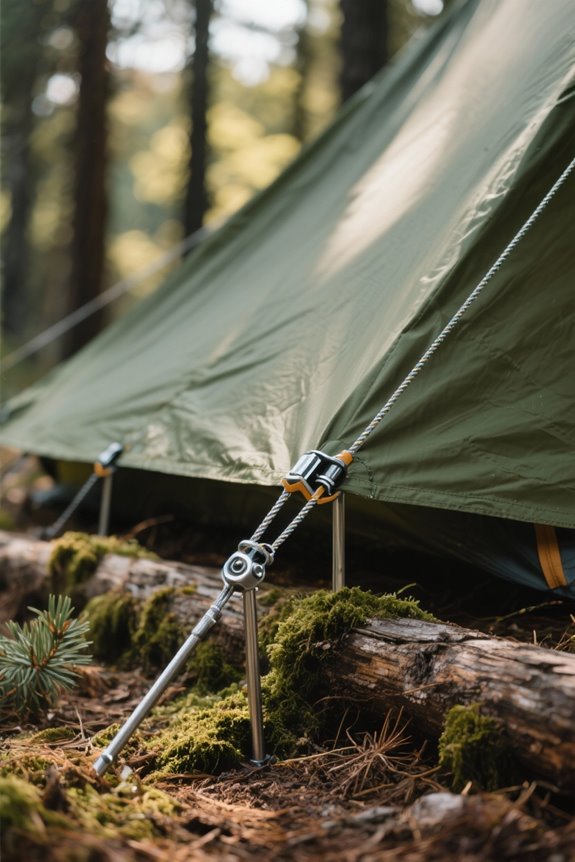
When we find ourselves setting up camp in unpredictable weather, the significance of properly secured guylines becomes even more apparent. Guylines enhance tent stability by:
- Distributing wind forces evenly across the structure, preventing collapse.
- Using high-quality guyline materials like strong polyester rope increases effectiveness.
- Confirming tension adjustments are made allows for ideal stability; we must balance tension to avoid over-tensioning or under-tensioning.
- Maintaining taut fabric reduces flapping, improving airflow and reducing noise.
- Offering additional structural support, guylines work with poles for enhanced resilience.
It’s vital to regularly check guyline tension, especially in harsh weather. With the right setup, we can guarantee our tent stands firm against the elements. Just as durable wheels and handles improve mobility for outdoor equipment over various terrains, properly configured guylines ensure our shelter remains stable and secure throughout our adventure. Prioritizing guylines becomes fundamental for a safe camping experience.
Recommended Products

【Layered Water Protection for Everyday Camping】The durable waterproof 420D oxford cloth tent fabric helps regulate temperature and reduces condensation. The rain cover adds extra waterproofing (PU5000+) and sun protection (UPF50+). Fully taped seams with Wit triple-protection side windows. The PVC net clamping cloth adds further comfort and is easy to clean after your trip. Zonkoo Inflatable tent engineered to keep you dry and comfortable in all weather.

Revolutionary Fabric Technology - Experience superior HyperBead technology across our ultralight tent line. This proprietary waterproof tent fabric outperforms traditional materials without added chemicals. The breathable combination of solution-dyed nylon ripstop and polyester mesh is engineered for lasting performance whether you choose a 2 person tent or larger family camping tent

SPACIOUS & COMFORTABLE FOR GROUPS: Designed with families and groups in mind, this tent offers 2.5ft taller sidewalls and a central height of 9.8ft, providing ample room to stand and move comfortably. Whether you're enjoying a family camping trip, hosting a gathering, or engaging in any outdoor activity that requires extra space, this tent ensures everyone has room to stretch out and relax.
The Effect of Guylines on Water Resistance

Achieving a stable shelter is just the beginning; water resistance is another critical factor for a successful camping experience. Guylines greatly enhance our tent’s water resistance by:
- Preventing water pooling: Properly tensioned guylines guarantee we maintain a taut structure, allowing water to roll off instead of collecting on the fabric.
- Avoiding moisture buildup: By keeping the rain fly elevated, we reduce contact with the tent body, minimizing condensation and internal dampness.
- Extending waterproof coating life: Tensioned guylines help preserve the effectiveness of waterproof coatings by preventing fabric sagging and maintaining smooth surfaces.
- Maintaining structural integrity: Quality tents with sealed seams and proper guyline tension work together to keep water out, especially when waterproof ratings of 1500 mm or higher are combined with a taut pitch that prevents fabric stress and potential leak points.
Recommended Products

Lightweight and adjustable

【Heavy-Duty Ratchet Camping Rope】 Engineered for performance, this 13.12-foot guy line (1/6-inch diameter, 150-lb capacity) combines a robust ratchet system with a smooth pulley mechanism—constructed from zinc alloy, ABS plastic, and aluminum alloy—to deliver unparalleled tightening force and secure, easy adjustment
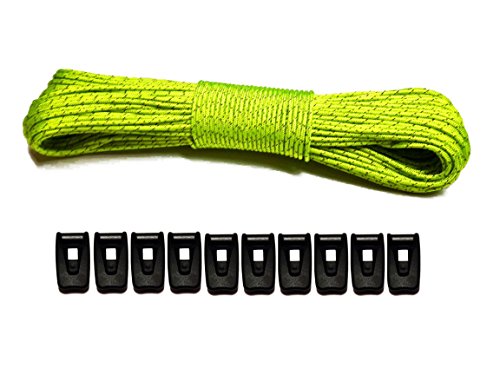
✔️ PREMIUM CONSTRUCTION - Featuring a Dyneema core and a polyester sheath, this cord will not absorb water and has almost no stretch. UHMWPE cord (also known as Dyneema or Spectra) is extremely high quality.
Improving Ventilation With Guylines

To guarantee our tent stays well-ventilated during camping trips, we can rely on strategically placed guylines. Here’s how they improve ventilation:
- Guylines at tent vertices help lift fabric away from mesh panels, enhancing airflow.
- Proper tension prevents sagging walls that trap moisture, promoting air circulation.
- Using guylines to “porch” tent doors creates pathways for fresh air.
- Adjustable guylines let us fine-tune airflow based on weather conditions.
Through effective airflow management, we can reduce condensation buildup inside. This stability assures that vents remain open and functional, even when it’s windy. By keeping an ideal gap between the rainfly and inner fabric, we achieve significant ventilation benefits. Integration of mesh windows and doors is crucial for improved airflow when combined with properly tensioned guylines. Ultimately, well-placed guylines transform our camping experience by maintaining a comfortable and dry environment.
Maximizing Interior Space With Tensioned Guylines

Maximizing interior space in our tent can greatly enhance our camping experience. By using tensioned guylines, we can effectively achieve space optimization in several ways:
- Increased interior volume: Guylines pull the walls outward, expanding usable space.
- Improved headroom: With tension, the fabric lifts, giving us more room to move freely.
- Enhanced livability: More space means less congestion, especially with multiple occupants.
- Reduced fabric sag: Keeping the tent taut prevents sagging, maintaining our interior space.
This practical application of guylines guarantees not only comfort but also stability. With proper tension, we create an inviting environment, helping our camping trips be more enjoyable and functional. Therefore, employing guylines is essential for maximizing our tent’s interior space.
Proper Setup and Adjustment Techniques
When it comes to proper setup and adjustment techniques for guylines, understanding the basics can make a significant difference in our tent’s stability and performance. Here are some key points to remember:
- Attachment and Knots: Use secure knots like the bowline for fixed points and clove hitch for adjustments.
- Stake Placement: Place stakes at a 45° angle towards the tent, and position them to allow for tension without creating trip hazards.
- Tensioning Techniques: Initially stake guylines loosely, then adjust with tensioners to avoid over-tightening.
- Pulley Systems: Implement a 2:1 pulley system for easy adjustments and minimizing cord usage.
For additional gear organization, consider using compression straps with quick-release buckles to secure sleeping bags and other camping equipment to your backpack, allowing for fast adjustments and easy access during setup.
Practicing these techniques gives us both guylines aesthetics and confidence, knowing we’ve prioritized guylines education for maximum stability.
Recommended Products

TOP QUALITY CONSTRUCTION: Made of high-quality 304 stainless steel material, the whole pulley has higher hardness, moisture resistance, corrosion resistance, rust resistance than ordinary materials. Rugged construction and shock-resistant design make it extremely durable

Slack Tending Pulley Kit from GM CLIMBING, which contains: 1x 30in 8mm Friction Hitch VT Prusik, 1x 24kN Twist Lock Oval Carabiner, 1x 30kN Swing Cheek Micro Pulley.

Quick and Knotless Securement: The copper Rope Tightening tool easily tightens and secures cargo, tents, and boats. To secure cargo, simply loosen the buckle. To adjust, simply press the buckle to roll; no frequent knotting is required.
Practical Use of Guylines in Different Conditions
How do we guarantee our tents remain stable and secure in various outdoor conditions? By effectively using guylines tailored to specific circumstances, we can enhance our tent’s performance:
- In windy conditions:
- Use non-stretch guylines to maintain consistent tension.
- Position guylines midway up the rainfly for better stability.
- On difficult terrain:
- Opt for longer pegs in loose soil and utilize natural anchors where possible.
- Tungsten carbide tips on trekking poles can serve as improvised stakes when traditional pegs fail in rocky terrain.
- With changing weather:
- Regularly adjust tension after rain or temperature shifts to prevent sagging.
- Incorporate additional guyline points ahead of heavy winds for extra security.
Durability of Guylines and Their Impact on Tent Longevity
Though it might seem like a small detail, the durability of guylines plays an important role in the overall lifespan of our tents. Here’s why:
- Materials Matter: Guylines made from nylon and polyester are decent but can stretch and wear over time. Opt for UHMWPE for superior strength and minimal stretch.
- Environmental Factors: UV exposure, moisture, and abrasion can hasten degradation. We need to inspect them regularly.
- Tension Maintenance: Maintaining ideal tension is vital. Durable guylines distribute stress, reducing wear on the tent fabric and poles.
- Quality Construction: Just as tents with PU-taped seams provide waterproof functionality and enhanced durability, well-constructed guylines with reinforced attachment points resist fraying and failure under stress.
The Importance of Proper Tensioning
Maintaining the right tension in our guylines contributes greatly to overall tent stability. Here’s why proper tensioning is vital:
- Prevents Water Pooling: A taut rainfly stops sagging, minimizing water accumulation during rain.
- Distributes Wind Forces: Even tension reduces fabric flutter, decreasing stress on the structure.
- Maintains Firm Anchor: Well-tensioned guylines avoid slippage, ensuring our tent stays anchored under changing conditions.
- Improves Comfort: Proper tension reduces movement, protecting seams and poles over time.
To achieve this, we can use various knot techniques, like the taut-line hitch for adjustability or the trucker’s hitch for quick retensioning. Understanding tension types is essential for efficient setups, so let’s prioritize proper adjustments to enhance our camping experience. Quality tents with freestanding designs allow for easy relocation and retensioning without complete disassembly, making adjustments simpler in the field.
Cable Systems and Their Advantages
When we think about enhancing tent stability, cable systems can be game changers. These systems utilize synthetic lines to provide numerous benefits:
- Controlled Tension: Cable systems evenly distribute tension across tent fabrics and poles, resisting deformation during gusty winds.
- Reduced Wear: By minimizing flapping, they prolong tent life and maintain structural integrity.
- Water Management: Proper tension prevents water pooling, improving runoff and keeping interiors dry.
- Adaptability: Adjustable lengths allow cable systems to adapt to various terrains and conditions.
- Strong Support: They anchor tents securely, helping poles remain upright and preventing snapping.
Choosing cable systems for securing tents can greatly enhance stability, ensuring a more restful camping experience. Similar to how propane stove ignition systems improve reliability in outdoor cooking equipment, well-designed tensioning mechanisms in guylines ensure consistent performance when you need it most. We should definitely consider their advantages next time we set up!
Maintaining Guylines for Optimal Performance
To keep our tents stable and secure, we need to pay careful attention to the maintenance of guylines, which are essential for ideal performance. Here’s a quick guide to guarantee our guylines are in top shape:
- Regular Inspection: Check for fraying, wear, or damage. Damaged guylines can compromise stability.
- Replacement: Use new materials that match or exceed original strength. Ultralight reflective cords enhance visibility and durability.
- Proper Knot Tying: Use bowlines for fixed loops and taut-line hitches for adjustable tension.
- Daily Adjustments: Re-tension guylines after weather changes.
- Safe Storage: Keep them dry and coiled to avoid kinks, and protect them from UV light.
- Material Selection: Choose guylines made from materials similar to tent components, as higher denier fabrics like 20D and 68D offer increased durability compared to lower-quality alternatives.
The Cost-Effectiveness of Using Guylines
Understanding the value of guylines goes beyond just their maintenance; it involves recognizing their cost-effectiveness as a critical component of our camping gear. Here are some key cost considerations:
- Material Types: Guylines vary in price, from under $7 to over $26. Materials like UHMWPE last longer, making them cost-effective in the long run.
- Usage Frequency: Regular usage increases cost-effectiveness, as they enhance tent stability and reduce replacements.
- Bulk Purchasing: Buying in bulk reduces costs considerably for frequent campers, maximizing savings.
- Economic Analysis: Weight savings from ultralight guylines, despite higher upfront costs, can benefit backpackers.
Frequently Asked Questions
Can Guylines Be Used With Any Tent Model?
Yes, guylines can be used with many tent types, but we need to take into account the guylines’ materials and attachment points. Properly fitted guylines enhance overall stability and guarantee our tents withstand various conditions.
How Do I Choose the Right Length for Guylines?
When we’re adventuring under the stars, choosing guylines depends on our tent size and environmental conditions. Let’s measure carefully, ensuring we balance stability with flexibility for whatever nature throws our way.
Will Rain Affect the Tension of Guylines?
Yes, rain’s impact on material absorption can loosen our guylines’ tension. We need to monitor and adjust them frequently to maintain stability, especially since wet soils can further compromise our anchoring strength.
Can I Replace Damaged Guylines Easily?
Like they say, “a stitch in time saves nine.” We can easily replace damaged guylines with durable materials, ensuring our tents stay secure. A little effort goes a long way in maintaining stability.
Are There Specific Knots Best for Securing Guylines?
Yes, there’re specific knot types ideal for securing guylines. We often use taut-line hitches for adjustability and trucker’s hitches for added tension. These techniques guarantee our setups stay secure and effective in various conditions.