As an Amazon Associate, we earn from qualifying purchases. Some links on this site are affiliate links at no extra cost to you. Our recommendations are based on thorough research and editorial judgment.


How Wind Load Affects Tent Design and Setup

Understanding wind load is vital for tent design and setup. Here’s how it impacts us:
- It affects structural stability and safety.
- Tent orientation and height play key roles.
- We must consider local wind zones and exposure categories.
- Heavy-duty fabrics and robust anchoring systems prevent failure.
You may be interested



By acknowledging these factors, we can guarantee effective event setups, even in windy conditions. For more insights on improving tent stability and safety, we can explore additional strategies together.
Key Takeaways
- Wind load influences tent design by requiring robust materials and structural configurations to withstand pressure during adverse weather conditions.
- Tent orientation and height must be carefully considered to minimize wind drag and enhance stability under varying wind patterns.
- Proper anchoring systems, including stakes and weights, are essential for securing tents against uplift and lateral forces from wind.
- Compliance with local building codes and ASCE 7 Standards is crucial for ensuring tents can safely handle designated wind loads.
- Regular maintenance and adjustments to tie-downs and guy ropes are necessary for maintaining tension and stability in changing wind conditions.
Understanding Wind Load and Its Importance
When we talk about wind load, we’re referring to the pressure wind exerts on structures, including tents. Understanding this concept is vital for tent safety. Here’s why wind load matters:
- Structural Pressure: Wind load can cause uplift, shear, and lateral forces.
- Material Selection: Choosing the right tent material is imperative; it must withstand wind forces reliably.
- Standards Compliance: Local building codes specify wind load requirements to guarantee safety.
For effective tent design, we rely on wind load instrumentation, which helps us measure these forces accurately. Knowing the wind zone where we’re setting up is essential for adhering to regulations. Addressing wind load properly prevents structural failures, safeguarding users and assuring a successful event. Winter camping tents often incorporate snow skirts and double-layer construction to protect against wind and maintain structural integrity in harsh conditions. Let’s prioritize safety!
Factors Influencing Tent Wind Load
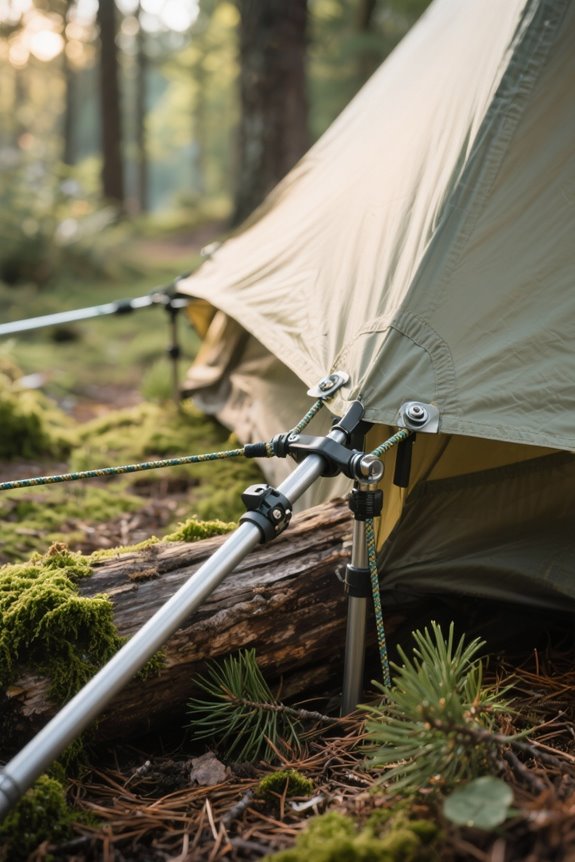
Understanding the factors that influence tent wind load is vital for guaranteeing safety and performance. Here’s what to ponder:
- Tent Orientation: The direction the tent faces affects wind drag.
- Pole Configuration: More poles, spaced closely, improve support.
- Wind Patterns: Different environments, like open fields or sheltered areas, create varied loads.
- Fabric Treatments: Flexible fabrics can help reduce peak loads but may wear out over time.
- Structural Integrity: Stronger frames resist deformation, while lighter tents may oscillate in wind.
- Installation Techniques: Firm anchoring is essential, especially in high winds.
- Maintenance Practices: Regular checks guarantee safety measures are upheld.
- Material Quality: Tents constructed with aluminum poles and reinforced seams provide superior stability during adverse weather conditions and resist structural deformation under wind stress.
Regional Wind Load Zones Explained

Regional wind load zones are crucial for anyone involved in tent design and setup, as they provide essential guidelines tailored to specific geographic areas. Understanding wind zone classifications guarantees structures can withstand local winds. Here’s a quick overview:
- Wind Zones in Germany: Ranges from zone 1 (22.5 m/s) to zone 4 (30.0 m/s).
- Wind Zones in the U.S.: Varies from zone 1 (130-140 mph) to zone 4 (over 160 mph).
- Geographic Wind Patterns: Areas near coastlines or mountains often face higher wind speeds.
When selecting camping gear for high-wind regions, consider waterproof fabrics that not only protect against precipitation but also withstand the force of strong gusts.
The Impact of Wind Speed on Tent Stability

As wind speeds increase, the stability of tents can be dramatically affected, often with surprising results. Here’s what we need to take into account:
- Force Correlation: The force on a tent increases with the square of wind speed. A simple doubling of the wind speed quadruples the force!
- Tent Design: Low-profile tents with segmented panels usually handle wind better than tall ones with flat walls.
- Tension Management: Properly managed tension through strong tie-downs enhances stability.
- Airflow Dynamics: Tent shape can either mitigate or amplify wind forces; understanding airflow helps in positioning and setup.
Frequent checks and various anchoring methods, like stakes and weights, are essential. By staying proactive, we increase our chances of keeping our tent secure against those unpredictable gusts. For added comfort and security during windy conditions, elevating yourself off the ground with a portable camping cot can provide both insulation from cold air and a more stable sleeping surface than directly on the tent floor.
Exposure Categories and Their Effects

When we consider the design and safety of tents, exposure categories play an essential role in determining how wind affects our structures. Understanding the exposure effects is vital for successful wind load assessments. Here’s a brief breakdown:
- Exposure B: Offers urban shielding, presenting the lowest wind pressures, allowing lighter frames.
- Exposure C: Features open terrain, where pressure coefficients increase, requiring stronger structural designs.
- Exposure D: Applies to flat, unobstructed areas, enforcing regulatory compliance with stricter wind resistance standards.
The landscape impact directly influences wind loads, meaning we must carefully assess areas like coastlines. By knowing our exposure category, we can choose appropriate anchoring methods and materials, ensuring tents remain safe and stable against wind forces. Mountaineering tents designed for extreme conditions often incorporate snow skirts and reinforced pole systems to provide additional stability in high-wind environments.
How Topography Affects Wind Loads
Topography plays an essential role in determining wind loads on tents, affecting their stability and safety. When we consider site selection, we should keep in mind:
- Topographic Features: Hills and ridges can amplify wind speed, increasing wind loads considerably.
- Elevation Effects: Elevated sites often experience stronger winds due to decreased surface friction and exposure to wind patterns.
- Terrain Classification: Different terrains, like smooth fields versus wooded areas, affect calculated wind speeds at tent height.
- Localized Wind Channeling: Valleys and gaps can funnel wind, creating unexpected gusts that surpass design ratings.
- Wind Obstacles: Vegetation or structures can decrease wind speed, impacting tent placement decisions.
Building Codes and Wind Load Regulations
Understanding building codes and wind load regulations is essential for anyone involved in tent design and installation. These regulations guarantee safety for everyone using the tents. Key points we’d like to highlight include:
- ASCE 7 Standard: Sets the minimum design loads for tents, including wind.
- International Building Code (IBC): Details wind resistance and designated wind zones.
- Specific Requirements: Tents over 7,500 sq ft or with over 1,000 occupants require strict compliance.
- Documentation: We must provide proof of structural stability to officials.
Following these tent regulations and safety standards isn’t just about compliance; it’s about guaranteeing every event is safe and secure. Modern canopy tents incorporate stability features like reinforced steel frames and anchoring systems to meet wind load requirements. By understanding and adhering to these codes, we can protect our clients and their guests.
Tent Shapes That Enhance Wind Resistance
After ensuring our tents comply with building codes and wind load regulations, we can turn our attention to design elements that boost wind resistance. Here are some beneficial shapes:
- Dome Tents:
- Rounded, aerodynamic structures that efficiently deflect wind.
- Lower profiles reduce wind pressure.
- Geodesic Designs:
- Multiple poles enhance stability.
- Even tension distribution aids in strong winds.
- Tunnel Tents:
- Long, curved shapes channel wind smoothly.
- Positioning the narrow end into the wind minimizes resistance.
- Pyramid and Cone Shapes:
- Steep slopes disperse wind forces and lower uplift risks.
Just as tent designs require attention to material quality and safety, components like hydration system bite valves should be replaced regularly every 3-6 months to maintain optimal performance during outdoor adventures.
The Role of Fabric Choice in Wind Load Management
When it comes to managing wind load effectively, fabric choice plays a pivotal role in tent design. Here’s how we can optimize our selection:
- Fabric Strength: Choosing heavy-duty materials like vinyl, with a denier of 1000 or more, guarantees durability against wind stress.
- Material Performance: Premium options, such as sailcloth, combine high tensile strength with lightness, reducing flapping.
- Coatings: PU and silicone coatings enhance waterproofing and add wind resistance, maintaining fabric integrity under stress.
- Weave: Opt for tightly woven fabrics to minimize sagging and promote aerodynamic performance.
- Panel Design: Smaller panels offer better wind resistance, while vertical seams distribute loads effectively.
- Stretch Resistance: Modern fabrics like OSMO poly-nylon ripstop exhibit three times less stretch when wet, maintaining structural integrity during wind-driven rain events.
Recommended Products
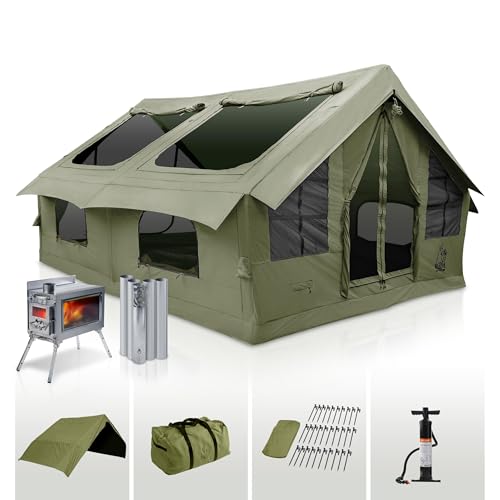
Spacious Inflatable Tent for 2–6 People: RBM Panda Air Large is a roomy inflatable canvas camping tent designed for families and small groups. The wide interior layout comfortably fits 2–6 people in sleeping bags while providing enough space for gear, movement, and relaxing during camping trips.

【CPAI-84 Fire Certification】: The fabric used in this tent meets the CPAI-84 fire safety standards, and we provide a PDF certificate for the fabric to facilitate compliance checks and adherence to fire safety regulations. We recommend consulting with your local fire department before purchase to ensure all safety requirements are met.

DIMENSIONS IN INCHES: Hole Size: 5/16 Flange Diameter: .630 Length Under Flange: .200 Metal Thickness: .015 Inside Diameter: .400 Outside Diameter: .655 Metal Thickness: .011
Calculating Wind Loads for Tent Design
To guarantee our tents can withstand the forces of nature, calculating wind loads is an essential step in the design process. We need to follow established design criteria to effectively manage these loads. Here’s how we do it:
- Wind Speed: The main factor that influences pressure.
- Surface Area and Height: Larger, taller tents experience more wind load.
- Shape: Rectangular tents generally face higher loads than those that are circular.
- Openings: Features like doors and vents affect load distribution.
We apply formulas, such as calculating velocity pressure \( q \) to determine design wind pressures. Adjustments based on terrain and structure help guarantee safety and stability. Quality family camping tents utilize fiberglass poles and freestanding designs to provide added stability against wind forces. Ultimately, precise calculations lead to robust design and reliable performance in windy conditions.
Importance of Proper Anchoring Systems
Proper anchoring systems are essential for guaranteeing tents remain stable and secure in varying weather conditions. Here’s what we need to take into account:
- Anchoring Techniques:
- Use stakes for soft soil, driven deep for maximum grip.
- In hard surfaces, utilize weights like sandbags or concrete blocks.
- Implement guy ropes to maintain tension and distribute wind forces.
- Tension Maintenance:
- Keep guy lines pretensioned to combat frame deflection.
- Ideal angles and depths for stakes increase pullout resistance.
- Regularly check and adjust anchors, especially during wind changes.
Using a combination of these techniques helps guarantee our tent remains stable and durable, minimizing risks associated with wind loads. For dome tents specifically, look for models rated to resist winds up to 31 mph and ensure you use both floor spikes and sandbags for optimal stability. Proper anchoring not only protects our structure but also enhances safety for everyone inside.
Ballasting Techniques for Stability in Wind
Ensuring a tent remains stable during windy conditions requires effective ballasting techniques in addition to proper anchoring. Here are some key points regarding ballast materials and their distribution:
- Concrete blocks provide excellent weight and stability.
- Water barrels weigh about 440 lbs but lose effectiveness on hard surfaces.
- Steel drums and metal plates are durable options.
- Sandbags and kettlebells are flexible choices for softer ground.
- Encasing ballasts in 5-gallon buckets allows for easier placement.
Proper ballast distribution is essential. We should evenly spread weight across all anchor points to prevent structural weakness. Securing ballasts to tent legs is vital to prevent shifting. With proper techniques, we can counteract wind forces, ensuring safety and stability for our events. Regular inspections keep everything secure.
Structural Reinforcement Strategies
When we talk about structural reinforcement strategies for tents, there are several key factors we need to assess. Here are some essential components to take into account:
- Material advancements: Lightweight aluminum frames and steel inserts provide strength and corrosion resistance.
- Design innovations: Tents in high wind zones are engineered with TÜV-certified designs for safety.
- Increased stability: Larger base plates and specialized fasteners guarantee robust connections to withstand wind forces.
- Tensioning techniques: A taut surface minimizes wind deformation, reducing potential damage and instability.
- Anchoring improvements: Enhanced stakes and proper embedment techniques substantially boost anchoring capacity.
Event Planning Considerations in Windy Areas
Have you ever considered how wind can impact event planning, especially when choosing the right tent? In windy areas, we should prioritize both tent visibility and event attendee safety by following several key strategies:
- Site Selection: Choose locations with natural wind barriers like trees or hills.
- Tent Choice: Opt for durable, aerodynamic tents that withstand winds exceeding 40 mph.
- Anchoring: Use stakes and heavy ballast to secure the tent against strong gusts.
- Sidewall Management: Remove sidewalls during high winds to reduce stress on the structure.
Performance Testing for Wind Resistance Standards
As we consider the impact wind has on event planning, it’s clear that choosing the right tent goes beyond aesthetics. Performance testing for wind resistance standards is essential. Here’s what we focus on:
- Testing Objectives: Evaluating tents’ structural integrity against various wind loads.
- Factors Influencing Performance: Materials, pole strength, and design all play a vital role.
- Compliance: Ensuring tents meet national and local wind resistance standards.
- Testing Protocols: We use rigorous methods including wind tunnel simulations and on-site evaluations.
Frequently Asked Questions
How Is Tent Design Affected by Climate Change?
Tent design’s evolved due to climate adaptation, necessitating sustainable materials for durability and comfort. We must prioritize better thermal management and environmental impact to guarantee our tents withstand increasing temperatures and extreme weather while maintaining functionality.
What Are the Best Materials for High-Wind Tents?
For high-wind tents, we prefer high strength fabrics like polyester and PVC-coated materials combined with aerodynamic shapes. These choices enhance durability and stability, ensuring our tents withstand tough weather without compromising comfort or safety.
How Frequently Should Wind Resistance Tests Be Conducted?
Like checking the roof before a storm, we recommend conducting wind resistance testing annually or biannually. Regular testing frequency guarantees our tents stay robust against the elements, maintaining safety and reliability for every deployment.
Can Wind Load Affect Tent Aesthetics or Appearance?
Yes, wind load can definitely affect a tent’s aesthetics. We might find color choices and design features limited to enhance durability, often resulting in a more straightforward structure that prioritizes wind resistance over visual appeal.
What Maintenance Practices Improve Wind Load Resistance?
Just like a ship needs a sturdy crew, our tents thrive on stakeholder collaboration and regular inspections. By maintaining components and evaluating conditions, we can sail smoothly through nature’s challenges and guarantee lasting durability.