As an Amazon Associate, we earn from qualifying purchases. Some links on this site are affiliate links at no extra cost to you. Our recommendations are based on thorough research and editorial judgment.


Understanding Different Fuel Types for Camp Stoves

Understanding different fuel types for camp stoves is essential for our outdoor adventures. Here’s a quick breakdown:
- Canister Gas Fuels: Easy to use, good for short trips, but less effective in cold.
- Liquid Fuels: Versatile, burn longer, but heavier and require maintenance.
- Alcohol Fuels: Lightweight and clean but burn slower.
- Solid Fuels: Compact, cheap, but limited heat output.
You may be interested



Choosing the right fuel impacts performance and convenience. Let’s explore these options further to find the best fit for our needs.
Key Takeaways
- Fuel Types: Camp stoves utilize canister gas, liquid fuels, alcohol, or solid fuels, each offering unique advantages and disadvantages for different cooking needs.
- Canister Gas Fuels: Convenient and easy to use, but less effective in cold conditions; ideal for short trips due to resealable options.
- Liquid Fuels: Versatile and cost-effective, they can burn multiple fuel types but are heavier and require more maintenance compared to gas canisters.
- Alcohol Fuels: Lightweight and portable, they have longer boil times but require careful handling due to toxicity and nearly invisible flames.
- Solid Fuels: Compact and lightweight, they are user-friendly with minimal setup, but provide limited heat output suitable mainly for backpacking trips.
Canister Gas Fuels
When choosing canister gas fuels for our camp stoves, there’s a lot to contemplate. First, we need to focus on canister compatibility. Most of us will find the screw-on types, featuring a Lindal valve, to be reliable. Options include:
- Screw-On: Widely available and resealable.
- Easy Clic: User-friendly but less common.
- Pierceable: Ideal for lighter packing.
- Aerosol: Not typically recommended.
Next, let’s consider the gas blend. Common mixes like propane and isobutane work best in various temperatures. For example, propane excels in cold weather, while butane performs well above 10°C. By understanding these aspects, we can make informed choices that enhance our outdoor cooking experience. Just as collapsible camping lanterns offer adjustable brightness settings to match different lighting needs, selecting the right fuel blend ensures optimal stove performance across varying weather conditions.
Recommended Products
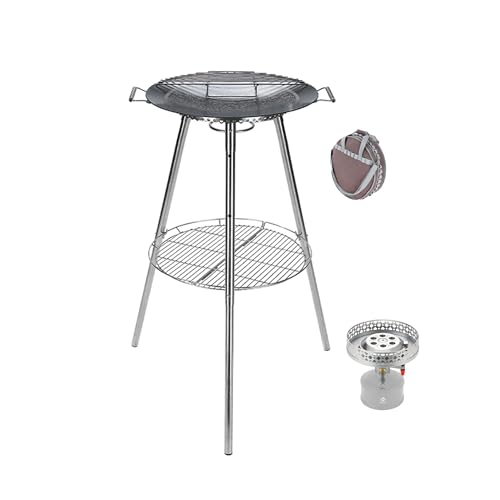
【High Power, Large Diameter Burner – EN417 Lindal valve Standard Gas Stove】Features a 4 inches (10.1cm) wide burner head with 490 flame outlets for powerful, even heating. Equipped with a built-in pressure regulator, it delivers a high output of 4.2kW for stable and intense heat.

ALL SEASON FUEL:HOTDEVIL's ISOBUTANE can be used in all seasons and all altitudes.A higher vapor pressure has been provided when ISOBUTANE is mixed with propane and butane,so Isobutane's performance in cold weather has improved.

Weight: 48g/1.7 oz.
Liquid Fuels

Liquid fuels are a reliable choice for camp stoves, offering several advantages that can enhance our outdoor cooking experience. Here’s why we might consider them:
- Fuel Types: Common options include white gas, kerosene, and unleaded gasoline.
- Cold Weather Performance: They perform well in freezing temperatures, unlike gas canister stoves.
- Fuel Versatility: Many stoves can burn multiple fuel types, making them adaptable.
- Cost-Effectiveness: Generally cheaper per unit of energy.
- Operational Features:
- Priming needed for ignition.
- Pressurized fuel bottles allow for efficient fuel delivery.
- Adjustable flame for cooking flexibility.
- Field Maintenance: Easier to clean and repair compared to other stoves.
With these operational features, liquid fuels provide practicality and efficiency for our camp cooking needs. While liquid fuel stoves excel in versatility, many outdoor enthusiasts also prefer stoves that utilize liquefied petroleum gas for its accessibility and ease of use in moderate weather conditions.
Recommended Products
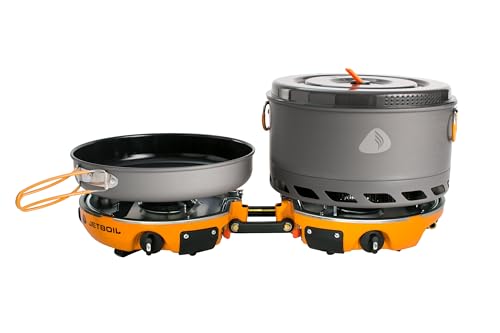
Portable Dual-Burner: Works as a standalone two-burner camp stove or pairs with other JetLink-compatible stoves (sold separately) to create a full range; Cookware included

Optifuel multi-fuel, single jet technology delivers performance cooking using LP gas, white gas, kerosene, diesel and jet fuel without having to change anything on the stove

Alcohol Fuels

Alcohol fuels are a popular and versatile choice for camp stoves, offering distinct advantages. Here’s a quick breakdown:
- Methanol Advantages:
- Burns cleanest and hottest, leading to shorter boil times.
- Produces minimal soot, making it easier to clean up.
- Ethanol Drawbacks:
- While it’s high in energy (about 12,000 BTU/lb), it doesn’t burn as cleanly as methanol.
- Available as high-proof drinking alcohol, it can be pricey and can leave minor residues.
In general, we find that methanol is a top choice for efficiency and cleanliness. Ethanol and denatured alcohol are decent alternatives but come with some concerns over cost and residue. Always handle these fuels with care due to their toxicity and nearly invisible flames. For backpackers seeking fuel-efficient design, modern camping stoves can boil 16 oz of water in approximately 1 minute and 18 seconds while using only 6g of fuel.
Solid Fuels

As we explore different fuel options for camp stoves, solid fuels emerge as a reliable and straightforward choice. Here are some solid fuel advantages:
- Lightweight and Compact: They’re perfect for backpacking.
- Easy to Use: There’s minimal setup involved.
- Cost-Effective: Generally, they’re inexpensive.
However, solid fuels do have disadvantages:
- Limited Heat Output: They usually produce less heat than liquid or gas stoves.
- Slow Cooking: Cooking times can be longer.
- Residue: They may leave sticky marks on pots.
Brands such as Esbit, Vargo, and Trail Designs create solid fuel stoves that cater to these attributes. Popular options like Coghlans Hexamine tablets burn for approximately 9 minutes each and can boil 2 cups of water in 8-10 minutes using just 2 tablets. While solid fuels are simple and convenient, being aware of their limitations helps in choosing the right stove for our outdoor adventures.
Recommended Products

Genuine Zippo windproof lighter with distinctive Zippo "click"

The super light Titanium version of our Bushbox LF! Only 300g (350g with pouch).

Includes propane tee.Fit Type: Universal Fit
Fuel Cost and Availability

When planning a camping trip, understanding fuel cost and availability becomes essential for efficient stove use. Here’s a quick overview:
- Gasoline: About $2.00 per liter, widely available globally, ideal for long trips.
- Kerosene: Approximately $40 for 10 liters, less economical and harder to find.
- Coleman Fuel: About $9.44 per gallon, convenient in North America.
- Canister Fuels: $4.88 for a 220g canister, great for short trips but pricier per use.
- Alcohol: Varies, e.g., $18 for 4 liters, popular among hikers.
Fuel pricing can shift based on the supply chain, so it’s wise to check local availability before your trip. Canister stoves compatible with butane, isobutane, and propane offer the most flexibility for backpackers who need reliable performance across different fuel types. Understanding these costs helps us make informed decisions for our outdoor adventures.
Performance in Various Conditions
Understanding how different fuels perform in various conditions is essential for our camping experience. Here’s how they stack up:
- Cold Weather: Liquid fuels shine, remaining effective even below -40°C. Canister fuels struggle, while alcohol stoves become inefficient.
- High Altitude: Liquid fuels excel due to efficient vaporization. Canister and alcohol stoves falter, resulting in lower performance.
- Wet Conditions: Liquid fuel stoves perform well if kept dry, but canister stoves can chill. Alcohol stoves often struggle.
- Wind Exposure: Liquid fuel stoves and canister stoves with windshields are reliable. Alcohol stoves and solid fuels are less effective in gusts.
- Long Trips: Liquid fuels are the most efficient, while canister stoves excel on short outings.
Selecting the right fuel can make all the difference during our adventures. For optimal performance across various conditions, isobutane/propane canisters offer excellent versatility and are designed for easy attachment to compatible stove systems.
Environmental Considerations
Selecting the right fuel for our camp stoves isn’t just about performance; environmental considerations play a significant role in our choices. Here’s what we should know:
- Toxic Emissions: Some fuels, like canister fuel, emit benzene and other pollutants, while alcohol fuels, especially bioethanol, offer a cleaner burn.
- Sustainability Metrics:
- Canister Fuel: High carbon footprint and waste issues.
- Liquid Fuel: Lower emissions, reusable bottles reduce waste.
- Alcohol Fuels: Lowest emissions and minimal waste when using bioethanol.
- Resource Use: Canister fuel’s production depletes resources and adds to landfill problems, while liquid and alcohol fuels tend to support a more sustainable approach.
- Tent Compatibility: When choosing eco-friendly camping setups, consider pairing your sustainable fuel choices with water-resistant canvas tents that offer durability and breathability without relying on synthetic materials.
Choosing the Right Fuel for Your Needs
What factors should we consider when choosing the right fuel for our camp stoves?
We need to align our fuel type with our specific trip requirements and user preferences:
- Fuel efficiency: Gas canisters offer quick setups for short trips, while white gas excels in cold weather or long journeys.
- Convenience: Gas canisters are clean and easy but less effective in extreme cold. Conversely, liquid fuels are versatile but heavier and require more maintenance.
- Weight: Alcohol stoves are lightweight, making them great for minimalists; however, they may take longer to boil water.
- Cost: While wood is free, it isn’t always practical.
- Heat output: For tasks like boiling and frying, look for stoves with a minimum of 10,000 to 12,000 BTUs to ensure adequate cooking power for outdoor meals.
Recommended Products

Marine Kettle 3 grill has waterproof electronic pulse ignition system that lights 1st time, every time.

Portable Dual-Burner: Works as a standalone two-burner camp stove or pairs with other JetLink-compatible stoves (sold separately) to create a full range; Cookware included

72 x 8 OZ. BUTANE GAS FUEL CANISTER, PORTABLE GAS FOR CAMPING STOVES, COOKING TORCHES & EMERGENCY USE – Power your portable gas appliances with Chef Master’s high-performance butane fuel canisters. Each 8 oz canister delivers a steady, high-heat flame for up to 2 hours (or up to 4 hours on simmer), making them ideal for camping stoves, backpacking cooktops, outdoor grills, culinary torches, crème brûlée torches, and portable heaters.
Frequently Asked Questions
Can I Use Canister Fuels in a Liquid Fuel Stove?
No, we can’t use canister fuels in a liquid fuel stove without proper adaptations. It’s essential to prioritize canister compatibility for safe and fuel-efficient operation, ensuring our adventures remain enjoyable and risk-free.
What Are the Safety Precautions for Using Alcohol Stoves?
To guarantee fire safety with our alcohol stove, we should always use stable surfaces, monitor the flame closely, keep our surroundings clear, and follow manufacturer instructions. Staying vigilant helps prevent accidents and enjoy our adventures safely.
How Do I Store Liquid Fuel Safely?
To store liquid fuel safely, we should use tightly capped metal containers that suit fuel characteristics. Keeping them upright in a dry, cool, well-ventilated area minimizes leaks and guarantees safety during our adventures.
Can Solid Fuels Ignite in Wet Conditions?
Imagine a phoenix rising from the ashes; solid fuels can ignite in wet conditions. With the right techniques, we can achieve reliable fuel ignition, ensuring warmth and sustenance despite the dampness surrounding us.
How Do I Dispose of Used Gas Canisters Properly?
To dispose of used gas canisters properly, we should puncture and mark them as empty, then check local recycling options. It’s vital to follow guidelines to guarantee safety and minimize environmental impact.