As an Amazon Associate, we earn from qualifying purchases. Some links on this site are affiliate links at no extra cost to you. Our recommendations are based on thorough research and editorial judgment.


How Altitude Affects Camp Stove Performance

Altitude affects camp stove performance in several ways. At higher elevations, the boiling point of water drops, which can lead to undercooked food. We should also expect longer cooking times—up to 25% more. Fuel combustion becomes less efficient due to lower air pressure, so liquid fuels often perform better than canister fuels. To counteract challenges, we recommend sturdy stoves designed for harsh conditions and using windscreens to boost efficiency. Let’s explore further strategies to optimize cooking in high-altitude environments.
Key Takeaways
- Boiling point of water decreases at higher altitudes, affecting food cooking temperatures and requiring longer cooking times.
- Decreased air pressure at high altitudes results in inefficient stove fuel combustion and potential hazards like carbon monoxide.
- Canister stoves experience increased boil times and decreased heat output; liquid fuels like white gas perform better in high-altitude conditions.
- Wind can disrupt flame stability, leading to reduced cooking efficiency; using windscreens can enhance stove performance in windy environments.
- Proper setup on stable surfaces and safe cooking locations are crucial to prevent accidents and ensure effective operation of camp stoves.
Understanding Atmospheric Pressure and Oxygen Levels
You may be interested


When we think about camping at high altitudes, one of the most vital things to understand is how atmospheric pressure and oxygen levels impact our camp stove performance. At higher altitudes, we encounter:
- Decreased Air Pressure: This reduction affects how well our stove burns fuel.
- Lower Oxygen Levels: With less oxygen available, combustion isn’t as efficient, potentially producing harmful carbon monoxide instead of carbon dioxide.
As a result, we face challenges such as:
- Reduced Heat Output: Our stoves may not generate sufficient heat.
- Inconsistent Flames: Maintaining a stable flame can be difficult.
It’s imperative to recognize these factors to guarantee safe and effective cooking while enjoying the great outdoors at high elevations. Canister stoves typically boil 1 liter of water in under 4 minutes at sea level, but this boil time can increase significantly as elevation rises.
The Impact of Boiling Point on Cooking Efficiency

The impact of boiling point on cooking efficiency becomes more pronounced at higher altitudes, making it essential for us to adapt our cooking methods. As we rise in elevation, water’s boiling limitations present challenges:
- At sea level, water boils at 212°F; at 10,000 feet, it’s just 193°F.
- This lower boiling point means food, especially grains and proteins, won’t reach proper temperatures.
To improve cooking success, we need to make specific cooking adjustments:
- Increase cooking times by up to 25% for meats and beans.
- Cover pots to retain moisture, preventing drying.
- Add extra liquid in recipes to combat evaporation.
Pressure-regulated stoves like the MSR WhisperLite Universal maintain more consistent performance at altitude, helping compensate for reduced boiling temperatures in cold weather and high-elevation conditions.
Fuel Performance at High Altitudes

Cooking at high altitudes poses unique challenges, especially with how fuels perform. Understanding fuel efficiency is key for successful cooking, so let’s explore our options:
- Liquid fuels: These typically outperform canister fuels at altitude.
- White gas delivers a high energy output and remains reliable even in cold conditions.
- Canister fuels: These struggle as altitude increases.
- They lose pressure and efficiency, affecting flame intensity.
- Multi-fuel stoves: Offer flexibility by burning various fuels, great for remote locations or international trips.
For efficient cooking at high altitudes, we must prioritize liquid fuels, especially when temperatures drop. The MSR WhisperLite International exemplifies this advantage with its multi-fuel versatility, supporting white gas, kerosene, and unleaded auto fuel for reliable performance in challenging conditions. Adapting our cooking methods to these challenges will guarantee we stay fueled for adventure!
Recommended Products
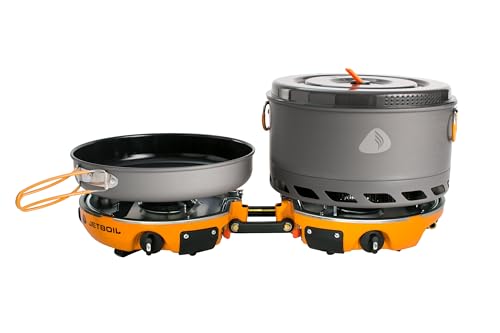
Portable Dual-Burner: Works as a standalone two-burner camp stove or pairs with other JetLink-compatible stoves (sold separately) to create a full range; Cookware included

Optifuel multi-fuel, single jet technology delivers performance cooking using LP gas, white gas, kerosene, diesel and jet fuel without having to change anything on the stove

Designing Stoves for Extreme Conditions
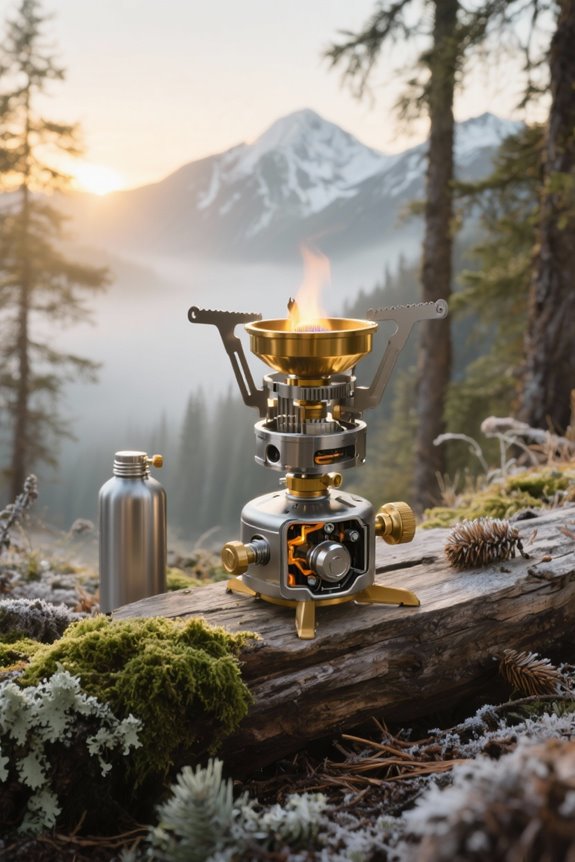
Designing stoves for extreme conditions requires a thoughtful approach, as high altitudes present unique challenges that can affect performance.
To enhance combustion efficiency, we focus on several key aspects:
- Internal Mixing Chambers: These guarantee proper air-fuel mixing for stable flames, even in thin air.
- Innovative Burner Designs: They create both convective and radiant heat, essential for reliable cooking.
- Built-in Heat Exchangers: These capture and direct heat effectively, improving thermal efficiency.
- Durable Materials: Sturdy construction using stainless steel and brass prevents corrosion and withstands temperature shifts.
High-performance models feature drum-style burner housing that ensures even heat distribution, particularly critical when cooking at elevations where temperature regulation becomes more challenging.
Recommended Products

【Heavy-Duty 304 Stainless Steel – Silver Finish】 Built to last through seasons of harsh outdoor use. The M6 silver wood stove features a 4.8mm double-layer top plate and 1.8mm stove body – both made from premium 304 stainless steel with a classic silver finish. Warp-resistant, corrosion-resistant, and heat-resistant. Weight: 23kg (50.7lbs).
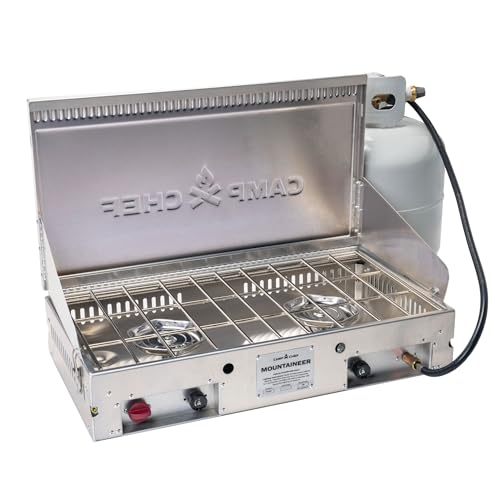
40,000 BTUs of Power: We're packing a ton of punch in our compact cooking systems. Two 20,000/Hr BTU cast aluminum burners deliver fast, even heat for reliable outdoor cooking.
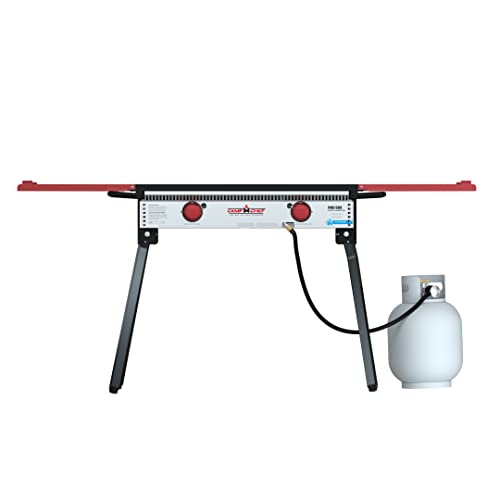
Camp Chef Deluxe 2-Burner Stove (PRO60X)
Overcoming Operational Challenges

As we venture into higher altitudes, overcoming operational challenges is key for effective stove performance. Here are some strategies we can employ:
- Adapt Cooking Techniques: Opt for meals that rehydrate quickly. Avoid boiling when possible, as it takes longer and depletes fuel.
- Implement Equipment Modifications: Use windscreens to shield our stove from harsh winds and guarantee consistent heat.
- Modify Fuel Mixtures: Experiment with propane-rich blends for better vaporization at altitude.
- Preheat Canisters: Keeping fuel canisters warm using body heat enhances performance.
- Increase Fuel Supply: We should always bring extra fuel to account for increased consumption and longer cooking times.
- Choose Appropriate Stoves: Select models with adjustable flame controls like the SOTO WindMaster that allow precise heat management in challenging high-altitude conditions.
Recommended Products

Lightweight aluminum mixer tube, extra-stable stainless steel legs and refined design keep weight to a minimum

Multiple included fuel injectors allow the stove to burn white gas, kerosene, or even unleaded auto fuel

40,000 BTU Performance: Dual 20K burners deliver fast heat and reliable output for any outdoor cooking trip.
Safety Precautions for Camp Stove Usage
When using a camp stove, following safety precautions is essential to assure a secure cooking experience. To help assure your safety, keep these points in mind:
Stove Placement
- Always set up on a flat, stable surface to prevent tipping.
- Never cook inside tents or near flammable structures; this reduces fire risk.
- Use only the manufacturer’s windscreen to shelter the stove from wind.
Fuel Storage
- Store fuel canisters in a cool, dry place, away from heat sources.
- Remove gas cartridges when not in use to avoid leaks.
- Always check connections and lines for wear before use.
- Ensure your fuel has UL Safety Certification to prevent leaks and guarantee reliable performance during your camping trip.
Optimal Fuel Choices for High Elevation
Choosing the right fuel for high elevation cooking can make a significant difference in our outdoor experience. Here are some ideal fuel choices based on specific criteria:
- Liquid fuels (like white gas) work best due to their high heat output and efficiency in cold conditions.
- Isobutane-propane blends, such as MSR IsoPro, offer reliability, but we should be cautious of their performance drop in extreme cold.
- Consider Primus Power Gas, engineered for high altitudes.
When we think about fuel selection criteria, we should also remember fuel storage considerations. Liquid fuels can be cumbersome but pack densely, while canisters simplify use but might struggle over 4500 meters. For optimal performance at altitude, look for stoves with heat output ratings between 10,000 to 12,000 BTUs minimum, as this ensures sufficient power for boiling and frying in thinner air. Ultimately, choosing the right fuel helps guarantee efficient cooking and a smoother adventure.
Strategies for Maintaining Stove Performance
Understanding the right fuel choices for high altitudes is just the beginning of maintaining reliable stove performance. Here are some strategies we can all use:
- Adjust Airflow: Increasing airflow balances the lower oxygen at high altitudes, boosting flame consistency.
- Use Pressure Regulators: These keep fuel flow steady, ensuring efficiency despite atmospheric changes.
- Regular Stove Maintenance: Cleaning helps avoid clogs in burner ports and fuel lines, which diminish performance.
- Choose Wind-Resistant Designs: Stoves designed to withstand wind protect the flame, helping conserve fuel.
- Proper Positioning: Setting our stove on a level surface safeguards against wind, enhancing combustion.
- Optimize Fuel Efficiency: Select stoves with adjustable flame control to balance heat output with fuel consumption, maximizing cooking times without frequent refueling.
With these strategies, we’ll encounter fewer issues and enjoy more dependable cooking in the mountains!
Recommended Products

Premium Dual-Use Oven & Tent Stove: This tent stove and wood stove for tent combines stove and oven functions in one elegant unit, ideal for outdoor cooking or tent setups

Includes 3 ft. hose and regulator

ULTRALIGHT&DURABLE:Only 4.4lbs. TA1 tianium is 60% lighter, more resistant to high temperature, more corrosion resistant and generally stronger than steel or iron stoves when in use. As a heat source for hot tent or cooking in the wilderness. PS:Fasteners and hinge pins are steel
Frequently Asked Questions
How Can I Determine My Stove’s Altitude Performance Rating?
To determine our stove’s altitude performance rating, we should compare stove efficiency at different elevations. We can also make altitude adjustments based on field tests, user reviews, and independent evaluations for accurate measurements.
What Are the Signs My Stove Needs Maintenance at Altitude?
We’ve noticed our stove needs maintenance at altitude if we see weak flames, hear odd noises, or smell fuel odors. Burner clogs and stove leaks can lead to inefficiencies, so we should inspect them regularly.
Can I Use Regular Fuels Without Modification at High Altitudes?
When it comes to using regular fuels at high altitudes, we can’t just wing it. Fuel types don’t generally perform well without altitude adjustments, so we’d recommend using proper liquid fuels instead for ideal results.
How Do Extreme Temperatures Affect Stove Ignition Systems?
Extreme temperature variations really impact our stove’s ignition reliability. In cold weather, fuels struggle to vaporize, making it harder to ignite. We should consider using reliable igniters and fuels better suited for low temperatures.
Are There Specific Cooking Techniques for High-Altitude Stove Use?
When cooking at high altitudes, we’ll find that the boiling point decreases greatly. Using techniques like pressure cooking helps us counteract that, ensuring efficient cooking despite the lower atmospheric pressure and longer times required.