As an Amazon Associate, we earn from qualifying purchases. Some links on this site are affiliate links at no extra cost to you. Our recommendations are based on thorough research and editorial judgment.

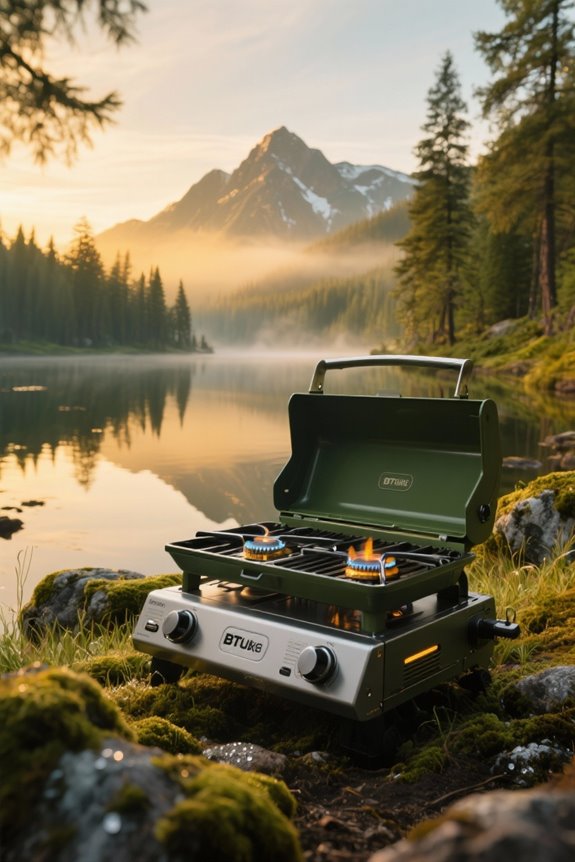
Understanding BTU Ratings and Cooking Performance

Understanding BTU ratings is key to enhancing cooking performance. BTU, or British Thermal Unit, measures heat energy. Here’s what we should remember:
- Total BTU ratings can be misleading; they don’t always reflect real cooking scenarios.
- Ideal BTUs for everyday use range from 9,000 to 12,000.
- High-heat tasks need 15,000 to 18,000 BTUs, while low-heat tasks require just 5,000 to 7,000.
You may be interested


By recognizing these details, we can choose the right equipment and improve our cooking efficiency. There’s more to uncover about BTU implications.
Key Takeaways
- BTU measures the heat needed to raise the temperature of one pound of water by one degree Fahrenheit, essential for comparing cooking appliances.
- Higher BTU ratings allow for faster cooking times, but burner design and heat distribution greatly affect cooking effectiveness.
- For effective cooking, general use burners should be between 9,000–12,000 BTUs; high-heat tasks require 15,000–18,000 BTUs.
- Ideal grilling performance typically requires 75–100 BTUs per square inch of cooking surface for even heating.
- Matching burner power to cookware size enhances energy efficiency and guarantees excellent cooking results.
What Is BTU and Why Is It Important?
When we think about cooking or heating our homes, understanding the British Thermal Unit, or BTU, is essential. This measurement tells us how much heat energy is needed to raise the temperature of one pound of water by one degree Fahrenheit.
Here’s why BTUs matter:
- BTU Comparison: They allow us to compare different cooking and heating appliances.
- Cooking Efficiency: Higher BTU ratings mean quicker cooking times and better energy utilization.
- Appliance Selection: Knowing BTU ratings helps us choose the right equipment for our needs.
The term has roots in BTU history, evolving from early British thermal engineering into a standard we rely on today. Whether for stovetops or heating systems, understanding BTUs enhances our decision-making considerably. For outdoor cooking equipment like camping stoves, a higher BTU rating translates to greater heat output and faster boiling times for efficient meal preparation.
How BTU Ratings Are Measured

To accurately measure BTU ratings, we rely on standardized methods that quantify the heat output of cooking appliances and heating systems. Here’s how it works:
- Fundamental Calculation: BTU, or British Thermal Unit, gauges energy needed to raise 1 pound of water by 1°F, typically shown as BTU/hr.
- Combined Outputs: We sum individual burner outputs to get the total, ensuring every element, including grills, is considered.
- Testing Standards: Testing methods include using infrared thermometers and controlled environments to verify measurements.
- Measuring Accuracy: Variations like gas pressure and burner design influence results, so precise equipment is essential.
- Material Considerations: Similar to camping equipment, durable materials used in burner construction can affect heat distribution and measurement consistency.
Misleading Total BTU Ratings From Manufacturers

While many consumers focus on total BTU ratings as a key factor in choosing cooking appliances, it’s important to recognize that these figures can often be misleading.
Key Takeaways:
- Total BTU Misconceptions: Manufacturers often total the BTUs of all burners, which typically doesn’t reflect actual cooking scenarios.
- Burner Capacity Evaluation: High BTU numbers don’t guarantee better cooking. Factors like burner design and heat distribution matter too.
- Realistic Performance: Ratings can inflate perceived power, ignoring efficiency and heat distribution.
What This Means:
In practice, most of us rarely use all burners at full capacity. Understanding these misconceptions is essential for buying wisely and ensuring our cooking needs are effectively met. For most outdoor cooking tasks, a minimum of 10,000 to 12,000 BTUs per burner is recommended for effective boiling and frying. Let’s focus on quality over quantity!
Recommended Products

160-Inch Outdoor Kitchen BBQ Propane Grill Island with Fridge and Wine Cooler - Transform your backyard with our complete outdoor kitchen station featuring 684 square inches of cooking surface, built-in refrigeration, and modular cabinets that arrive pre-assembled for hassle-free setup

【Ultimate All-in-One Outdoor Cooking Center】Transform your patio into a premium open-air resort; This massive 107.8" modular outdoor kitchen island seamlessly combines a powerful gas barbecue, cooler, sink, and storage; Perfect for luxury outdoor kitchens, this outdoor kitchen creates the ultimate backyard social hub, allowing you to chill ingredients, wash vegetables, prep steaks, and host pool parties without running to your indoor kitchen
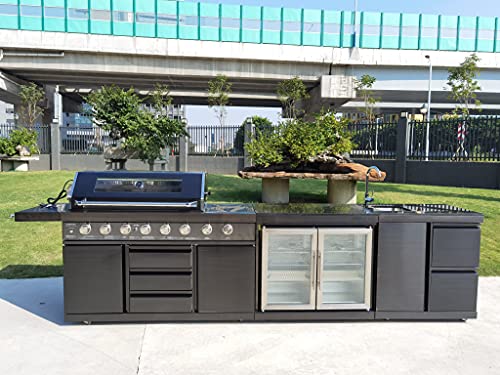
High Quality Black #201SS Stainless Steel Construction, High Quality Stainless Steel Burners + Flame Guards, 8 Zone BBQ Grill, Rotisserie Kit (Skewer, Motor, Bracket, all parts included), Rear Infrared Sear Burner. 6 Burners each at 11,000 BTU's. 1 x Cast Iron Side Burner @ 12,000 BTU's. 1 x Infrared Rear Burner @ 12,000 BTU's. (8 Total) Total 96,000 BTU's! 2 stainless steel + 1 cast iron grate.
Understanding BTU in Relation to Cooking Surface Size

Understanding how BTU ratings relate to cooking surface size is essential for achieving ideal grilling performance.
- Key Metric: The industry standard is 75–100 BTUs per square inch of cooking surface.
- Cooking Consistency: Below 75 BTUs/sq in can lead to slow, uneven cooking, while above 100 may char food before it’s cooked through.
- Larger Areas: Bigger grilling surfaces need higher total BTUs to maintain effective heat.
- Efficiency Matters: A matched BTU-to-area ratio guarantees even heating, avoiding overcooking on small grills or undercooking on larger ones.
- Camp Stove Example: Coleman’s classic camp stoves deliver 10,000 BTUs of cooking power, making them suitable for compact cooking surfaces like 8-inch pans while maintaining efficient heat distribution.
For peak grill maintenance, focus on BTU/sq in ratios, balanced with build quality. Remember, high BTUs alone won’t guarantee great cooking—design and construction are just as important.
Higher BTUS Vs Cooking Performance: What You Need to Know

When we talk about grill performance, BTU ratings often come up as an important factor. Higher BTUs can mean quicker cooking times, but they don’t always guarantee better cooking performance. Here’s what we need to know:
- BTU Efficiency: High BTUs may use more fuel, impacting energy efficiency.
- Cooking Techniques: Different styles require different BTU levels; high heat for searing, lower for slow cooking.
- Even Heat Distribution: Burner design is vital; powerful burners can lead to uneven cooking.
- Design Matters: A grill’s insulation and burner quality greatly affect heat output.
Choosing the right BTU rating depends on our preferred cooking techniques. Camp Chef stoves offer BTU outputs ranging from 10,000 to 60,000, with models like the High Pressure Single Burner Cooker delivering powerful heat for versatile cooking methods such as frying, boiling, and simmering. It’s essential to find a balance that aligns BTU efficiency with our grilling goals for the best results.
The Role of Heat Retention in Cooking Efficiency
Heat retention plays an essential role in cooking efficiency, enhancing how we prepare meals and manage fuel use. Here’s how it impacts our cooking:
- Energy Savings: By maintaining vessel temperature, heat retention reduces the need for continuous energy input. This means less fuel consumption during cooking.
- Heat Retention Devices: Tools like insulated cookers and heat retention bags minimize heat loss, saving both energy and time.
- Shorter Cooking Times: Once we turn off the burner, residual heat continues cooking food, leading to shorter active cooking periods.
- Material Matters: Using materials with high thermal mass, like cast iron, helps store heat better, improving retention.
- Outdoor Cooking Applications: Cast iron Dutch ovens excel at heat retention, making them ideal for slow-cooked campfire meals where consistent temperature is crucial for braising and baking.
Ultimately, maximizing heat retention boosts our cooking efficiency and is smart for both our meals and energy usage.
How Burner Quality Affects BTU Effectiveness
It’s often overlooked how burner quality directly impacts the effectiveness of BTU ratings. Here are key aspects to take into account:
- Burner Efficiency: High-quality burners manage heat distribution better. They prevent hot spots, guaranteeing consistent cooking with even heat.
- Flame Stability: Burners made from durable materials, like brass, resist clogging and corrosion, providing stable flames that maintain heat output.
- Design Matters: Specialized burners, like those with vertically oriented flames, excel in delivering focused heat compared to standard models.
- Independent Controls: Independent burner controls allow for simultaneous cooking at different temperatures, maximizing the practical use of your stove’s total BTU output across multiple dishes.
Ultimately, a high BTU rating is only part of the equation. The construction and design of the burner must complement those ratings. By focusing on burner quality, we can guarantee our cooking experience is both efficient and effective.
Recommended Products

FRAME: All Welded, Powder Coated, 12 Gauge Bent Steel Roll Cage, 3/4" Threaded Axles Welded to the Frame, Lifting Bar, 13" Pneumatic Wheels Attached with Lock Nuts, 10 Gallon Poly Fuel Tank, Hose Reel Mounting Plate
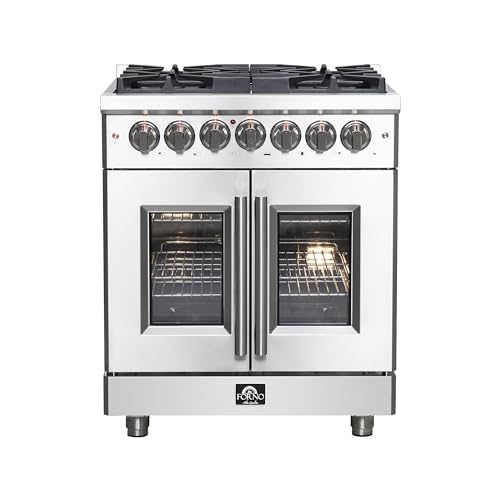
𝐕𝐄𝐑𝐒𝐀𝐓𝐈𝐋𝐄 𝐂𝐎𝐎𝐊𝐈𝐍𝐆 𝐎𝐏𝐓𝐈𝐎𝐍𝐒: Enjoy the flexibility of a powerful 20,000 BTU Sealed Dual-Ring Brass Burner, allowing you to achieve high-heat searing or delicate simmering control. The 4.32 Cu.Ft True Convection Oven with Air Fryer Kit, Wok Support, and Reversible Griddle expands your culinary possibilities.
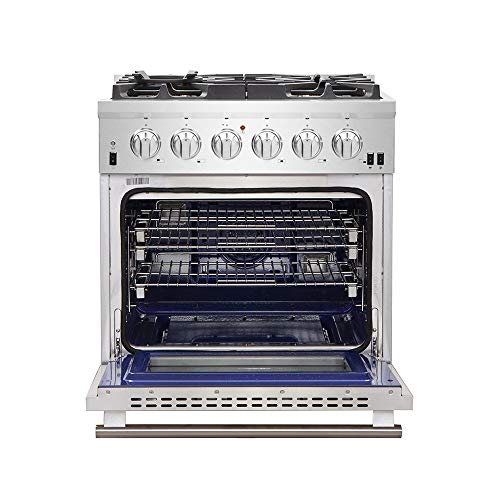
𝐂𝐎𝐎𝐊𝐓𝐎𝐏: The 5-burners are made from Italian solid brass and can output up to 20 000 BTU. Surface Burners Include five 20,000 BTU Max and 1,000 BTU Min, Dual Ring Burners For Maximum Cooking Control, Auto Flame Re-ignition on Surface Burners, Black Enamel Surface Plate for Easy Clean, Black Matte Cast Iron Continuous Burner Grates. Middle Burner BTU: 20,000, Front Right Left Burner BTU: 20,000, and Rear Right Left Burner BTU: 20,000
The Importance of Heat Distribution in Cooking
Understanding the importance of heat distribution in cooking can greatly enhance our culinary outcomes. When we achieve even cooking, we avoid undercooked or burnt sections in our dishes. Here’s how materials and design play a role:
- Cookware materials: Cast iron provides great thermal retention, while copper guarantees rapid temperature control.
- Cooking techniques: Proper heat mechanics lead to better flavor development through efficient browning and caramelization.
- Design efficiency: Thicker cookware bases heat more evenly, reducing temperature fluctuations for consistent results.
Cast iron’s excellent heat retention allows it to maintain stable cooking temperatures over extended periods, making it particularly effective for outdoor cooking environments where heat sources may vary.
Evaluating BTUs per Square Inch for Better Heat Management
How can we guarantee our grilling experience is as effective as possible? By evaluating BTUs per square inch, we can enhance cooking efficiency and achieve better heat management. Here are some key points to take into account:
- Ideal Range: Look for grills with 80-100 BTUs per square inch for superior performance.
- Calculation: Divide total BTUs by cooking surface area; this reveals the BTU comparison essential for even heating.
- Design Matters: A well-constructed grill retains heat better, balancing BTUs with efficiency.
- Heat Distribution: Even heat across the cooking surface leads to thorough cooking, while low BTUs might slow things down.
The Impact of Cooking Vessel Size on BTU Efficiency
When we consider BTU efficiency, the size of our cooking vessel plays an essential role in achieving ideal performance. Here’s how vessel size impacts our cooking experience:
- Vessel Efficiency: Larger vessels require more energy to heat up, impacting overall efficiency.
- Heat Absorption: The thermal mass of a larger vessel absorbs more heat, slowing down the cooking process.
- Heat Distribution: To guarantee even cooking, larger vessels may need higher BTUs, which can lead to increased energy consumption.
- Matching Size: Using a burner size that matches our vessel optimizes heating efficiency.
- Heat Exchanger Technology: Specialized heat exchanger designs can increase boiling efficiency by up to 30%, significantly reducing both fuel consumption and cooking times regardless of vessel size.
Ultimately, understanding these factors can help us choose the right vessels and BTUs, allowing for better control and reduced energy waste in our cooking practices.
Energy Efficiency and BTU Consumption: Myths and Facts
BTU ratings can often lead to confusion, especially when paired with misconceptions about their real-world impact on cooking efficiency. We need to clarify a few points regarding energy efficiency and fuel consumption:
- Higher BTUs: More heat output doesn’t always mean better cooking. It can lead to excess fuel use without improved results.
- Heat Control: Efficient cooking isn’t just about BTUs; it depends on burner design and heat distribution.
- Variable BTUs: Allow for precise control, reducing energy waste for different cooking tasks.
- Fuel Type Impact: Different fuels like propane and butane have varying vapor pressure levels that affect BTU output and performance in different temperature conditions.
Material and Design Features That Influence BTU Retention
Cooking efficiency is closely tied to the materials and design features of burners and cookware. When exploring BTU retention, consider:
- Burner Design: Cast iron burners offer excellent heat retention, ensuring even cooking temperatures. Conversely, brass burners provide precise flame control, enhancing thermal performance.
- Grate Material: Heavy-duty cast iron grates stabilize temperature, improving sear quality by reducing heat dissipation.
- Cooktop Surface: Durable materials like 304 stainless steel resist warping, aiding consistent BTU output and heat management.
- Burner Configuration: Multi-ring designs optimize heat distribution, aligning flame patterns with cookware for better energy use.
BTU Ranges for Different Cooking Styles
Understanding the right BTU ranges for various cooking styles is crucial for achieving ideal results in the kitchen. Here’s a quick guide to help us choose the right heat sources based on cooking techniques:
- Low heat (up to 5,000 BTU/hr): Great for simmering or melting chocolate.
- Medium heat (6,000–10,000 BTU/hr): Perfect for tasks like boiling, sautéing, and frying.
- High heat (11,000–20,000 BTU/hr): Best for searing and stir-frying; great for caramelization.
- Pro-style burners (18,000–25,000 BTU/hr): Designed for rapid boiling and intense cooking.
- Simmer burners (250–850 BTU/hr): Ideal for delicate tasks, like reducing sauces.
In short, selecting the right BTU guarantees our cooking is efficient and effective, no matter the technique!
Common Misconceptions About BTU Ratings
When it comes to BTU ratings, many of us often fall victim to common misconceptions that can cloud our judgment. Let’s clarify some of these BTU misconceptions:
- Higher isn’t always better: High BTUs can lead to uneven cooking and aren’t a guarantee of great performance.
- Power vs. performance: What matters is how heat is distributed, and flame control often trumps sheer BTU numbers.
- Context matters: Cooking style and kitchen layout are critical. Different techniques can make lower BTUs work effectively.
- Efficiency is key: Well-designed burners distribute heat evenly; it’s not just about the BTUs.
- Measurement variations: BTU ratings can differ based on appliance types; they aren’t universally comparable.
Selecting the Right BTU for Your Cooking Needs
Selecting the right BTU for our cooking needs can greatly enhance our kitchen experience. To make the best decision, let’s consider the following factors:
- General Use: Burners between 9,000–12,000 BTUs suit everyday tasks like sautéing and simmering.
- High-Heat Tasks: For boiling or stir-frying, a 15,000–18,000 BTU “power burner” is ideal.
- Low-Heat Tasks: Use 5,000–7,000 BTU burners for gently melting or warming food.
It’s crucial to match burner types to pan size and cooking techniques. A larger pan needs a higher-BTU burner for even heat distribution. Balancing BTU ratings with cookware guarantees great results and efficient energy use. With these guidelines, we can optimize our cooking, making every meal a success in the kitchen.
Recommended Products

120,000 BTU Multi‑Function Outdoor Kitchen Island. This all‑in‑one Outdoor Kitchen Island brings together a high‑performance Gas Grill, Pizza Oven, Rotisserie, Smoker Grill, Double Door Refrigerator, and Sink into one complete BBQ Grill Station. Perfect for Outdoor Cooking lovers who want a full Barbecue Island experience right in their own backyard.
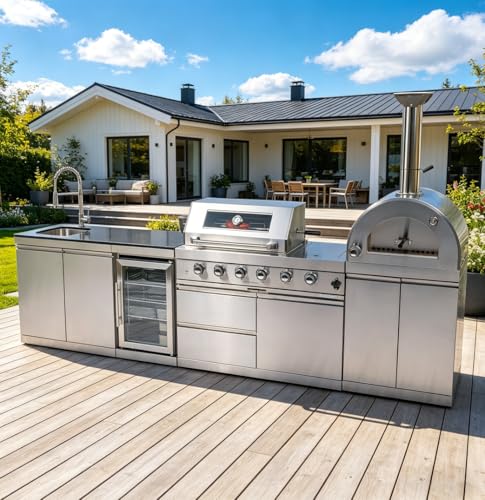
🔥 108000 BTU Multi-Function Outdoor Kitchen Island This Outdoor Kitchen Island combines a high-performance Gas Grill, Pizza Oven, Rotisserie, and Smoker Grill into one complete Barbecue Grill Station. Designed for outdoor cooking enthusiasts who want a full BBQ Island experience at home.

COMPLETE OUTDOOR KITCHEN SOLUTION - This 94-inch modular island delivers a fully equipped outdoor cooking station with a 44-inch 6-burner gas grill, infrared side burner, outdoor-rated refrigerator, sink, and ample storage cabinets and drawers in one integrated unit.
Frequently Asked Questions
Can BTU Ratings Vary Significantly Between Different Cooking Appliances?
Yes, BTU ratings can vary considerably between gas stoves and electric grills. We’ve noticed that while gas stoves typically feature higher BTUs for intense cooking, electric grills usually offer lower outputs for versatile, controlled cooking needs.
How Do Environmental Factors Influence BTU Performance?
We’ve seen how temperature fluctuations and humidity levels can play havoc with BTU performance, making our beloved grills feel like they’re fizzling out. It’s critical to take into account these environmental factors for ideal cooking adventures!
Are There Standard BTU Ratings for Specific Cooking Techniques?
Yes, there’re standard BTU ratings guiding techniques. For instance, low flames enhance simmering efficiency, while higher ratings cater to grilling techniques. We can select equipment based on our specific cooking needs to guarantee ideal results.
Do All Cooking Fuels Produce the Same BTU Output?
No, not all fuel types produce the same BTU output. Propane generally delivers more heat than natural gas. We should consider combustion efficiency too, as it impacts how effectively each fuel can be utilized for cooking.
How Does Altitude Affect BTU Effectiveness in Cooking?
Cooking at high altitudes feels like trying to brew coffee in a drizzle; without altitude adjustments, our cooking efficiency drops considerably. We need to tweak our methods to maintain effectiveness and guarantee great meals.


