As an Amazon Associate, we earn from qualifying purchases. Some links on this site are affiliate links at no extra cost to you. Our recommendations are based on thorough research and editorial judgment.


How Wind Affects Camp Stove Efficiency

Wind can considerably affect camp stove efficiency, leading to:
- Increased fuel consumption, sometimes doubling or tripling compared to calm conditions.
- Longer cooking times due to heat being pushed away by the wind.
- Flames that may be displaced, wasting heat and needing more fuel.
You may be interested



To counteract these challenges, we should consider using wind-resistant stove designs and well-placed windscreens. If we want to optimize our cooking experience in windy conditions, we can learn about effective strategies and solutions.
Key Takeaways
- Wind speeds above 3 mph can significantly increase fuel consumption, often doubling or tripling it compared to calm conditions.
- Concave burners and three-legged stove designs provide better stability and efficiency in windy environments.
- Using a windscreen can save up to 20% in fuel, enhancing overall stove efficiency by preventing heat loss.
- Higher winds can cool pots unevenly and displace flames, leading to wasted heat and increased fuel requirements.
- Effective windbreaks improve cooking conditions and efficiency, making them crucial for camping in windy areas.
Impact of Wind on Fuel Consumption
When we think about camping with stoves, we often overlook the impact of wind on fuel consumption. Here are some key points to take into account:
- Wind Speed Matters: Even at 3 mph, fuel consumption starts to rise. By 5 mph, we can see our fuel use double or triple compared to calm conditions.
- Heat Displacement: Wind pushes heat away from our pots, leading to longer boil times. This translates into higher fuel burn.
- Optimal Flame Settings: Low flames might work well in calm air, but as wind increases, medium flames often become more fuel-efficient, effectively heating the pot.
- Environmental Factors: Cold temperatures and high altitudes can exacerbate wind’s effect, requiring more thoughtful fuel planning.
- Wind Protection Features: Coleman’s WindBlock technology shields flames from wind interference, helping maintain consistent heat output and reducing unnecessary fuel consumption during outdoor cooking.
Stove Design for Wind Resistance
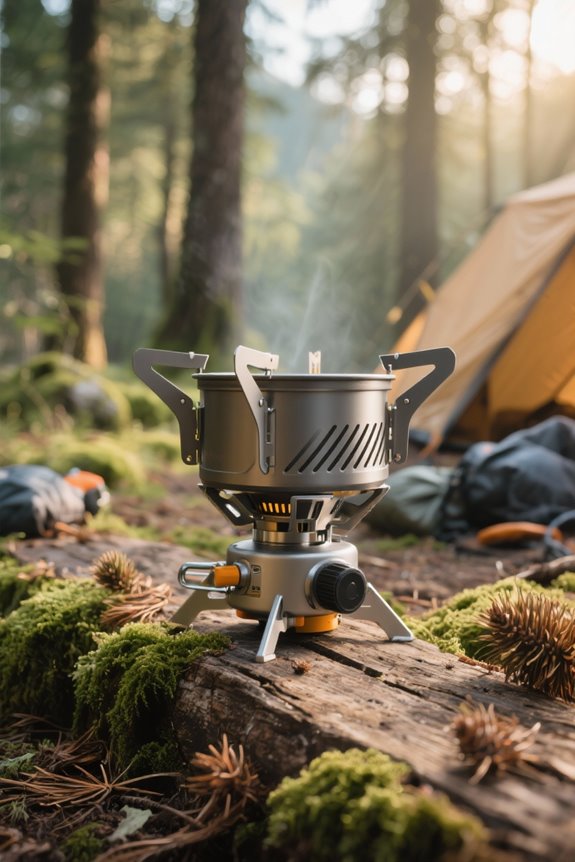
In order to achieve peak performance while camping, we need to take into account how stove design can help resist the harsh effects of wind. Here are some key elements to weigh:
- Burner Design: Opt for concave burners, like the SOTO WindMaster, that protect flames from wind.
- Individual Short Flames: These flames offer better stability in gusty conditions.
- Stable Support: Look for three-legged stoves, such as the SOTO Fusion Trek, which provide balance on uneven ground.
- Integrated Systems: All-in-one stoves like the MSR WindBurner excel in windy environments.
- Canister Placement: Stoves with remote canister systems, like the Primus Ulti, enhance performance when it’s cold and blustery.
- Broadened Burner Design: Stoves with broader burner designs perform better in windy conditions, as seen in the MSR WhisperLite Compact which features this wind-resistant construction.
Recommended Products

MATERIAL: Performance cotton-polyester blend canvas, using BCI cotton and recycled pet bottle poly fiber

TRUE 4-SEASON DOUBLE-LAYER HOT TENT - Hexagon uses a tent-within-a-tent design with a separate outer shell and inner tent divided by an insulating air gap to help reduce direct cold transfer in winter, manage condensation in wet weather, and reduce direct heat buildup in warm and hot weather.

Premium Breathable TC Cotton Canvas (210 GSM): The Coody 17.2 is made from durable 210 gsm TC fabric (65% polyester / 35% cotton). This breathable canvas improves airflow and significantly reduces condensation compared with synthetic tents while providing a more comfortable interior climate for long camping stays.
Efficiency of Windscreens

Stove designs can greatly enhance performance in windy conditions, but we won’t get the most out of our camp stoves without proper windscreens. Here are key aspects to evaluate:
- Windscreen materials: Choose between traditional foldable options and built-in mini windscreens for better efficiency.
- Heat retention: A well-placed windscreen can trap heat, potentially saving up to 20% in fuel. Models like the Soto can improve performance considerably.
- Design effectiveness: Engaging wider, squat pots helps capture heat more efficiently with windscreens, and dark pots further enhance heat absorption.
In windy conditions, an effective windscreen is crucial. It can make the difference between a disappointing boil and a successful meal, even with just a slight breeze. Just as collapsible designs enhance portability in outdoor gear, foldable windscreens offer convenient storage while providing essential wind protection when deployed.
Recommended Products
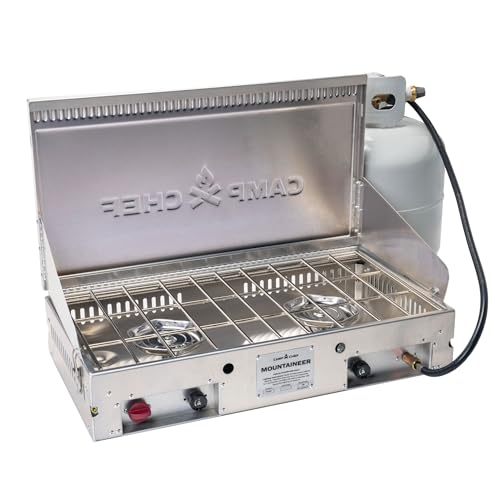
40,000 BTUs of Power: We're packing a ton of punch in our compact cooking systems. Two 20,000/Hr BTU cast aluminum burners deliver fast, even heat for reliable outdoor cooking.

Portable Dual-Burner: Works as a standalone two-burner camp stove or pairs with other JetLink-compatible stoves (sold separately) to create a full range; Cookware included
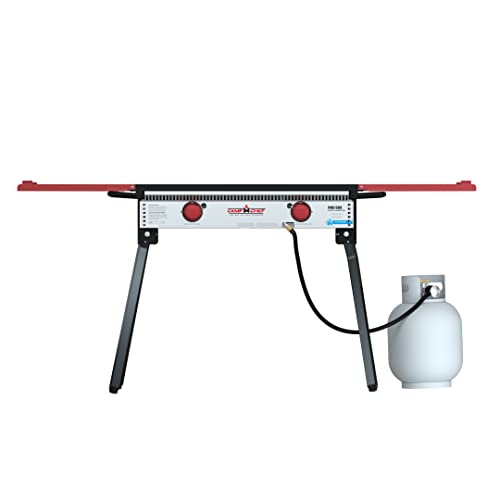
Camp Chef Deluxe 2-Burner Stove (PRO60X)
Flame Intensity vs. Wind Conditions

Understanding how flame intensity interacts with wind conditions is key to optimizing our camp cooking efforts.
- Flame Displacement: Increased wind speeds push flames laterally, reducing contact with the pot’s base. This means wasted heat and longer cooking times.
- Oxygen Balance: Flames need adequate oxygen to burn efficiently. At higher settings, restrictive windscreens may starve the flame or even extinguish it.
Practical Impact:
- In moderate winds, cooking becomes inefficient. We can observe that pot supports on the windward side may cool, signaling reduced efficiency.
- As wind speed increases, our fuel consumption can rise sharply, often requiring three times more fuel to achieve the same results as in calm conditions.
Mitigating strategies, like using windbreaks, can help drastically improve our cooking experience. Just as weather-resistant materials with high waterproof ratings protect camping gear from the elements, proper wind protection is essential for maintaining stove efficiency in challenging outdoor conditions.
Testing and Environmental Considerations
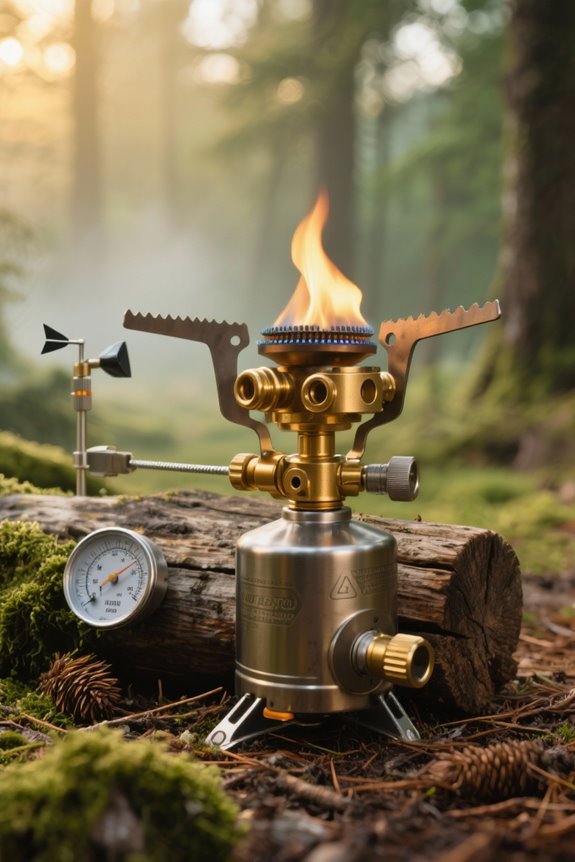
When we conduct stove testing, factors like wind speed and environmental conditions play an essential role in determining efficiency. Our testing methodologies include:
- Variable Wind Speeds: We assess performance at speeds from 1 to 5 miles per hour.
- Controlled Environment: Using fans like the Vornado 723 DC, we generate consistent wind for accurate results.
- Accurate Measurements: Tools like the Kestrel 1000 help us gauge wind speeds precisely.
- Stove Selection: We examine various models, including the BRS 3000t and MSR Pocket Rocket Deluxe, to understand their responses to wind.
Environmental factors, such as wind speed, can greatly impact fuel consumption, often doubling it in windy conditions. Testing under these parameters allows us to better understand stove efficiency in real-world scenarios. Stoves with flame control mechanisms help maintain consistent heat output and reduce fuel waste even in challenging wind conditions.
Practical Tips for Cooking in Windy Conditions
Cooking in windy conditions can be quite a challenge, but it doesn’t have to be frustrating. Here are some practical tips to enhance your outdoor cooking experience:
- Choose Wind-Resistant Stoves: Opt for models like the SOTO WindMaster, which tackles wind interference effectively.
- Utilize Natural Barriers: Set up your stove near rocks or trees to block the wind.
- Employ Windshields Carefully: Use floating windscreens or stoves with built-in protection; avoid traditional designs that can overheat fuel canisters.
- Adjust Cooking Techniques: Lower the flame for better fuel efficiency, and keep a steady boil to conserve energy.
- Select Appropriate Fuel: Consider isobutane/propane canisters for windy conditions, as they provide consistent performance and high vapor pressure even in challenging weather.
- Prioritize Safety Precautions: guarantee stability throughout cooking, especially with adjustable pot supports to prevent tipping.
These steps will lead to more efficient and safer cooking in windy environments.
Frequently Asked Questions
How Do Different Pot Materials Affect Stove Efficiency in Wind?
Different pot materials greatly impact stove efficiency in wind. Aluminum pots heat up quickly but cool faster, while stainless steel retains heat better, making it more effective under windy conditions. Choosing wisely enhances our cooking experience.
Can Altitude Impact Stove Performance in Windy Conditions?
Yes, altitude definitely impacts stove performance in windy conditions. With lower air pressure, combustion struggles, leading to inefficient fuel use. We should always consider these altitude effects when planning our outdoor cooking adventures.
What Are the Best Practices for Using Fuel Canisters in Wind?
As the wind howls around us, we’re mindful of fuel canister placement. Using wind barrier techniques, we create a shield that keeps our flame steady, ensuring safety and efficiency for our outdoor cooking adventures.
How Does Wind Direction Influence Stove Performance?
Wind direction greatly affects stove performance, impacting wind shield effectiveness and directional flame stability. By positioning our stove away from direct winds, we can greatly enhance heat retention and fuel efficiency while cooking outdoors.
Are Certain Stove Brands More Efficient in Windy Conditions?
When the wind howls, we find comfort in stove design that withstands it. In brand comparisons, the SOTO WindMaster and MSR WindBurner shine for efficiency, making our outdoor cooking adventures not just possible, but enjoyable.