As an Amazon Associate, we earn from qualifying purchases. Some links on this site are affiliate links at no extra cost to you. Our recommendations are based on thorough research and editorial judgment.

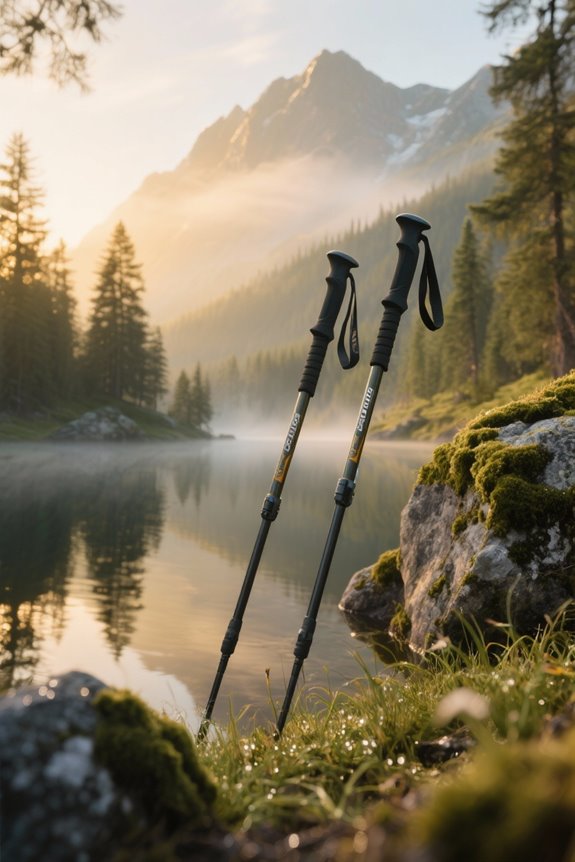
How Weather Affects Trekking Pole Performance

Weather affects trekking pole performance in several ways:
- Grip Materials: For instance, rubber grips hold up in wet conditions, while cork grips adapt well to moisture.
- Pole Durability: Aluminum resists corrosion but can bend; carbon fiber is lightweight but may splinter.
- Stability: Adjusting pole length based on uphill or downhill terrain helps maintain balance.
You may be interested


By understanding these factors, we can enhance our hiking experience, especially in variable weather. Let’s explore more about optimizing our gear!
Key Takeaways
- Weather influences grip comfort: rubber grips excel in wet/cold conditions, while cork grips adapt to moisture without absorbing it.
- Terrain challenges dictate pole adjustments: shorten poles uphill for leverage, lengthen downhill to maintain balance and reduce joint impact.
- Moisture and temperature affect pole durability: aluminum resists corrosion but bends, while carbon fiber is lightweight but can splinter in wet conditions.
- Sustained use in inclement weather requires regular maintenance: cleaning and lubricating mechanisms prevent corrosion and ensure reliable performance.
- Energy management is enhanced by proper pole use: poles reduce leg fatigue, improve posture, and absorb shock, especially in varying weather conditions.
Weather Influence on Grip and Comfort
When we consider how weather influences our trekking poles, grip and comfort become critical factors. The right grip material can enhance our experience on the trail. Here’s a quick reference:
- Foam grips: Lightweight, offer moderate thermal insulation, but can absorb moisture, leading to discomfort.
- Rubber grips: Durable and ideal for wet or cold conditions, they maintain warmth but may cause friction in heat.
- Cork grips: Comfortable and water-resistant, they adapt to our hands while preventing moisture absorption, making them perfect for long hikes.
In cold weather, grips with better thermal insulation like rubber keep our hands warm. In humid or wet conditions, cork’s moisture management helps maintain grip security without increasing blister risk. Choosing wisely can enhance our trekking experience. Similarly, when selecting replacement poles for tents, prioritizing lightweight and durable materials like aluminum or fiberglass ensures reliable performance across varying weather conditions.
Terrain Challenges Under Different Conditions

Weather not only affects how we grip our trekking poles, but also the terrain we’ll be tackling on our hikes. Here’s how we can adapt our poles under different conditions:
- Uphill: Shorten poles for more leverage, reducing strain on our shoulders.
- Downhill: Lengthen poles to maintain balance and reduce joint impact.
- Technical Terrain: Use poles as additional stability aids; they help us navigate challenging spots effectively.
- Traversing: Adjust poles to optimize stability; shorten the uphill pole and lengthen the downhill for better balance.
Understanding terrain adaptability is essential. Increased grip sensitivity on various surfaces helps us prevent slips and falls, allowing us to tackle any situation with confidence. In wet conditions, double cam twist locks provide enhanced security to prevent pole collapse during critical moments on challenging terrain. Let’s stay safe and enjoy the journey ahead!
Impact of Moisture and Temperature on Pole Durability

Understanding how moisture and temperature impact our trekking poles is essential for maintaining their durability and performance.
Moisture Effects:
- Aluminum poles resist corrosion but can bend under impact.
- Carbon fiber poles are lightweight but can splinter in wet conditions.
- Metal components may wear faster when exposed to moisture without proper care.
Temperature Resilience:
- Cold temperatures can make metal poles brittle and prone to breakage.
- Carbon fiber poles lose elasticity in the cold, increasing the snap risk.
- Rubber grips may become slippery; cork grips excel in wet conditions.
To enhance pole longevity, we should regularly clean and dry our trekking poles. Paying attention to these factors helps us enjoy our adventures without unexpected failures. Investing in poles with tungsten carbide tips provides superior grip across various terrains, regardless of weather conditions.
Energy Management and Joint Support in Varied Weather
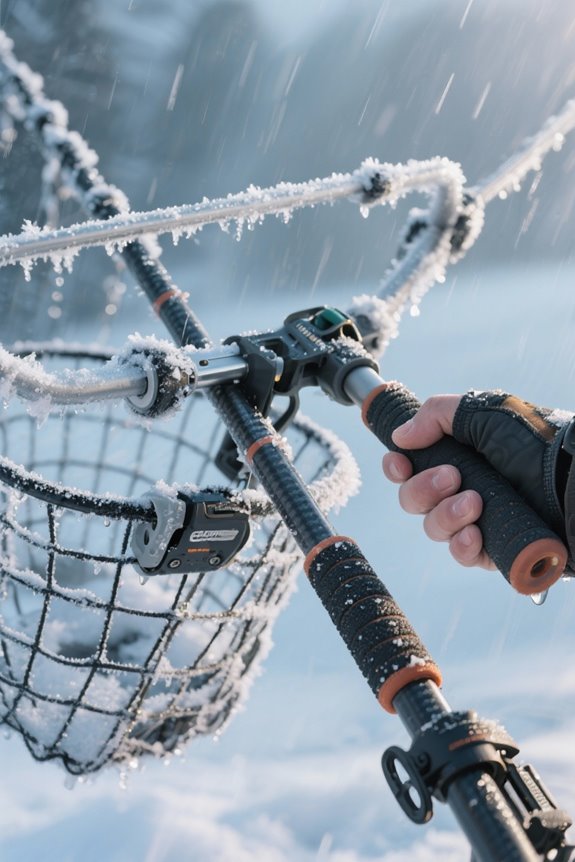
Trekking in varied weather means we have to be smart about how we manage our energy and support our joints. Here’s how we can do that:
- Energy Conservation:
- Trekking poles distribute weight, reducing muscle fatigue, especially in our legs.
- They help maintain posture, preventing energy-wasting slouching.
- Fatigue Prevention:
- Poles act like shock absorbers during descents, lowering stress on our knees and ankles.
- By improving stability, they decrease the risk of falls, which can sap our energy.
- Adapt to Conditions:
- Adjusting pole length based on the terrain optimizes stability.
- In wet or slippery conditions, poles provide essential balance, safeguarding us from energy-demanding slips.
- Materials like carbon fiber offer better shock absorption capabilities, which becomes especially important when navigating challenging weather conditions.
Adapting Pole Use to Changing Weather Conditions
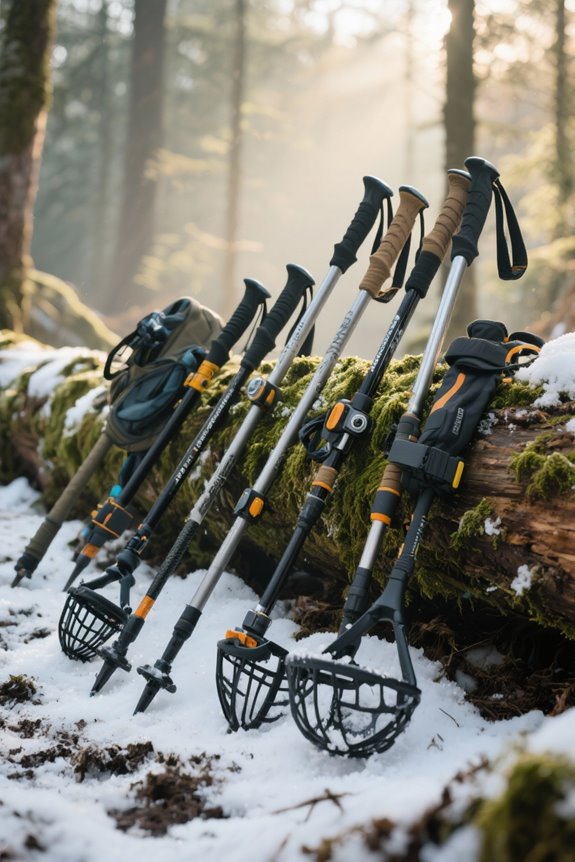
When we’re out on the trail, knowing how to adapt our trekking poles to changing conditions can make all the difference.
- Pole Adjustment:
- Uphill: Shorten by 5-10 cm for better leverage.
- Downhill: Lengthen by 5-10 cm to maintain balance.
- Traversing slopes: Shorten on the uphill side, lengthen on the downhill side.
- Grip Materials:
- Foam grips absorb sweat in warm weather.
- Cork grips keep warm and manage moisture in colder conditions.
- Rubber grips offer insulation and grip in wet, cold weather.
- Material Considerations:
- Weather resistance varies with different pole materials, so consider aluminum for durability in harsh conditions and carbon fiber for lightweight performance in milder weather.
With adjustable poles, we can quickly respond to these challenges, ensuring stability and comfort no matter what the terrain throws at us. Embrace these adjustments for a more enjoyable trekking experience!
Safety Considerations for Trekking in Adverse Weather
Adverse weather conditions can transform an enjoyable trek into a challenging ordeal if we aren’t prepared. To guarantee our safety, let’s consider the following:
- Storm Response: If thunderstorms loom, avoid open spaces. Seek shelter in sturdy buildings or mountain huts until the storm passes. Remember to wait an additional 30 minutes after the last thunderclap before resuming our trek.
- Lightning Awareness: Don’t stand under isolated trees or near water bodies, as they’re high-risk areas. Trekking poles provide limited protection during lightning strikes; our priority should be reaching safe shelter quickly instead.
- Hypothermia Risks: In cold, wet conditions, dress in synthetic or wool layers, stay dry, and recognize early hypothermia signs to take immediate shelter.
- Pole Maintenance: After trekking in extreme weather conditions like rain or snow, clean and lubricate your poles, and consider using rubber tips to protect the metal spikes from moisture damage and extend their lifespan.
Maintenance Strategies for Weather-Exposed Trekking Poles
After considering how to stay safe during challenging weather while trekking, it’s equally important to focus on how to care for our trekking poles. Here are some maintenance tips for weather-exposed poles:
- Clean and Dry: Remove dirt, mud, and snow using a damp cloth. Disassemble if needed, and dry all parts thoroughly to prevent moisture-related corrosion.
- Lubricate Mechanisms: Use a light silicone-based lubricant on locking mechanisms. Regularly check for wear after exposure to harsh conditions.
- Protect and Store: Use pole tip covers on rugged terrain. Store poles indoors to avoid rust and guarantee airflow using a mesh bag.
- Inspect Grips and Straps: Check moisture-wicking grips and padded straps for degradation, as these ergonomic features can wear down from prolonged exposure to rain, snow, and humidity.
Following these practices will extend the life of our trekking poles and enhance their performance during our adventures.
Frequently Asked Questions
How Do I Choose the Right Trekking Poles for Varying Weather Conditions?
To choose the right trekking poles for varying weather conditions, we must consider pole length for terrain changes and grip comfort for moisture management. This guarantees stability, control, and protection during our outdoor adventures.
What Materials Are Best for Trekking Poles in Extreme Weather?
For extreme weather, we prefer aluminum for its toughness over carbon, which can snap. As for grips, EVA foam offers warmth and durability, while cork adapts well but may degrade in demanding conditions. Choose wisely!
Can Trekking Poles Be Used Effectively on All Types of Terrain?
Yes, we can use trekking poles effectively on various terrains by adjusting their length for best support and stability. Their terrain adaptability enhances our balance, reduces strain, and improves our overall hiking experience, regardless of conditions.
How Often Should I Replace My Trekking Poles Due to Weather Exposure?
We should replace our trekking poles every few years, depending on durability factors and usage. Regular maintenance tips, like cleaning and lubrication, can extend their life in harsh weather, but watch for signs of wear.
Are There Specific Techniques for Using Poles in High-Wind Situations?
Just like seasoned sailors battling tempests, we use wind resistance techniques and stability adjustments to navigate high winds. Shorter strides, double planting, and a relaxed grip keep us grounded when gusts threaten to upend our progress.