As an Amazon Associate, we earn from qualifying purchases. Some links on this site are affiliate links at no extra cost to you. Our recommendations are based on thorough research and editorial judgment.


How Trekking Poles Improve Balance and Stability

Trekking poles can greatly improve our balance and stability during outdoor activities. They provide several advantages:
- Multiple Contact Points: More points of contact mean greater support.
- Weight Distribution: They help distribute our weight, reducing strain on legs.
- Posture Management: Engaging the upper body promotes an upright posture, lowering fall risk.
- Traction: Their tips enhance grip on uneven surfaces.
You may be interested


Using trekking poles, we can hike longer and feel more secure. And there’s more to discover about their benefits.
Key Takeaways
- Trekking poles create a wider base of support, lowering the center of mass and enhancing overall stability on rugged terrain.
- They decrease postural sway, allowing for improved balance and control while navigating challenging surfaces.
- With multiple contact points, two poles significantly increase stability, reducing the risk of falls during hikes.
- Poles help redistribute weight, relieving pressure on the knees and joints, which contributes to better balance and endurance.
- Adjustable locking mechanisms ensure poles remain secure during use, providing reliable support and stability throughout the hike.
Understanding Trekking Poles and Their Functionality
When we think about our hiking adventures, understanding trekking poles and their functionality is crucial for both safety and comfort. Here’s what we need to know:
- Pole Materials: Lightweight options like aluminum or carbon fiber balance strength with weight.
- Grip Design: Choices like cork, rubber, and foam offer different benefits for comfort and control.
- Locking Mechanisms: Twist locks are lightweight, but clasp locks provide secure adjustments, especially in varied weather.
- Pole Versatility: They can serve multiple functions, from stability to emergency gear.
- Ergonomic Shapes: Designed to fit our hands, they reduce fatigue.
- Weight Considerations: Lighter poles make for a better hiking experience.
- Terrain Adaptability: Interchangeable tips help us manage different surfaces.
- Pole Maintenance: Regular checks guarantee our poles function effectively.
- Collapsibility Features: Modern poles can collapse to under 15 inches, making them ideal for convenient packing and transport during travel.
Biomechanical Advantages of Using Trekking Poles

Trekking poles not only enhance our overall hiking experience but also provide significant biomechanical advantages that can make a noticeable difference on the trail. Here are a few key benefits:
- Wide Base of Support: They convert our two-legged stance into a four-legged one, lowering our center of mass for enhanced stability.
- Reduced Postural Sway: By minimizing postural sway, especially on challenging terrain, they improve balance and decrease fall risk.
- Distributed Weight: This feature evenly spreads weight, relieving leg strain and promoting stability.
- Improved Balance on Uneven Terrain: Trekking poles offer extra support, replicating the stability seen in four-legged animals.
- Enhanced Traction: Features like tungsten carbide tips provide excellent stability and traction across various terrains, further improving balance during trail running and hiking activities.
Enhancing Posture and Spinal Alignment

Enhancing our posture and spinal alignment can greatly change how we feel during and after our hikes. By incorporating trekking poles, we can:
- Boost posture awareness: The additional contact points encourage us to stand taller and engage our core.
- Increase spinal flexibility: With poles, we activate upper body muscles, contributing to a more erect spinal posture.
- Support core strength: Engaging our core while using poles helps stabilize our spine, reducing the risk of leaning forward.
- Improve gait symmetry: Trekking poles promote longer strides, aiding overall postural alignment during walking.
In essence, using trekking poles not only enhances our hiking experience but also assists in maintaining proper posture and spinal alignment, making each trek more enjoyable and sustainable. The ultralight design of quality poles, such as those weighing only 19.2 oz for the pair, enhances joint comfort and minimizes fatigue during long hikes while supporting proper body mechanics.
Weight Distribution and Joint Protection

Using trekking poles can greatly improve our hiking experience by addressing weight distribution and protecting our joints. Here’s how they help us:
- Redistribution of Weight: Poles take on about 20% of our total body weight, relieving pressure from our knees and legs.
- Optimal Pack Adjustment: They help evenly distribute pack weight, enhancing balance on steep and uneven terrain.
- Joint Protection: Shock absorbing poles minimize impact forces on our knees and spine, which decreases the risk of injuries and joint pain.
- Fatigue Reduction Strategies: By using our arms and shoulders, we save our legs for longer hikes, improving our endurance.
- Advanced Impact Absorption: Anti-shock technology can absorb up to 40% of impact forces, further protecting our knees, ankles, and wrists during extended treks.
Balance Improvements With Trekking Poles

Balance while hiking can be greatly improved by incorporating poles into our gear. Here’s how trekking poles enhance our balance and stability:
- Reduced Postural Sway: Poles help decrease swaying, especially on rough terrain.
- Increased Base of Support: The poles create a four-legged stance, improving stability.
- Improved Walking Posture: Better posture when using poles leads to enhanced balance during hikes.
- Enhanced Stability: Extra support points make traversing uneven ground easier.
- Impact Absorption: Advanced features like dynamic suspension systems can absorb up to 40% of impact, further enhancing stability and comfort on uneven terrain.
Recommended Products

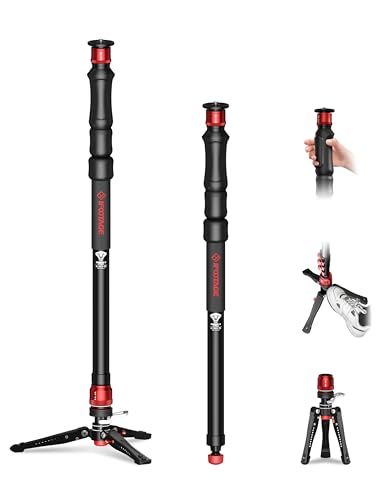
💡💡【One-Press Lifting Monopod】: Easily extend or retract the monopod with one hand— smoothly glide from 33" to 59.2" with just one hand while your other hand holds your gear. Ensuring you never miss a critical shot. Perfect for capturing fast-moving moments without delay.
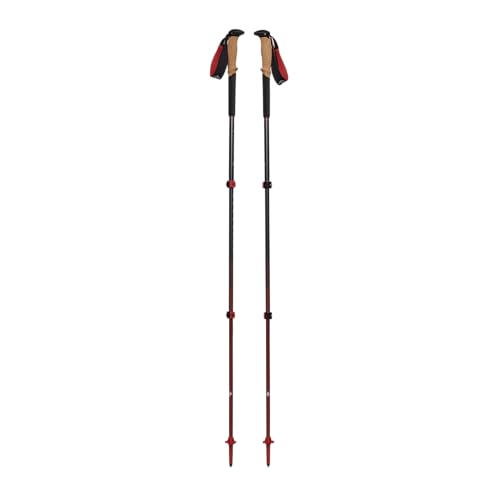
ERGONOMIC, TRAIL-READY DESIGN: Designed for comfort and stability on long hikes, backpacking trips, and mountain treks. The Pursuit Trekking Poles deliver balanced support and durability for all-season exploration.
The Role of Poles in Preventing Falls
When it comes to outdoor activities, the role of trekking poles in preventing falls can’t be underestimated. These versatile tools provide essential support through:
- Increased stability: Two poles offer four points of contact, enhancing balance on tricky terrains.
- Better posture: Engaging our upper body with pole types like adjustable or fixed varieties helps keep us upright.
- Controlled movements: With proper pole adjustments, we can manage our stride length and gait, reducing fall risk.
- Reliable locking systems: Double cam twist locks ensure your poles won’t collapse during use, maintaining consistent support on challenging trails.
Recommended Products

Now in Black | LEKI’s premium trekking poles redesigned with a completely black style for a sleek look. Previously known as the Black Series FX Carbon.

Completely Carbon & Collapsible | Ultralight trekking poles provide an adjustable length and collapsible packability.

HYBRID DESIGN - Carbon fiber upper section and aluminum lower sections provide weight savings over tradional full aluminum poles.
The Impact of Poles on Ground Impact Forces
Trekking poles can greatly alter the way we experience impact forces on our bodies during outdoor activities like hiking. Here’s how they make a difference:
- Reduced Ground Impact: Using poles can decrease vertical ground reaction forces by up to 12%. This means less pressure on our legs.
- Shock Absorption: Poles absorb part of the impact forces, reducing shock transmission to our lower limbs.
- Adjusted Weight Distribution: Weight shifts from our legs to our arms, lowering the load on joints, particularly in the hips and knees.
- Enhanced Stability: This redistribution not only lowers fatigue but can lower injury risks on tough terrain.
- Improved Traction: Poles equipped with tungsten carbide tips provide superior grip across various terrains, further enhancing stability and reducing the risk of slips that can increase impact forces.
Trekking Poles and Joint Health
While some might think trekking poles are just an accessory, they play an essential role in maintaining our joint health during hikes. Here’s how they help reduce joint strain and improve comfort:
- Load Reduction: Poles can decrease joint stress by 10-20% with each step, especially beneficial during downhill hikes.
- Support for Joints: They help redistribute weight from our knees and hips to the upper body, easing strain on lower extremities.
- Protection for Sensitive Joints: For those with osteoarthritis or joint pain, poles can provide discomfort reduction through unweighting effects.
- Stability: Increased trunk muscle activation offers joint stability, reducing the risk of injuries like sprains.
- Ergonomic Design: Features like moisture-wicking cork handles and padded straps further enhance comfort by reducing hand fatigue and preventing blisters during extended use.
Incorporating trekking poles into our hikes not only enhances comfort but remarkably benefits our joint health.
Recommended Products

ERGOBAUM 7G ERGONOMIC FOREARM CRUTCHES FOR ADULTS- Extensively designed to be the most comfortable and advanced forearm crutches for adults available, the ERGOBAUM 7G crutches are built for its users’ needs first. Ergobaum 7G premium design features combined provide an unparalleled level of comfort and ease that is unrivaled by any other product on the market. Expect your ergonomic forearm crutches and crutches accessories to provide safety, performance, comfort and style; they will move you. FSA/HSA eligible. If you've struggled with uncomfortable crutches, the Ergobaum 7G is the upgrade your body needs.

VERSATILE USE: Ta-Da chair series 1 PRO is a versatile product that simultaneously provides outdoor lovers with a seat for resting and a walking stick for support. This design, which instantly converts a walking stick into a chair with a snap, offers rest for tired legs and knees at a moment’s notice.

REHAB & RECOVERY. Urban Poling’s ACTIVATOR2 is a pair of premium-quality Nordic walking sticks designed by an occupational therapist & gerontologist specifically for rehab and long-term conditions.
Energy Expenditure While Hiking With Poles
Energy expenditure can be a key consideration when we’re out on the trail with our trekking poles. Here’s how they affect our energy dynamics:
- Hiking Intensity: While hiking with poles doesn’t noticeably increase our heart rate or effort during flat or uphill terrain, they do enhance movement efficiency.
- Downhill Walking: Using poles tends to increase energy expenditure, making that descent feel more strenuous.
- Uphill Benefits: On inclines, poles may reduce our perceived exertion without changing energy expenditure, allowing us to conserve energy.
- Strides and Speed: Poles can improve our gait, promoting longer strides, whether carrying a load or not.
- Weight Considerations: The choice between carbon fiber poles at approximately 140 grams and aluminum options around 316 grams can impact overall energy efficiency during extended treks.
Benefits for Specific Populations
Many people can greatly benefit from using trekking poles, particularly specific populations with unique needs.
Trekking pole benefits for various groups include:
- Elderly Adults: Improves balance, reduces fall risk, and decreases joint load, enhancing functional mobility.
- Individuals with Parkinson’s Disease: Enhances coordination, alleviates back pain, and promotes a normal gait pattern, improving quality of life.
- Obese Populations: Aids in balance, reduces impact forces on joints, and helps distribute weight evenly, encouraging physical activity.
- Individuals with Low Back Pain: Reduces lumbar spine load, promotes erect posture, and engages core muscles, providing temporary pain relief.
- Populations Carrying Heavy Loads: Improves balance, stability, and reduces fall risk when traversing challenging terrains.
Each of these population-specific advantages highlights the versatility of trekking poles in enhancing stability and overall movement. The shock-absorbing technology built into quality trekking poles further minimizes impact on joints, making them particularly beneficial for those with mobility challenges or existing joint concerns.
Techniques for Effective Use of Trekking Poles
Using trekking poles effectively can greatly enhance our hiking experience, especially when it comes to maintaining balance and stability across various terrains. Here are some key techniques to reflect upon:
- Pole Adjustments: Verify elbows are bent at 90 degrees on flat ground. Shorten poles uphill, lengthen them for downhill descents.
- Movement Synchronization: Alternate arm and leg movements—right pole with left leg, and vice versa. Avoid simultaneous movements to prevent stumbles.
- Pole Placement: Plant poles firmly; lean forward on uphill sections and use as brakes when descending.
- Stride Adjustments: Keep a shorter stride and widen our stance for stability on uneven terrain. Engage core muscles on climbs.
Recommended Products

Antishock Trek | Take the shock out of treks with this lightweight, adjustable, collapsible trekking pole featuring the Dynamic Suspension System.

For Elite Runner on Race Day | Ultralight, collapsible poles designed specifically for racing and competition.

Hit The Trail | LEKI’s premium trail running pole specifically designed for avid hikers and trail runners.
Practical Considerations for Selecting Trekking Poles
When selecting trekking poles, there are several practical considerations that can influence our hiking experience. Here’s what we should keep in mind:
- Pole Types: We can choose between aluminum for strength and affordability or lightweight carbon fiber, which absorbs vibrations better.
- Weight Matters: A lighter pole reduces arm fatigue, especially on long hikes. However, ultralight models might compromise durability.
- Adjustability: Adjustable poles let us customize height for different terrains. Lever-lock mechanisms are preferable for quick adjustments.
- Grip and Straps: Grips come in cork, foam, and rubber with varying comfort levels. Padded straps enhance hold without adding strain.
- Terrain Features: For rocky ground, stronger poles like aluminum are beneficial, and attachable baskets can help adapt to conditions.
Recommended Products

Cant and Pan 90ºCant & 360º Pan

【Cobra 3 Innovative invention patent 】Length adjustment pull knob,Anti-pinch ergonomics;Brand new foot design, Pedal locking control,bid farewell to squatting, automatic locking and unlocking can be realized while standing and adjusted with one knob.Rotation damping adjustment design,Adjust the damping size according to the demand, and the angle adjustment is smoother, the foot rotation is more flexible, say goodbye to stuttering, and can adapt to more shooting environments.

5-in-1 Modes: Effortlessly switch between Tripod Mode, Monopod Modes 1 & 2, Desktop Mode, and Trekking Pole Mode. Perfect for all shooting styles.
Long-Term Benefits of Regular Trekking Pole Use
Regularly using trekking poles can greatly enhance our hiking experience and overall physical well-being. The long-term benefits of this practice are significant:
- Improved Long-Term Mobility: Trekking poles encourage a natural walking pattern and promote better gait efficiency, which can enhance our mobility as we age.
- Injury Resilience: By reducing stress on our joints—especially during descents—we lower the chance of long-term injuries. The offloading effect is especially valuable for those with arthritis or joint concerns.
- Enhanced Endurance: Using poles distributes the effort, helping to reduce fatigue and allow us to hike longer.
- Greater Balance and Stability: Trekking poles support us on challenging terrains, improving our coordination and reducing fall risks.
Incorporating trekking poles into our regular hiking routine fosters these essential benefits, leading to a healthier, more enjoyable experience outdoors.
Frequently Asked Questions
Can Trekking Poles Be Used on Flat Terrain?
Absolutely, we can use trekking poles on flat terrain! The flat terrain benefits include reduced joint stress and engaging upper body muscles. Let’s employ proper trekking pole techniques for ideal balance and a more effective workout.
Are There Weight Limits for Using Trekking Poles?
Yes, there are weight limits for using trekking poles, typically around 20 kg per pole. We should always consider pole durability to guarantee safety and effectiveness, especially when carrying heavier loads or relying heavily on them.
How Do I Choose the Right Trekking Pole Height?
To choose the right trekking pole height, let’s consider our height and verify our elbows form a 90-degree angle. We’ll also factor in pole materials and grips for comfort during our adventures.
Can Trekking Poles Be Adjusted for Different Terrains?
Absolutely, trekking poles can be adjusted for different terrains. By making quick height modifications, we enhance our terrain adaptability, allowing us to enjoy a smoother trek. Did you know adjusting just an inch can improve stability considerably?
What Should I Look for When Buying Trekking Poles?
When buying trekking poles, we should consider material types for durability, the importance of pole features like adjustability and locking mechanisms, and the grip style that feels most comfortable during our adventures.