As an Amazon Associate, we earn from qualifying purchases. Some links on this site are affiliate links at no extra cost to you. Our recommendations are based on thorough research and editorial judgment.


How Ambient Temperature Affects Cooler Performance

Ambient temperature plays a vital role in cooler performance. Here’s how:
- Higher temperatures lead to a drop in cooling capacity by 30-50%.
- Energy efficiency declines as compressor loads increase.
- Insulation quality becomes essential for maintaining desired temperatures.
- Regular maintenance, like checking fans and coils, helps address performance issues.
You may be interested


Understanding these factors enables us to optimize cooling systems. There’s much more to explore about improving efficiency and reliability.
Key Takeaways
- Air-cooled systems experience significant efficiency drops, losing up to 75% performance at ambient temperatures of 38–40 °C.
- High ambient temperatures negatively impact liquid cooling effectiveness, weakening heat exchange and reducing overall cooling capacity.
- Elevated temperatures lead to increased compressor loads, driving up power consumption and operational costs.
- Cooling capacity can decline by 30-50% at temperatures around 60°C (140°F), resulting in performance degradation.
- Regular maintenance and proper ventilation strategies are crucial for maintaining cooler efficiency in high ambient temperatures.
Understanding Heat Absorption and Transfer
When we talk about how coolers work, it’s essential to understand heat absorption and transfer. Here’s a breakdown of key mechanisms in cooling systems:
- Heat Conduction: This is when heat moves through solids. Materials with high thermal conductivity, like copper and aluminum, are excellent for this purpose.
- Convection Methods: Natural convection occurs as heated air rises, while forced convection uses fans or pumps for stronger heat removal.
- Radiation Effects: This form is less significant in typical ambient conditions but crucial at higher temperatures.
- Evaporative Cooling: By using water’s latent heat, this technique can effectively reduce temperatures but requires careful humidity management.
Understanding these heat transfer principles is crucial when selecting insulation materials, as modern camping equipment often features waterproof materials with high resistance ratings similar to those found in quality outdoor shelters.
The Impact of Ambient Temperature on Cooling Systems

Understanding how ambient temperature influences cooling systems is essential for maximizing their efficiency. Here’s what we need to take into account:
- Air-Cooled Systems: These systems rely on ambient air to disperse heat. As temperatures rise, efficiency decreases. When ambient temperatures reach 38–40 °C, performance can drop by up to 75%.
- Liquid Cooling: While more effective, it still depends on air temperature. When it gets too high, heat exchange struggles, leading to suboptimal cooling optimization.
- Chillers: Placed outdoors, they must face ambient temperature swings that can affect output. High temperatures increase energy consumption unless we utilize variable-speed technology.
- Portable Coolers: Quality insulation becomes critical in high heat environments, as coolers like the Coleman Classic Series can maintain ice for up to 3 days even in temperatures reaching 90F.
To navigate these challenges, we need to mitigate the ambient influence and optimize our cooling strategies now and in the future.
Recommended Products
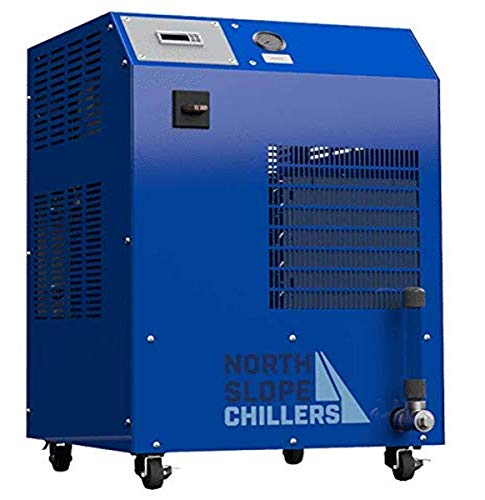
Freeze, North Slope's standard industrial chiller is an absolute workhorse

Product Parameters: 1500W(0.39mW) air cooled continuous laser cleaning machine is a powerful, efficient, and eco-friendly solution for industrial surface cleaning. It utilizes a high-performance laser and a smart control system, the laser rust remover delivers exceptional results with no damage to the substrate. Model: ALC-1500. Laser Power: 1500 W. Laser wavelength: 1080±10nm. Operation Mode: Continuous/modulated. Fiber Cable Length: 10m. Adjustable Scanning Width: 10-250mm. Input voltage: AC220V±10%. Cooling method: Air cooling. Laser Level: Class 1. Output Power: 0.39mW

Efficient Cooling for Workspaces: Cool-Space 400 Evaporative Swamp Cooler is ideal for workshops, garages, and studios up to 3,600 sqft (334 sqm). Cool-Space 400 Evaporative Cooler rapidly cools air by up to 33 degrees, depending on ambient conditions, with a 36-inch fan and airflow ranging from 6,400 to 9,700 cfm, ensuring efficient cooling for various spaces
System Design and Operational Limits
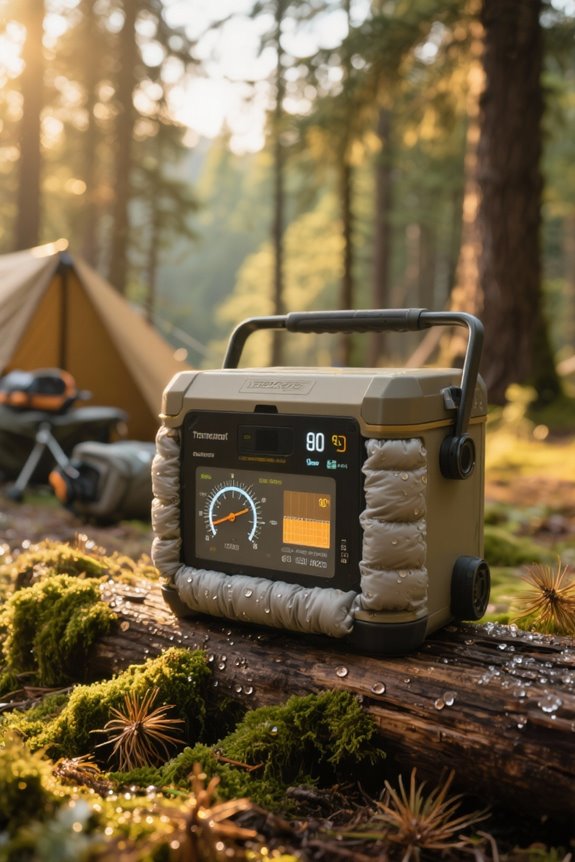
As we explore system design and operational limits, it’s clear that the relationship between ambient temperature and cooling performance is complex and multifaceted.
Key considerations include:
- Design Temperature Limits: We base our cooling system sizing on local outdoor design temperatures, guaranteeing equipment can maintain indoor comfort during peak heat.
- Heat Load Assessment: It’s vital for us to factor in the highest expected heat loads from ambient temperature changes.
- System Sensitivity: Increased ambient temperatures can lead to performance declines, so we need to design for flexibility.
- Operational Validation: We must test our systems against the worst-case scenarios to confirm reliability.
For example, high-quality rotomolded coolers can maintain ice retention for up to 5 days in temperatures of 90°F, demonstrating how proper insulation thickness can mitigate the effects of elevated ambient conditions.
Energy Consumption and Efficiency Loss
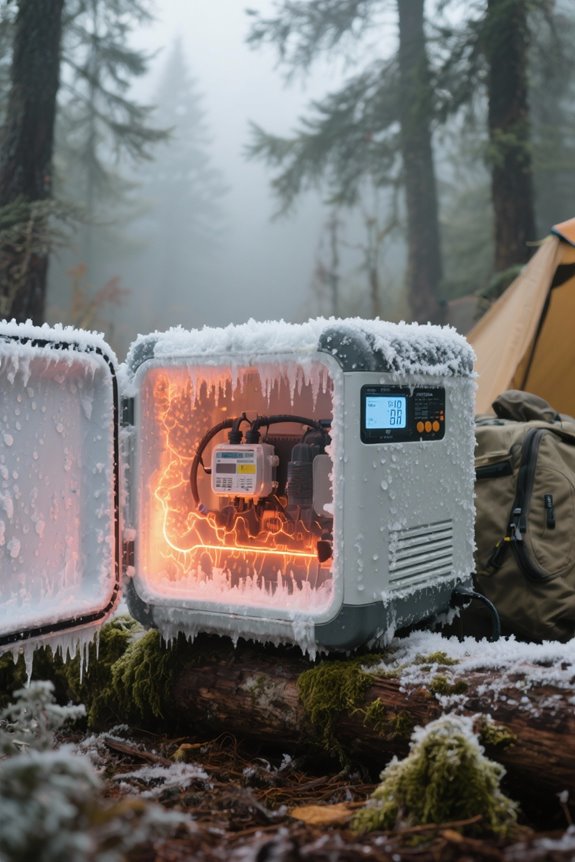
Ambient temperature plays an essential role in how efficiently our cooling systems operate, impacting both energy consumption and overall effectiveness.
As ambient temperatures rise, we experience:
- Increased power consumption: Compressors work harder, leading to higher compressor load.
- Reduced condenser effectiveness: Efficiency drops markedly, affecting chiller performance.
- Heightened operational costs: Elevated temperatures can result in up to 75% loss in cooling capacity.
To enhance energy efficiency, we must consider operational strategies such as:
- Utilizing variable-speed compressors that adjust based on thermal dynamics, offering energy savings of 20-40%.
- Prioritizing airflow management to maintain optimal temperature regulation.
Many portable electric coolers include battery protection features that help extend usage time and prevent excessive drain on your vehicle’s power system during extreme temperature conditions.
Recommended Products

Cooper & Hunter 48,000 BTU (4 Ton) Multi Zone Outdoor Condenser 24 SEER2, 230V, with (5) Wall Mounted Indoor Units 6,000 + 6,000 + 6,000 + 12,000 + 18,000 BTU. Smart Kits included to control the system from your smartphone.

Cooper & Hunter 36,000 BTU Multi Zone Outdoor Condenser 24 SEER2, 230V, with (4) Wall Mounted Indoor Units 9,000 + 9,000 + 12,000 + 18,000 BTU. Smart Kit included to control the system from your smartphone.

Cooper & Hunter 60,000 BTU Universal Floor/Ceiling, 19.5 SEER2 Ductless Mini Split AC/Heating system with Remote Control, Wall Thermostat, and 25FT Installation Kit. This system delivers powerful cooling and heating for large commercial spaces, open-plan areas, and wide residential zones
Variability in Cooling Technologies

While we explore various cooling technologies, it’s important to recognize the distinct advantages and limitations each method brings to the table. Here’s a quick overview:
- Radiative Cooling: Uses infrared radiation, effective even in direct sunlight.
- Thermoelectric Coolers (TECs): Move heat using electricity, can cool below ambient temperature.
- Evaporative Cooling: Relies on evaporation, commonly utilized in textiles.
- Air Cooling: Limited to ambient temperature, efficiency drops in high heat.
- Liquid Cooling: Transfers heat efficiently, ideal for electronics.
Understanding these cooling methods involves grasping thermal dynamics. Each technology adapts differently to ambient conditions, affecting performance. We’ll benefit from leveraging these cooling techniques based on specific needs and environmental factors. Recognizing their variability helps us make informed choices. For outdoor applications, insulation quality remains critical, as high-performance coolers can maintain ice retention for up to 5 days even in 90°F temperatures.
The Role of Air Density in Heat Transfer
Air density plays a significant role in how effectively cooling systems can transfer heat. When air density decreases, we encounter issues with convective heat transfer. Here’s how it affects our cooling systems:
- Mass Flow Rate: Lower air density means less mass is moved per volume, reducing heat dissipation.
- Convective Heat Transfer Coefficient: As density drops, this coefficient decreases, impairing cooling efficiency.
- Altitude Impact: Higher altitudes have lower density, weakening natural convection’s buoyancy forces, which aids cooling.
- Forced vs. Natural Convection: While forced systems maintain airflow, the actual mass of air declines, impacting overall cooling performance.
Understanding these air density effects is particularly important when selecting insulated coolers, as vacuum insulation reduces heat transfer more effectively than standard foam insulation by minimizing convective heat loss.
Cooling Performance Degradation at High Temperatures
As temperatures rise, we often see a corresponding decline in cooling performance, which can greatly impact our cooling systems. Increased ambient influences lead to:
- Thermal efficiency dropping, especially past 40°C (104°F).
- Cooling capacity reduces considerably, sometimes by 30-50% at 60°C (140°F).
- Degradation rates are measurable, with an average of 3-7% decline due to temperature limitations.
These effects push components to their performance thresholds, straining their resilience. When facing high ambient conditions, reliability factors weaken, accelerating wear and potentially leading to equipment failure. Modern 12-volt compressor coolers demonstrate this challenge, as units that typically cool from 68°F to 32°F in 15 minutes under normal conditions may experience significantly extended cooling times when operating in extreme heat. As we adapt our systems, we must understand these challenges and seek innovative solutions to enhance performance despite the heat. Successfully managing cooling requires us to acknowledge these degradation aspects in our planning and operation strategies.
Recommended Products

Up to 20% more fuel efficient than leading competitors, this 22-kilowatt generator provides 22,000 watts of continuous power on propane and 19,800 watts on natural gas, with no refueling, no manual operation, and no extension cords needed

Non-Contact Cleaning Technology: The air cooled cleaning machine utilizes advanced laser cleaning technology, offering non-contact cleaning that ensures no damage to substrates like metal and more. This laser cleaning machine is perfect for rust removal, paint stripping, and oil stain cleaning without the need for abrasive materials or harsh chemicals. The process is highly effective for industrial applications, including automotive repairs and machinery maintenance.Class 2 Output Power 0.874mW

Handles Even the Big Appliances: Run major home appliances with 7200W of rated power (14,400W surge). Supports both 120V and 240V for powerful more devices, even a 5-ton AC for comfortable indoor temperatures or a water heater for a hot shower.
Maintenance Practices for High Ambient Conditions
To maintain ideal cooling performance in high ambient conditions, it’s crucial to adopt consistent maintenance practices. Here’s what we should focus on:
- Regular Inspections: Schedule frequent checks of cooler components, like fans and coils, to catch issues early.
- Component Cleaning: Make certain that we clean radiators and fans regularly, promoting optimal airflow and heat transfer.
- Electrical Checks: Inspect wiring for damage or wear; secure connections are essential.
- System Flushing: Periodically flush out the cooling system to remove debris.
- Calibration of Controls: Regularly calibrate thermostats to make sure temperatures are preserved efficiently.
- Cooler Storage: When not in use, store coolers in a cool, dry place to prevent material degradation and ensure TempLock insulation technology maintains its effectiveness for future outings.
Recommended Products

Air Conditioner: 4th Generation DIY mini split air conditioner equipped with a low refrigerant alarm to prevent costly repairs and air filter cleaning and replacement alerts to ensure optimal air quality and efficiency

High-Efficiency Cooling Chiller: Equipped with a robust 1HP 2600W compressor, this cold water chiller delivers exceptional performance-cooling 80 gallons of 70F water down at a rate of 5F per hour. Outpaces traditional models by 3x for cold plunge recovery at home, the gym, or outdoor wellness zones

Complete 1HP Cold Plunge System – Chiller + 120Gal Round Tub: This all-in-one cold plunge recovery kit includes a high-performance 1HP cold plunge chiller with external filter and pump, paired with a 120-gallon PVC ice bath tub. Delivered in 2 separate packages for easy handling. Perfect for athletes, fitness enthusiasts, and wellness seekers.
Real-World Performance Challenges
Real-world performance challenges can greatly impact how well cooling systems function, especially under extreme conditions. When ambient temperatures rise above ideal levels, we may see significant reductions in cooling capacity, sometimes by as much as 75%. This is primarily due to:
- Decreased Temperature Differential: High ambient temperatures reduce the efficiency of heat transfer.
- Component Stress: Key parts like compressors and condensers face additional strain, potentially leading to malfunctions.
- Design Considerations: Systems should be designed for environment adaptation, staying effective in varying conditions.
To tackle these challenges, we should prioritize performance enhancement. This means considering local climate patterns and using adaptive technologies. High-efficiency compressors can significantly improve cooling performance and energy efficiency, even when operating in demanding environmental conditions. Ultimately, adequate planning guarantees that cooling systems maintain their effectiveness and longevity, even in tough conditions.
Effects on Energy Efficiency
Understanding how ambient temperature influences the efficiency of cooling systems is key to optimizing performance. Ambient temperature impacts our system’s energy efficiency and thermal performance. Here’s how:
- High temperatures cause compressors to work harder, increasing energy demand.
- Inefficient heat transfer occurs in hotter conditions, leading to more energy usage.
- Cooler environments improve heat dissipation, allowing for less energy consumption.
- Variable-speed compressors help reduce energy waste by adjusting to changing conditions, saving 20–40% in energy costs.
- Oversized systems struggle with efficiency when conditions vary, leading to unnecessary cycling.
- Similar to how weather resistance ratings determine a tent’s ability to withstand harsh conditions, ambient temperature resistance affects how well cooling systems maintain efficiency across varying external temperatures.
Proactive Strategies for Enhancing Cooling Performance
As we look for effective ways to enhance cooling performance, incorporating proactive strategies can make a significant difference. Here are some approaches to reflect upon:
- Optimize Ventilation: Utilize cross-ventilation by properly placing vents and windows to enhance airflow and reduce stagnant hot zones.
- Cooling Materials: Explore radiant and phase-change cooling techniques, like cool roofs and thermal mass, to improve thermal comfort.
- Strategic Shading: Plant deciduous trees and use outdoor shading to block intense sunlight and reduce heat gain.
- Landscape Design: Create cooler microclimates with vegetation, avoiding materials like artificial turf that can raise temperatures.
- Airflow Management: Employ fans for effective cooling at night and in the mornings, enhancing efficient indoor temperature management.
Together, these strategies promote energy resilience and effective indoor cooling.
Recommended Products

【Innovative Double Roof System】 - 14x24 Gazebo features a durable 16mm thick resin lower roof and a galvanized steel upper metal roof—the first of its kind in the market. This design significantly enhances snow load capacity (up to 35lbs/sq.ft vs. standard 22lbs/sq.ft), reduces rain noise, improves heat insulation in winter (better for hot tubs), and prevents deformation during shipping for this hard top gazebo.

Galvanized Steel Roof: The hardtop gazebo features a fade-resistant and rust-resistant galvanized steel top with a frame sturdy enough to withstand wind and snow, shielding you from sunlight, uv, rain and snow, providing unmatched stability for your outdoor recreation.

ENERGY-EFFICIENT COOLING SOLUTION: The QA-Deluxe 5500 whole house fan offers superior energy efficiency, reducing reliance on traditional air conditioning and lowering utility bills. Enjoy a comfortable indoor environment with effective air circulation and reduced temperatures.
The Importance of Temperature Gradients
Temperature gradients play an essential role in the effectiveness of cooling systems, especially when we consider their impact on performance and efficiency. Here’s why understanding these gradients is crucial:
- Complex Challenges: They complicate heat dissipation in high-density systems.
- Material Choices: Coolant selection and materials must withstand expansion and contraction.
- Environmental Integration: We can draw from geothermal or oceanic gradients to boost cooling.
- Component-Specific Needs: High-heat components, like processors, require tailored cooling strategies.
- Dynamic Adjustments: We should monitor thermal interfaces and adapt our systems to ambient conditions.
Long-Term Reliability and Component Wear
Cooling systems interact closely with the ambient environment, impacting the long-term reliability and wear of their components. Consider the following key points:
- Component Longevity: Every 10°C rise in temperature may halve component life, although this doesn’t apply universally.
- Thermal Degradation: Higher temperatures accelerate chemical reactions, leading to increased wear and eventual failure.
- Specific Failure Mechanisms: Different components have unique responses to heat, necessitating tailored reliability models.
- Energy Impact: As temperatures rise, not only do efficiency levels drop, but reliability also suffers due to increased condensing pressures.
Frequently Asked Questions
How Can Ambient Temperature Affect Energy Costs in Cooling Systems?
Higher ambient temperatures increase energy costs for cooling systems, as they work harder to maintain comfort. By enhancing energy efficiency, we can mitigate cost implications, helping us save money and reduce our overall energy consumption.
What Are the Signs of Cooling System Overheating in High Temperatures?
We can spot overheating indicators like a rapid gauge spike or coolant leaks when thermal stress hits. If we notice odd engine noises or localized hot spots, it’s time to check our cooling system closely.
Can I Use a Cooler Outside Its Recommended Temperature Range?
We can certainly face cooler limitations when using it outside the recommended temperature range. In temperature extremes, it struggles to maintain effectiveness, risking spoilage and diminished quality. Let’s always prioritize ideal conditions for our cooler’s performance.
How Do Different Cooling Technologies Compare in Extreme Heat?
When the heat’s on, it is understood the adage, “Necessity is the mother of invention.” In extreme heat, technologies like evaporative cooling and portable air conditioning show varied efficiency, but liquid cooling remains the top performer overall.
What Regular Maintenance Is Crucial During Heat Waves?
We can’t overlook regular cooler cleaning and fan maintenance during heat waves. By ensuring both are in top shape, we’ll enhance efficiency and reliability—key for keeping our environment comfortable when temperatures soar.


