As an Amazon Associate, we earn from qualifying purchases. Some links on this site are affiliate links at no extra cost to you. Our recommendations are based on thorough research and editorial judgment.


The Impact of Cooler Loading Techniques on Ice Retention

When we load our coolers properly, we can greatly enhance ice retention. Here’s how:
- Start with large ice blocks at the bottom.
- Aim for a 2:1 ice-to-contents ratio.
- Fill gaps with towels to minimize warm air pockets.
You may be interested


These techniques not only create a cold microclimate but also reduce thermal exchange. Tightly packed coolers guarantee better insulation. By following these tips, we can keep our ice colder for longer. If curious, more techniques await!
Key Takeaways
- Filling coolers with a 2:1 ice-to-contents ratio optimizes cooling performance and extends ice retention.
- Starting with a solid ice base and layering food creates an efficient cooling structure and enhances thermal mass.
- Reducing airspace by tightly packing contents prevents warm air entry, maintaining a stable cold microclimate.
- Using towels or rags to fill gaps eliminates air pockets that can accelerate ice melting.
- Minimizing lid openings keeps cold air inside, significantly improving overall ice retention duration.
Understanding Ice Retention in Coolers
When it comes to understanding ice retention in coolers, it’s essential to grasp how different types of ice perform. Our ice durability analysis reveals that solid block ice outlasts chipped ice and ice-water slurries. Here are key insights:
- Solid block ice retains cold longer due to slower melt rates.
- Using frozen water bottles in rotomolded coolers can extend cold time by a significant 37 hours.
- Cooler material impact is apparent; injection-molded coolers show less stability with chipped ice, sometimes exceeding 6°C.
- For optimal performance, aim for a 2:1 ice-to-contents ratio when packing your cooler.
The Importance of Cooler Insulation
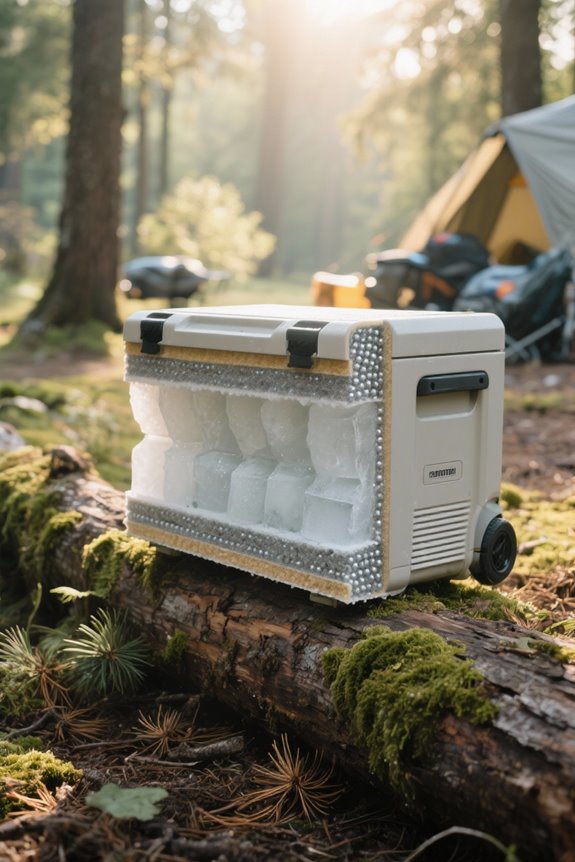
While we might take coolers for granted, their insulation is crucial for maintaining temperatures, and understanding its significance can enhance our outdoor experiences. Here are key points about cooler insulation:
- Insulation Materials: Common options include Styrofoam, polyurethane foam, and vacuum insulation.
- R-Value Importance: Higher R-values signify better insulation. Styrofoam has an R-value of 5 per inch, while vacuum insulation offers the best performance, maintaining ice for up to 10 days.
- Thickness and Density: Thicker insulation improves R-value, but compression can reduce effectiveness.
- Heat Transfer Modes: Insulation reduces conduction, convection, and radiation, keeping coolers effective.
Understanding these factors helps us choose the right cooler to guarantee longer ice retention during our adventures. For those seeking alternatives to traditional ice-based cooling, portable electric coolers offer consistent temperature control without the need for ice replenishment. Proper insulation is fundamental for maximizing our experience outdoors.
Types of Coolers and Their Ice Retention Capacities

Understanding the various types of coolers and their ice retention capacities is essential for anyone looking to keep their food and drinks cold during outdoor adventures. Here’s a breakdown:
- Rotomolded Coolers: Best for ice retention, lasting 5–9 days. Examples include Yeti and Bison.
- Injection Molded Coolers: Affordable and lighter, but ice retention is only 2–5 days. Brands like Coleman and Igloo fall into this category.
- Soft-Sided Coolers: Highly portable with limitations, usually holding ice for just 1–3 days, suitable for short trips.
- Specialty Coolers: Designed for extreme conditions, ice retention can exceed 10 days, but these are costly and bulkier.
Choosing the right cooler depends on your specific needs for ice retention and portability. The Igloo Marine Ultra employs effective foam insulation to maintain ice for up to 3 days even at temperatures reaching 90°F.
Recommended Products

The Haul is the first-ever YETI cooler on wheels. Perfect for taking the Tundra's legendary toughness and unmatched insulation power the extra mile
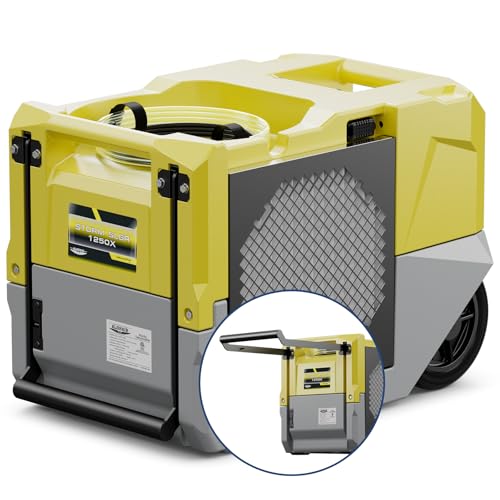
Commercial, Industrial, And Personal Use: Ideal for removing damp and moisture from Flood & Restoration, Carpet Cleaning, Basements/Cellars, Laundries, De-Flooding, up to 3,000 sq. ft... Built-in Pump. Drying work hard overnight or continuously for days at a time without you worrying about it.

The YETI Tundra 125 is your go-to ice chest, it offers ample space to hold two quartered deer or several limits of redfish, snapper, or trout
The Role of Coolant Types in Maintaining Temperature

Coolant types play a crucial role in maintaining temperature, especially for coolers that store food and drinks during our outdoor adventures. Here’s what we need to reflect on:
- Glycol-based coolants: Ethylene glycol mixes efficiently lower freezing points, but if concentration is too high, coolant effectiveness suffers due to reduced heat transfer.
- Water: It has the highest specific heat capacity, making it great for heat removal, but it freezes quickly, affecting ice retention.
- Special additives: Corrosion inhibitors and pH buffers enhance thermal stability, ensuring our coolants perform consistently.
Balancing these factors helps us optimize our cooler’s performance. The right choice of coolant can greatly influence both temperature maintenance and how long our ice lasts, making our adventures more enjoyable. Many outdoor enthusiasts favor ice packs over traditional ice for less mess while maintaining effective cooling performance.
Recommended Products

Reduce Freight & Storage Costs: Stop wasting valuable warehouse space and inbound freight costs on bulky gel packs. These ice pack sheets for coolers ship and store completely flat, thin, and remarkably light. You add the water weight only when you are ready to freeze and use them, making them a highly cost-effective alternative.
Long Lasting Ice Pack Sheet: Ice sheets for coolers stay flexible when frozen and are great for shipping. Soak, dry off, freeze, then use ice pack sheets, which hold 25 times their weight in water, expanding to a flexible frozen ice pack about 1 inch thick, holding in water as they melt to prevent a soaking watery mess.

2 ply Techni-Ice stays frozen longer than ever before
Combining Frozen Water Bottles and Cubed Ice
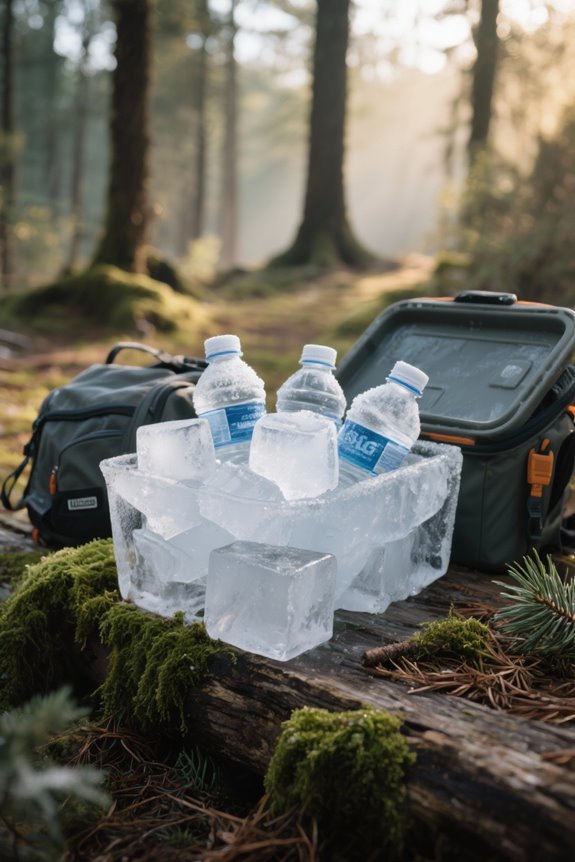
When we’re packing coolers for our adventures, combining frozen water bottles and cubed ice can greatly enhance ice retention and optimize temperature control. Here’s how to do it effectively:
- Bottom Layer: Place frozen bottles against the cooler’s bottom and sides. They act as solid ice blocks, melting slowly.
- Rapid Chill: Add cubed ice on top or around the food for quick cooling. This fills gaps, ensuring better contact.
- Avoid Air Pockets: Fill any openings with cubed ice or towels to minimize airflow.
- Layering Strategy: Start with frozen bottles, then add provisions, followed by cubed ice on top.
- 12 Volt Alternative: For extended trips where ice replenishment isn’t feasible, consider that 12 volt compressor coolers can maintain temperatures as low as -8°F without requiring ice at all.
Techniques for Pre-Chilling Your Cooler
Pre-chilling our cooler can greatly improve its ice retention and keep our food and drinks at safe temperatures longer. Here are some effective pre chill methods:
- Ice Pre-Chill: Fill the cooler with ice for 24 hours before packing. This helps lower the internal temperature substantially.
- Dry Ice: Utilize about 10 lbs of dry ice for a deep chill. Make sure there’s ventilation to prevent pressure buildup.
- Chill Contents: Pre-chill items to fridge temperature, reducing the heat load inside the cooler.
- Cool Environment: Store cooler in a cool place before use for enhanced efficiency.
- Use Cooler Accessories: Solid ice packs or block ice can maintain low temperatures longer than regular cubes.
When selecting a cooler for extended trips, consider models with thick insulation ranging from 1.5 to 3 inches, as this feature significantly enhances ice retention capabilities beyond pre-chilling techniques alone.
Implementing these strategies helps us maximize our cooler’s performance and extend ice life.
Recommended Products

54 Cu.ft Capacity: With 54 cubic feet of storage and a 72” W upright structure, commercial freezer refrigerator combo easily accommodates large quantities of food, beverages, and ingredients without sacrificing floor space. This generous capacity paired with the space-saving design means you get maximum storage while keeping the unit compact for most commercial or home spaces.

Intelligent APP Control: This commercial freezer features a built-in wireless function, enabling remote supervision of it and food preservation from computers, tablets, mobile phones. Easily manage auto defrost, adjust temperature, and get alerts (unit failure, open doors, temperature change) via text/email notifications, and avoid increased maintenance costs caused by the expansion of faults

Efficient Cooling: This commercial refrigerator combines high-performance cooling with digital temperature display to keep food fresh while saving energy. With a 32℉ to 50℉ (0℃ to 10℃) range and smart digital control, it easily adapts to diverse storage needs
Optimizing Cooler Loading for Maximum Efficiency
Having established methods to pre-chill our cooler, we can now focus on optimizing how we load it for maximum efficiency. Here are key strategies:
- Ice Layering: Start with large ice blocks at the bottom; they last longer. Then add cold-tolerant items, finishing with fresh cubed ice on top.
- Air Circulation: Fill gaps with soft materials like towels to limit airflow and prevent warm pockets from forming, which accelerates ice melt.
- Ice-to-Contents Ratio: Aim for a 2:1 ratio—two-thirds ice, one-third provisions. This balances cold mass with the warming load.
- Seal Enhancement: Ensure airtight seals to minimize air exchange, which is crucial for maintaining ice retention performance in high-temperature conditions.
Recommended Products

Makes 520 lbs of 7/8" x 7/8" x 7/8" dice size ice cubes per day!

Durable Material: This square cold plunge is made of Canadian Red Cedar Wood. It is sturdy and durable, gets more beautiful the more you use it, and gives off a woodsy scent. Stainless black steel weatherproof frame with an extra durable coating to withstand the elements & enhanced with the beauty of a wood deck–last in all settings

Temperature Management Within the Cooler
Managing temperature within a cooler isn’t just about loading it up with ice; it’s a science that can greatly extend the life of our perishable items. Here’s how we can optimize cooling dynamics:
- Insulation Matters: High-quality rotomolded coolers trap cold air and minimize heat transfer, keeping temperatures steady.
- Pre-Chilling: Cooling the cooler and its contents before use reduces temperature fluctuations, helping our ice last longer.
- Air Management: Minimizing lid openings prevents warm air entry, as each opening increases temperature rapidly.
- Tight Seals: Silicone gaskets help maintain the cold environment, delaying ice melt considerably.
- Insulation Thickness: Coolers with thick insulation liners of 8mm or more provide optimal temperature retention for extended periods.
The Effects of Air Space on Ice Melting
When we think about ice melting in a cooler, one crucial factor often overlooked is the amount of air space present. Here’s how it affects our ice retention:
- Air Pockets: Large empty spaces allow warm air to enter, ramping up thermal exchange and hastening ice depletion.
- Cooling Efficiency: When we pack our cooler densely, we reduce airflow and enhance insulation effectiveness.
- Cold Microclimate: Air space can break this, making it harder to maintain a cold environment.
- Airflow Management: We’ve seen that minimizing cooler openings preserves cold air, reducing unnecessary thermal exposure.
To prolong ice life, we should keep our coolers tightly packed, limit empty space, and utilize efficient airflow management strategies. By doing so, we create a more effective thermal barrier against heat! Quality foam insulation works hand-in-hand with proper packing techniques to maximize ice retention performance across different cooler models.
Leveraging Thermal Mass for Longer Ice Life
Keeping ice in a cooler longer relies heavily on how we leverage thermal mass. By understanding the ice properties and thermal dynamics at play, we can greatly enhance our cooling efforts. Here’s how we can optimize ice retention:
- Increase Ice Volume: More ice means greater thermal mass, keeping interiors cooler for longer.
- Choose the Right Ice Type: Block ice melts slower due to lower surface area, while cubed ice cools quickly but doesn’t last.
- Pre-Chill Everything: Cooling beverages and the cooler itself reduces the initial heat load, allowing ice to work more effectively.
- Layer Strategically: Position block ice at the bottom and cubed ice on top for sustained cooling and immediate chill.
- Organize Your Cooler Interior: Just as storage pockets help keep camping gear accessible and minimize clutter in tents, using dividers or containers in your cooler maintains organization and prevents excessive air gaps that reduce ice efficiency.
Strategies for Preventing Heat Infiltration
To effectively prevent heat infiltration, we must focus on several key strategies that optimize our space’s energy efficiency. Here are some effective methods:
- Air Sealing:
- Sealing cracks around windows and doors minimizes unwanted hot air entry.
- Conducting professional air infiltration tests helps identify leakage points.
- Insulation Strategies:
- Using high-quality insulation in roofs, walls, and floors establishes an effective heat barrier.
- Be mindful of thermal bridges and guarantee full coverage to prevent condensation.
Utilizing these strategies not only reduces heat gain but also improves air quality and comfort. By addressing air sealing and insulation together, we can markedly enhance our space’s efficiency and maintain cooler temperatures, especially during hot summer months.
Practical Loading Hacks to Enhance Ice Retention
Enhancing ice retention in our coolers can really make a difference during those hot summer outings. Here are some practical loading hacks to boost our cooler organization:
- Start with a Solid Base: Place ice or frozen packs at the bottom for a cold foundation.
- Layer Wisely: Alternate layers of ice and food, finishing with ice on top.
- Utilize Frozen Water Bottles: These freeze and cool without leaving a watery mess.
- Fill Empty Spaces: Use towels or rags to eliminate warm air pockets.
- Pre-Chill Everything: Cool the cooler and contents before packing to reduce ice melt.
- Avoid Frequent Openings: Minimize lid openings to keep cold air in.
With these creative packing strategies, we can enhance our ice retention, ensuring our food and drinks stay cool longer.
Recommended Products

BEAUTIFUL DISPLAY FOR FLOWERS - With 53 cu. ft. of space, this floral cooler has 3 glass doors and white LED lighting to beautifully showcase bouquets and arrangements. The 12 adjustable shelves allow for flexible configurations to accommodate any product needs, while the illuminated Fresh Flowers lens attracts customer attention and encourages sales. This flower fridge measures 68" W x 28.5" D x 82" H.

1.5-ton (16,800 BTU) 115V / 20Amp 1 pH Portable Spot Cooler

2-ton (22,900 BTU) 230V / 20Amp 1 pH Portable Spot Cooler
The Balance Between Ice Weight and Cooler Capacity
When we’re planning our outdoor adventures, balancing ice weight and cooler capacity becomes essential for maximizing ice retention. Here’s what we should consider:
- Cooler Dimensions: Larger coolers (60+ quarts) can retain ice longer due to more volume and better insulation.
- Ice Distribution: Aim for a two-thirds ice to one-third contents ratio. This optimizes cooling while avoiding overcrowding.
- Weight Considerations: Heavier coolers maintain thermal mass, vital for slowing ice melt, but check portability, especially with loads over 50 pounds.
- Insulation Quality: Thicker walls provide better insulation, enhancing retention even with less ice.
- Air Gaps: Efficient packing reduces unnecessary air pockets, allowing for balanced weight and content for improved ice longevity.
Keeping these tips in mind will help us choose the right cooler for our adventures.
Frequently Asked Questions
How Does Sunlight Exposure Affect Ice Retention in Coolers?
Sunlight exposure greatly affects ice retention in coolers. By using sunlight blocking techniques and ensuring proper thermal insulation, we can maximize ice longevity, keeping our drinks cold longer during outdoor activities. Let’s enjoy those cool refreshments!
What Role Does Humidity Play in Ice Melting Rates?
Humidity plays an essential role in ice melting rates; higher humidity affects ice condensation, leading to faster melting. We should consider these factors to maintain ice retention in cooler environments effectively.
Can Using Dry Ice Increase Ice Retention Duration?
Sure, dry ice can’t help with ice retention—oh wait, it actually does! By lowering cooler temperatures, it slows melting, extending ice retention. Just remember, it requires careful handling and ventilation to avoid surprises!
How Often Should I Check the Cooler’s Contents to Maximize Ice Life?
We should check the cooler’s contents every few hours to maximize ice life. Following best practices in cooler maintenance guarantees we maintain insulation and cold temperatures, keeping our ice lasting longer during our adventures.
Does the Color of the Cooler Impact Its Cooling Efficiency?
Yes, the color of the cooler does impact its cooling efficiency. Darker cooler materials typically absorb more heat, whereas lighter insulation types reflect sunlight, enhancing ice retention. We should consider both color and material when choosing coolers.


