As an Amazon Associate, we earn from qualifying purchases. Some links on this site are affiliate links at no extra cost to you. Our recommendations are based on thorough research and editorial judgment.

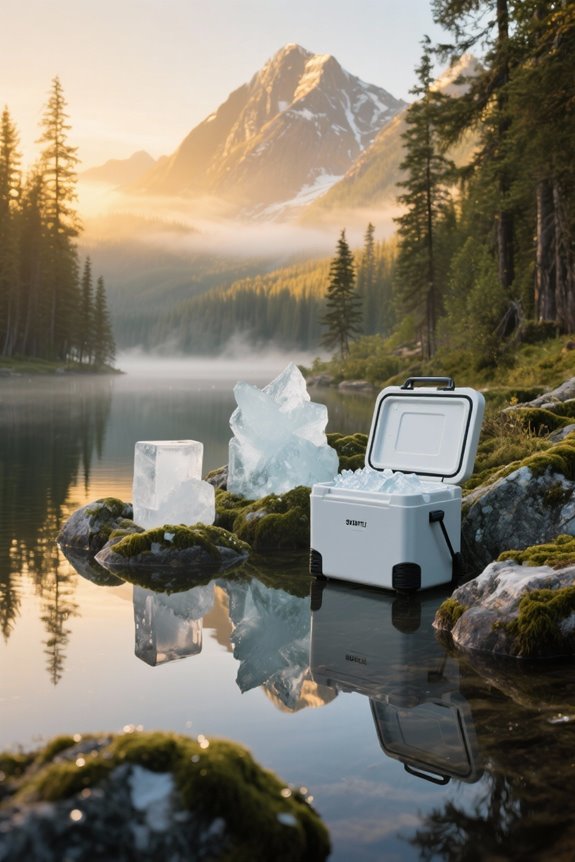
How Different Ice Types Affect Cooler Performance

Different ice types can really impact cooler performance. Here’s how:
- Cubed Ice: Melts fast, perfect for quick chilling on short trips.
- Block Ice: Lasts longer, ideal for weekend adventures.
- Dry Ice: Great for extended cooling, keeping items frozen.
You may be interested


Consider environmental factors like temperature and humidity, as well as safe handling for dry ice. For ideal cooling, we can combine these ice types effectively. Stick with us to discover more tips on maximizing your cooler’s performance.
Key Takeaways
- Ice types vary in longevity; block ice lasts 3-5 days while pellet ice only lasts under 24 hours.
- Layering different ice types in coolers optimizes cooling: dry ice at the bottom, block ice in the middle, and cubed ice on top.
- Dry ice effectively preserves contents but requires careful handling due to asphyxiation risks and must be used in well-ventilated areas.
- Insulation and cooler design significantly affect ice retention, with thicker insulation and airtight seals helping maintain lower temperatures.
- Pre-chilling coolers and contents before use enhances ice performance, prolonging the cooling effect during trips.
Understanding the Different Types of Ice
Understanding the different types of ice is essential for various activities, whether we’re maneuvering through icy waters or studying environmental changes. Knowing about ice types and their properties can help us make better decisions.
Lake Ice Types:
- Unseeded Ice: Large, tabular crystals.
- Seeded Ice: Smaller, granular crystals.
- Snow Ice: Forms frozen slush on top.
- Primary Ice: The first layer.
- Secondary Ice: Grows beneath the primary layer.
Sea Ice Types:
- New Ice: Thin, less than 10 cm.
- Young Ice: 10-30 cm thick.
- First-Year Ice: Over 30 cm but won’t survive summer.
- Multiyear Ice: Survives multiple melts, 2-4 meters thick.
Ice for Coolers:
When it comes to keeping food and drinks cold, block ice is more effective than cube ice for longer-lasting chilling in hard coolers.
Understanding these classifications helps us effectively use and navigate through different ice environments!
Ice Retention Duration: How Long Does Each Type Last?

How long can we expect each type of ice to last in our coolers? Let’s break it down:
- Pellet Ice: Lasts under 24 hours due to its increased surface area and quicker melting in warm conditions.
- Block Ice: Offers the best ice retention, lasting 3 to 5 days or more. Its dense mass fights temperature variation effectively.
- Crushed Ice: Stays cold for about 1 to 2 days, providing a balance between cooling speed and retention.
- Dry Ice: Lasts 18 to 24 hours, keeping things below freezing without turning into water.
Ultimately, our cooler’s insulation, usage, and color can influence ice retention dramatically. Choosing the right ice type for our needs is essential! For those seeking to minimize mess during outdoor adventures, ice packs may be favored over traditional ice while still maintaining effective cooling performance.
Cubed Ice: Quick Chilling for Short Trips

- Rapid Cooling Techniques: With a high surface-area-to-volume ratio, cubed ice melts quickly, absorbing significant heat.
- Immediate Effect: It cools our drinks and perishables fast, making it perfect for day outings or picnics.
- Maintenance: While it requires frequent replenishment, this guarantees we maintain our cooler’s efficiency.
In just the first 10 hours, cubed ice stabilizes temperatures effectively. Its melting contributes to immediate temperature reductions, enhancing our comfort. For anyone looking for quick chill solutions without the need for longevity, cubed ice is undeniably our go-to option. High-performance coolers with 2 inches of insulation and freezer-grade gaskets work alongside cubed ice to maximize cooling efficiency during short trips.
Block Ice: The Best Choice for Longer Adventures

When planning for longer adventures, choosing block ice can truly make a difference. The block ice benefits include:
- Longevity advantages: It melts slower than cubed ice due to its larger volume and smaller surface area, extending the cold retention inside our coolers.
- Space-efficient: Its compact shape fits neatly, allowing us to store more ice without overcrowding, improving airflow and cooling distribution.
- Perfect for long trips: Ideal for camping or fishing where ice replenishment isn’t possible, it preserves perishable foods over many hours or days.
- Enhanced by quality insulation: When combined with coolers featuring TempLock insulation or Ultratherm foam, block ice can maintain cold temperatures for up to 5 days, maximizing performance during extended outdoor excursions.
Dry Ice: The Ultimate Solution for Extended Cooling

For anyone seeking extended cooling solutions, dry ice stands out as a top choice. Here’s why:
- Sublimation Process: It sublimates directly from solid to gas at –109.3°F, eliminating messy water.
- Superior Cold: Compared to traditional ice, dry ice maintains temperatures below –70°F, perfect for perishables and vaccines.
- Sublimation Rate: Expect a sublimation rate of 5–10 lbs per day in well-insulated coolers, depending on design and temperature.
- Safety Precautions: Always use gloves when handling and avoid airtight containers due to the risk of pressure buildup.
When considering dry ice vs water ice, its effectiveness for prolonged cooling makes it the ultimate solution for your needs. For those looking to upgrade from traditional ice coolers, modern 12 volt compressor coolers can achieve temperatures as low as -8°F without the handling concerns of dry ice. Just remember proper handling is key!
Ice Packs: A Modern Alternative to Traditional Ice
Ice packs have become a modern favorite for those seeking convenient cooling solutions. These versatile products offer several advantages:
- Gel Pack Benefits: Typically filled with water and polymers, gel packs stay flexible when frozen, molding around your items. This provides targeted cooling, especially useful for medical supplies or shipping.
- Ice Pack Durability: Designed for multiple freeze-thaw cycles, many ice packs guarantee long-lasting performance. High-quality polymer casings improve leak resistance and extend lifespan.
While ice packs tend to lose coolness within 12 hours, they can markedly enhance cooling efficiency when paired with traditional ice. Plus, their mess-free usage eliminates the hassle of water run-off.
Choosing ice packs simplifies our cooling needs while promoting easy maintenance and cleanliness in our coolers. Similar to how waterproof materials protect camping air mattresses from moisture damage, quality ice packs feature leak-resistant construction that prevents water seepage as they thaw.
Cooler Design Factors That Influence Ice Longevity
Understanding how a cooler is designed can play a crucial role in how long our ice lasts. Several factors impact ice longevity, including:
- Insulation Materials: Thick, foam walls reduce heat transfer, with closed-cell spray foam and expanded polystyrene being effective choices.
- Cooler Dimensions: Larger coolers stabilize temperatures better; they maintain cold air more efficiently during use.
- Airtight Seals: Compressible rubber gaskets on lids form critical airtight barriers to preserve internal temperatures.
- Reflective Surfaces: Cooler exteriors can be reflective, blocking solar radiation and minimizing heat gain.
Additionally, ensuring minimal air gaps inside enhances insulation effectiveness, reducing ice melt. Coolers with UV inhibitors provide added protection against sun damage, which can help maintain structural integrity and insulation performance over time. Investing in high-quality insulation and thoughtful design can greatly extend our ice retention time, making for a more enjoyable outdoor experience.
Environmental Conditions and Their Impact on Ice Performance
When we think about how well ice performs, it’s essential to contemplate the environmental conditions surrounding it. Several factors impact ice longevity, including:
- Temperature Management: High temperatures can cause ice to melt quickly, degrading cooler performance. Cooler conditions help maintain ice durability.
- Humidity Control: Ideal humidity levels (40-50%) prevent frost formation, which can damage ice surface quality. High humidity can also encourage moisture accumulation.
- Sunlight Exposure: Direct sunlight speeds up ice melt, so placing coolers in shaded areas considerably extends ice life.
- Climate Variability: Different environments require specific strategies to effectively manage temperature and humidity, ensuring the best ice quality.
- Cooler Preparation: Proper preparation techniques, such as pre-chilling contents and minimizing frequent opening, work alongside TempLock insulation technology to enhance ice retention performance during extended outdoor trips.
Understanding these conditions can help us keep our ice performing at its best for longer periods.
Practical Tips for Selecting the Right Ice Type
Choosing the right type of ice can make a real difference in how well our coolers perform. Here are some practical tips to guide our selection:
- For Short Trips (1-2 Days): Cubed ice chills quickly but melts fast. It’s great for immediate cooling.
- For Weekend Trips (2-3 Days): Block ice lasts longer and maintains temperature, making it a solid choice.
- For Extended Trips (1 Week+): Dry ice is ideal for freezing contents and preserving food extendedly.
- Combination Use: Mixing block and cubed ice provides rapid chilling and long-lasting cold.
Additionally, using commercial ice packs can enhance flexibility and minimize mess. For backpack coolers, consider models with thick insulation liners of 8mm or more to maximize ice retention and maintain optimal temperature for extended periods. Remember, pre-chilling our cooler and contents can maximize the ice benefits, regardless of the ice types we choose.
Combining Ice Types for Optimal Cooler Efficiency
Selecting the right type of ice is just the beginning of enhancing our cooler’s performance. By combining various ice types, we can achieve ideal layering for synergistic cooling. Here’s how:
- Bottom Layer: Place dry ice on a barrier to freeze items like meats.
- Middle Layer: Use block ice to buffer and regulate the dry ice’s sublimation.
- Top Layer: Cubed ice chills beverages rapidly, with meltwater aiding the lower layers.
Mixing ice types maximizes cooling duration and efficiency. A good starting point is 5–10 lbs of dry ice, complemented by 25–50% block ice. Monitoring performance is key. Adjust ratios based on how quickly the ice melts. For added convenience during outdoor activities, consider using wide mouth water bottles that allow easy access to ice cubes for quick refills. Combining these strategies can greatly extend our cooler’s effectiveness, allowing us to keep everything cold longer.
Safe Handling of Dry Ice and Precautions to Consider
Handling dry ice safely is essential for preventing accidents and injuries. Here are some key precautions to evaluate:
- Protective Equipment: Always wear insulated gloves and safety goggles. Use tongs or scoops to minimize direct contact.
- Ventilation: Store and use dry ice in well-ventilated areas to avoid asphyxiation risks. Never seal dry ice in airtight containers.
- Safe Storage: Use insulated, vented containers for storage. Label containers clearly and minimize the quantity stored.
- Transport Safety: Transport dry ice in the cargo area of vehicles with windows open. Never keep it in the passenger compartment.
Frequently Asked Questions
Can Ice Types Affect the Taste of My Drinks?
Absolutely, ice types can affect our drinks’ flavor profile and temperature. Different shapes and sizes influence how quickly ice melts, altering dilution rates and enhancing or muting flavors, ultimately shaping our overall drinking experience.
Is There a Best Ice Type for Cooler Aesthetics?
When it comes to cooler aesthetics, ice cube aesthetics often shine with their clean, uniform look. Decorative ice, like block or dry ice, can enhance visual appeal, but practicality’s important for our cooler experience too.
How Does Ice Type Impact the Weight of My Cooler?
Ice density greatly affects our cooler’s weight, impacting portability. Denser block ice adds bulk upfront, while lighter crushed ice reduces initial weight. We must balance between weight and efficiency based on our trip needs.
Are There Specific Coolers Designed for Dry Ice Use?
Absolutely, some coolers are specifically designed for dry ice use, boasting around 5–8% daily sublimation loss. These models enhance cooler compatibility with thick insulation and secure latches, ensuring safety and efficiency during our adventures.
Can Certain Ice Types Cause Cooler Odors Over Time?
Yes, certain ice types can cause cooler odors over time due to ice contamination and odor absorption. Regularly replacing ice and maintaining cleanliness helps minimize these issues, keeping our cooler fresh and pleasant.


