As an Amazon Associate, we earn from qualifying purchases. Some links on this site are affiliate links at no extra cost to you. Our recommendations are based on thorough research and editorial judgment.


How to Use Trekking Poles for River Crossings Safely

To use trekking poles for safe river crossings, we should:
- Inspect poles for damage and adjust their length based on conditions.
- Face upstream while crossing to maintain stability.
- Test water depth, avoiding areas deeper than mid-thigh.
- Choose wide, shallow channels with even bottoms.
- Use poles to help maintain balance and check for hazards.
- Move slowly and communicate with each other.
You may be interested


Understanding these techniques will help us navigate crossings more confidently and safely.
Key Takeaways
- Inspect trekking poles for damage and ensure they are made of durable materials before river crossing.
- Adjust pole length appropriately to maintain balance and stability in deep water.
- Use poles to test water depth and avoid crossing in depths exceeding mid-thigh.
- Face upstream and lean into poles for support while crossing to maintain balance.
- Synchronize pole movements with foot placement, crossing one person at a time in challenging conditions.
Understanding River Hazards
When we think about crossing rivers, understanding the hazards is essential for our safety. Knowing about river depth and current strength helps us choose safe paths. Here are key considerations:
- Bends and Pools: Currents near bends can hide deep pools, increasing risks.
- Straight Sections: These often have faster currents and uniform bottom features, but can be safer if managed carefully.
- Islands: Islands can reduce current strength, providing resting zones.
- Visual Clarity: Clear water lets us assess depth and detect hazards like rocks or underwater holes.
Always be mindful of conditions like sudden water level changes or cold water risks, as these factors can drastically influence our safety during crossings. Cold water exposure requires proper insulation, and just as temperature ratings help determine appropriate sleeping bags for different conditions, understanding water temperature helps us prepare with suitable gear for river crossings.
Selecting the Right Crossing Point

Selecting the right crossing point is essential for a safe river crossing, as making the wrong choice can lead to dangerous situations. Here are some guidelines for our site evaluation:
- Choose slower sections: A stick can help us test flow speed; if it moves easily, it’s likely safer.
- Avoid deep or swift water: If it’s above mid-thigh, consider another route.
- Look for ripples: Small ripples indicate a safer, rocky bottom compared to large waves.
- Opt for wide channels: They disperse water flow, reducing depth and speed.
- Pick straight sections: The “S” bend midpoint offers a better angle against the current.
- Practice beforehand: Just as you would practice setting up your tent before a camping trip to gauge time and conditions, scout your crossing route in advance to identify the safest path and potential hazards.
Recommended Products

SITKA GEAR MOUNTAIN HAULER 4000 PACK - The Mountain Hauler 4000 is the perfect pack for day hunts or overnight stays when you need the ability to carry meat and horns out of the field simultaneously

ULTIMATE PERFORMANCE - The Sitka Gear Mountain 2700 Pack is a hard-working day pack that can comfortably and quietly support loads of 45 pounds; Carry a myriad of things that you need while hunting, including your bow
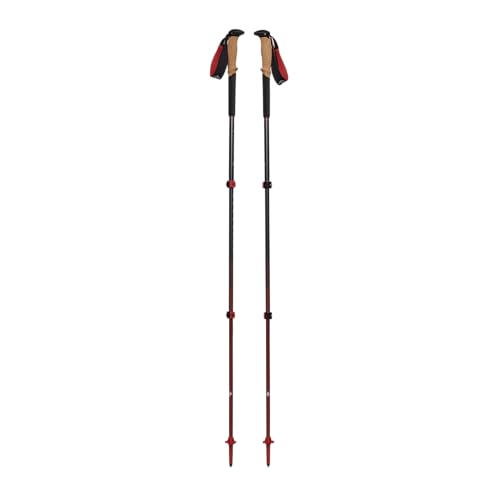
ERGONOMIC, TRAIL-READY DESIGN: Designed for comfort and stability on long hikes, backpacking trips, and mountain treks. The Pursuit Trekking Poles deliver balanced support and durability for all-season exploration.
Preparing Your Trekking Poles

Before we step into the river, it’s essential to prepare our trekking poles for effective use during crossings. Here’s how to guarantee they’re ready:
- Pole Maintenance: Inspect each pole for damage. Look for cracks or misalignments.
- Material Check: Use poles made of durable materials that can withstand water exposure.
- Pole Adjustments: Adjust the length so our elbows bend at approximately 90 degrees. This helps maintain balance.
- Water Considerations: Shorten poles for tricky terrain, but keep them longer in deep water.
- Testing Depth: Before stepping, use the pole tips to check the water’s depth and the riverbed conditions.
- Weight and Portability: Choose lightweight and compact poles, ideally around 1 to 1.2 pounds, to ensure they don’t add unnecessary burden during your river crossing and can be easily packed when not in use.
Proper Crossing Techniques for Individuals

Crossing a river can be a challenging task, but with the right techniques, we can do it safely and effectively. Here are some essential individual techniques:
- Pole Positioning: Place your trekking poles securely on the riverbed to enhance stability. Confirm they’re angled slightly downstream to help counteract the current.
- Assess Depth: Use your poles to check water depth before crossing, avoiding depths over mid-thigh.
- Evaluate Current: Face upstream to maintain balance. If unsure, test the current by throwing a stick to gauge speed.
- Choose Wisely: Select wide, straight sections of the river with even, shallow bottoms and avoid bends or hazards downstream.
- Secure Your Grip: Ensure your poles feature ergonomic cork grips that conform to your hands and wick away moisture, maintaining a reliable hold even when wet during challenging river crossings.
Recommended Products

Now in Black | LEKI’s premium trekking poles redesigned with a completely black style for a sleek look. Previously known as the Black Series FX Carbon.

Completely Carbon & Collapsible | Ultralight trekking poles provide an adjustable length and collapsible packability.

PREMIUM CARBON FIBER CONSTRUCTION: Built from 100% carbon fiber for exceptional strength, stiffness, and low weight. Provides efficient support for backpacking, trekking, and mountaineering in all seasons.
Group Crossing Strategies

When we approach a river crossing as a group, preparation becomes key to ensuring everyone’s safety and stability. To make our crossing successful, we should follow these strategies:
- Formation: Link arms or shoulders, creating a chain for stability; strongest members go upstream.
- Pacing: Move slowly and deliberately, allowing for careful footing and adjustments.
- Communication: Maintain visual and verbal cues to coordinate our movements.
- Strength Hierarchy: Position ourselves according to strength—strongest first, followed by those with more stability.
- Scout Together: Check the crossing site for hazards before starting.
- Pole Positioning: Each person should use their trekking poles with anti-shock technology to reduce impact forces on unstable riverbed surfaces, providing additional points of contact for enhanced balance.
Timing Your Crossings
Timing is essential for successful river crossings, as it can greatly affect our safety and efficiency. Here are some guidelines for ideal crossing times:
- Cross in the morning: Water levels are usually lower before midday warming and snowmelt increase flow.
- Avoid afternoon crossings: Snowmelt often peaks water levels and currents in the afternoon and early evening.
- Reach crossings early: This reduces risks from rising water and flow velocity.
- Monitor the weather: Local knowledge and forecasts can help us anticipate river flow changes.
- Conduct river flow evaluation: Look for floating debris or sticks to assess current speed and safety.
- Stay hydrated during your approach: Proper hydration from a leak-proof hydration reservoir ensures you maintain focus and energy when timing critical crossings.
Environmental Considerations
Environmental considerations are essential when we use trekking poles, especially during river crossings. To guarantee sustainable practices, let’s keep these points in mind:
- Minimize Soil Erosion: Place trekking poles within established trails. Avoid soft, saturated soils to prevent degradation.
- Protect Aquatic Ecosystems: Steer clear of disturbing riverbanks. Limit pole use in or near water to prevent sediment disruption.
- Safeguard Vegetation: Avoid dense vegetation areas and remove pole baskets in these zones to protect delicate plants.
- Respect Wildlife Habitats: Keep distance from known wildlife areas and stick to well-used trails.
- Use Non-Toxic Materials: Choose trekking poles made from BPA-free materials to ensure that any contact with water sources doesn’t introduce harmful chemicals into aquatic environments.
Assessing Water Depth and Current
After considering the environmental impact of our river crossings, it’s important to focus on how we assess water depth and current. Here’s how we can do that effectively:
- Check Water Clarity: In murky water, use our trekking poles to probe depth and feel for the bottom.
- Test Current Signs: Throw sticks or leaves in the water to gauge current speed.
- Observe Changes: Watch for color or texture variations; these can indicate depth shifts.
- Listen Closely: Pay attention to the sounds; a hollow “ka-thump” from tossed rocks signals deeper water.
- Enter Slowly: Maintain three points of contact as we proceed.
- Choose Sturdy Poles: For river crossings, opt for poles made from aircraft-grade aluminum or carbon fiber that can withstand the force of moving water and provide reliable support.
If the current feels too strong or depth exceeds our comfort, it’s best to reconsider our crossing. Safety always comes first!
Maintaining Balance and Stability
When we navigate river crossings, maintaining balance and stability is essential for our safety. Here are some key techniques to help us:
- Body Positioning: Face upstream to see the current, and lean slightly into our poles for extra support. Keeping a low center of gravity by bending our knees enhances stability.
- Pole Synchronization: Move poles in tandem with our feet, planting an opposite pole as we step to maintain balance.
- Optimal Pole Placement: Plant poles firmly on stable surfaces, adjusting their length to keep our arms comfortably bent for better control. Poles with tungsten carbide tips provide excellent traction on slippery river rocks and unstable surfaces.
- Probing: Use poles to check for depth and unstable footing before stepping to prevent slips.
Recommended Products
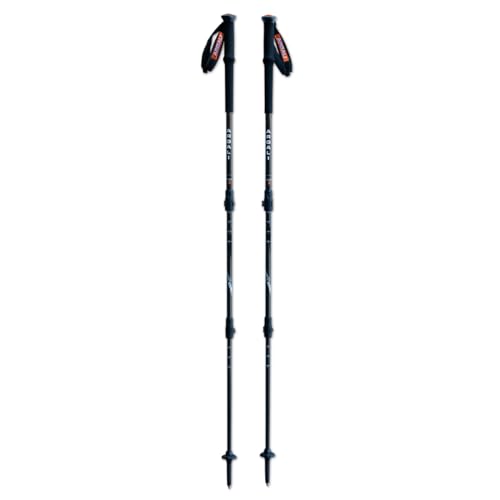
WEIGHT - 15oz.
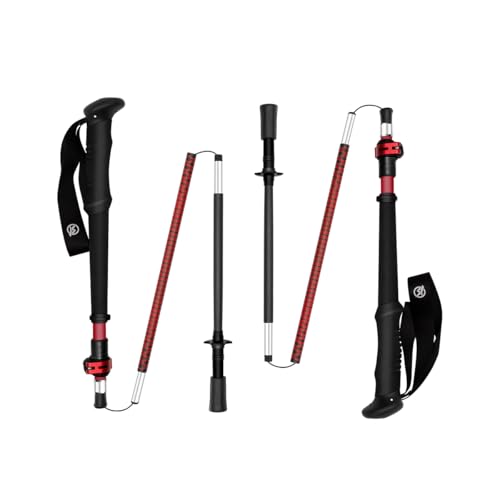
Ultra-Lightweight & Packable – Each trekking pole weighs only 6.98oz, lighter than a phone. Collapses to just 14.9in for effortless packing into backpacks, carry-ons, or travel gear.
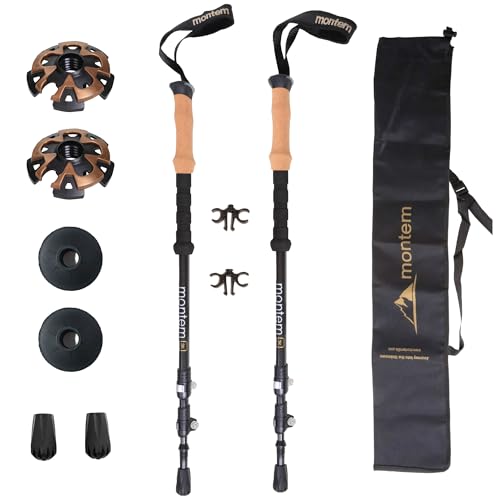
✅【NEW 3K DESIGN】A stylish and innovative 3K design fused with 100% carbon fiber offers ultra-light and compact hiking. Our trekking poles are not just functional but also make a statement on the trail.
Safety Protocols During Crossings
Crossing rivers safely is essential for our overall well-being during outdoor adventures. To guarantee proper crossing preparation, we should:
- Assess water speed: If it moves faster than a brisk walk, don’t cross.
- Test depth with trekking poles: Avoid depths beyond mid-thigh in fast water.
- Observe surface patterns: Small ripples are safer than large standing waves.
When planning our crossing, consider:
- Crossing in the morning when levels are lower.
- Using maps for safe spots; avoid downstream hazards like waterfalls.
As a group, we should:
- Link arms for support.
- Position the strongest person upstream.
- Cross one at a time in tough conditions.
Staying vigilant and practicing water awareness can help us navigate crossings more safely. For river crossings, poles constructed from 7075 aluminum alloy or carbon fiber offer the durability and strength needed to probe depths and maintain stability in challenging water conditions.
Post-Crossing Care for Equipment
Post-crossing care is just as important as the precautions we take before entering the water. Proper equipment maintenance guarantees our trekking poles stay reliable for future adventures. Let’s focus on these steps:
- Disassemble the poles: This promotes air circulation and allows them to dry completely.
- Clean thoroughly: Wipe each segment to remove mud and water, especially around locking mechanisms.
- Inspect for damage: Check for dents, cracks, or wear on rubber tips.
- Lubricate as needed: Use non-running lubricants on threads to maintain functionality.
- Store properly: Keep poles in ventilated bags, away from sunlight and moisture.
Recommended Products

THREE-SECTION ALUMINUM CONSTRUCTION: Built from strong, lightweight aluminum that delivers dependable stability on rugged trails. Withstands repeated impacts, rocky terrain, and long-distance mileage.
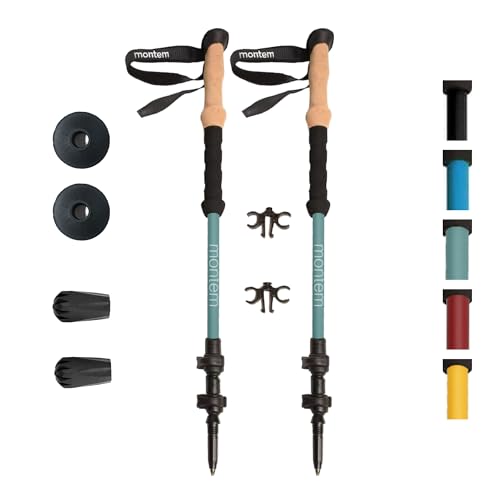
✅【TOP REVIEWED】Montem Carbon Trekking Poles have been reviewed by Backpacker Magazine as the best affordable carbon pole available. Our light, sturdy, and reliable design made it through thousands of miles throughout New Zealand. We don't sacrifice quality for cost and neither should you.

Ultra-Strong & Durable: 50% thicker carbon fiber shafts for maximum strength and confidence.
Frequently Asked Questions
Can Trekking Poles Be Used for Other Outdoor Activities?
Absolutely, we’ve found trekking poles incredibly versatile outdoor gear. They enhance stability during snowshoeing, trail running, and even bushwhacking, providing numerous trekking pole benefits that improve our overall safety and enjoyment during various outdoor adventures.
How Do I Choose the Right Trekking Poles?
When it comes to choosing trekking poles, we shouldn’t reinvent the wheel. Opt for ergonomic grips and adjustable lengths to guarantee comfort and adaptability. Finding the perfect fit can make all the difference on the trail!
What Are the Best Materials for Trekking Poles?
When choosing the best materials for trekking poles, we often prefer aluminum poles for durability and affordability, while carbon poles excel in lightweight performance. Each has unique benefits, so it depends on our hiking needs and preferences.
Can I Use Trekking Poles With Gloves?
Like a tightrope walker balancing high above, using trekking poles with gloves can enhance grip comfort. However, we should choose glove types wisely to maintain control; textured palms really make a difference in slippery situations.
How Often Should I Replace My Trekking Poles?
We should replace our trekking poles when we notice visible damage or locking issues. By following maintenance tips, we can improve pole longevity, extending their life considerably and ensuring safe and enjoyable outdoor adventures.