As an Amazon Associate, we earn from qualifying purchases. Some links on this site are affiliate links at no extra cost to you. Our recommendations are based on thorough research and editorial judgment.


Understanding Trekking Pole Locking Mechanisms

Understanding trekking pole locking mechanisms is key for effective hiking. There are two main types:
- Lever Lock:
- Quick adjustments, reliable, and minimal slipping.
- Twist Lock:
- Lightweight but prone to slippage and harder to check.
You may be interested


We adjust pole lengths between 24 to 55 inches, ensuring ergonomic use. Regular inspections and maintenance are essential for safety. Choosing the right locking mechanism, based on conditions and preferences, can enhance our outdoor experience. Let’s explore more about these mechanisms.
Key Takeaways
- Trekking poles use lever locks, twist locks, push-button locks, and flip locks, each with unique advantages and disadvantages for user preference.
- Lever locks allow for quick adjustments and minimal slippage, making them ideal for cold or wet conditions.
- Twist locks rely on friction and are prone to slippage and failure, especially in harsh environments; they often require more frequent maintenance.
- Regular inspection, cleaning, and lubrication of locking mechanisms are essential to ensuring durability and functionality over time.
- User preferences often lean towards external lever locks for reliability and ease of adjustment, especially in difficult conditions.
Types of Trekking Pole Locking Mechanisms
When it comes to choosing trekking poles, the locking mechanism can greatly affect our hiking experience. Let’s explore the key types:
- Lever Lock:
- Advantages: Quick adjustments, even with gloves.
- Security: Visually confirm tightness, lowering slippage risk.
- Twist Lock:
- Drawbacks: Tends to slip in cold or wet conditions.
- Operation: Harder to check lock status; relies on friction.
- Enhanced Security: Double cam twist locks provide improved stability and prevent pole collapse during use.
Both mechanisms have their benefits and drawbacks. The lever lock offers great reliability and ease of use, while the twist lock can be more budget-friendly but poses challenges in adverse weather. Knowing these differences helps us choose the poles best suited for our adventures, ensuring we enjoy every step of the journey.
Recommended Products

The lightest monopod in the range

Completely Carbon | Ultralight trekking poles provide an adjustable length in a carbon construction you can take with you for any adventure.

Ultralight, Fully Featured Trekking Pole | The lightest, full-sized, fully featured pole from LEKI designed for hiking and trekking.
Characteristics and Reliability of Lock Types

Understanding the characteristics and reliability of different trekking pole locking mechanisms helps us make informed choices on the trail.
Lever Lock Advantages:
- Minimal slipping, rarely needing readjustment.
- Long-term users report few, if any, failures.
- Generally operational after years of use with simple maintenance.
Twist Lock Drawbacks:
- Frequent reports of failure during use, risking safety.
- Prone to issues like cross-threading and slippage.
- Show negligible wear theoretically, yet practical failures are common.
While lever locks are mostly reliable, especially with metal ferrules, twist locks often lead us to frustration. The FlickLock technology found in Black Diamond poles exemplifies the superior adjustability and quick-release performance that lever-style mechanisms provide for mountaineering adventures. Choosing wisely can make all the difference in ensuring our journey is safe and enjoyable.
Recommended Products

Now in Black | LEKI’s premium trekking poles redesigned with a completely black style for a sleek look. Previously known as the Black Series FX Carbon.

For Elite Runner on Race Day | Ultralight, collapsible poles designed specifically for racing and competition.

Antishock Trek | Take the shock out of treks with this lightweight, adjustable, collapsible trekking pole featuring the Dynamic Suspension System.
Adjustability and Length Range

Having chosen the right locking mechanism is just the beginning; adjustability in trekking poles plays a significant role in our comfort and performance on the trail. Here’s what we should consider for custom length adjustment:
- Length Range: Adjustable poles typically span from 24 to 55 inches.
- User Height Adaptation: We can fine-tune the poles to match our arm length, enhancing ergonomics.
- Telescoping Design: Most adjustable poles feature two or three interlocking sections for versatile use.
- Mechanisms: Common options include external lever locks, push-button locks, and twist locks, allowing quick adjustments, even with gloves.
- Collapsibility: Many poles can collapse to under 15 inches, with some models featuring flip-lock systems that enable 20cm height adjustments for optimal portability.
Recommended Products

Completely Carbon & Collapsible | Ultralight trekking poles provide an adjustable length and collapsible packability.

ULTRALIGHT CARBON CONSTRUCTION: Made from 100% carbon fiber for maximum strength and minimal weight. Designed for mountain runners, hikers, and fastpackers who need reliable support without extra bulk.

HYBRID DESIGN - Carbon fiber upper section and aluminum lower sections provide weight savings over tradional full aluminum poles.
Ease of Use in Various Environments
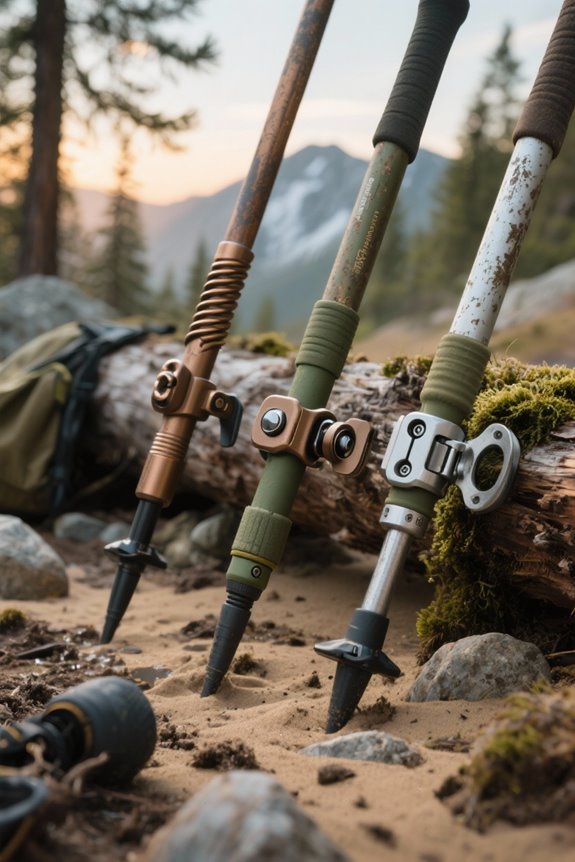
Selecting the right trekking pole locking mechanism is essential, especially since we often encounter varying environments on our adventures. Here’s how different mechanisms perform under tactical usage and temperature effects:
- External lever locks: Fast, one-handed adjustments, ideal for cold climates—no need to remove gloves.
- Twist locks: Slower to use, particularly tricky with cold hands, and can jam in freezing weather.
- Push-button locks: Quick to set but may lack adjustability.
- Combination locks: Offer speed and security but can be complex.
In wet or dusty conditions, flip locks excel with reliable performance. Their lightweight design enhances usability, while other mechanisms may struggle. Regularly checking the tightness of our locks is key to avoiding unexpected collapses, keeping our adventures safe and enjoyable. Quick-lock mechanisms also facilitate instant height adjustments, allowing hikers to customize pole length from 24 to 54 inches for various terrains and users.
Environmental Considerations for Locking Mechanisms

When we consider the environmental impact of trekking pole locking mechanisms, several factors come into play that directly affect our trails and surroundings.
- Material Selection: Most poles use aluminum or carbon fiber, with each having a unique environmental footprint.
- Manufacturing Process: The creation of these mechanisms can contribute to emissions and resource use.
- End-of-Life Disposal: Proper disposal is vital; recycling some pole components can mitigate waste.
- Sustainable Design: Using durable, sustainable materials helps guarantee longevity and reduces overall environmental effects.
- Fixed-Length Advantages: Fixed-length poles feature fewer potential failure points and eliminate complex adjustment mechanisms, which can reduce both material usage and the likelihood of parts requiring replacement over time.
Choosing responsibly designed locking mechanisms can benefit both our adventures and the natural environment. By being mindful of our gear, we can strike a balance between enjoyment and sustainability, preserving the trails we cherish for future generations. Fixed-length poles offer a simpler design that contributes to overall reliability while minimizing environmental impact through reduced component complexity.
Grip and Additional Features Affecting Locking Mechanisms
Grip and additional features greatly influence the functionality of trekking pole locking mechanisms. Here’s how:
Grip Materials:
- Cork: Comfortable, but moderate durability affects locking reliability over time.
- Rubber: Vibration-dampening, yet can be slippery in warm conditions.
- Foam: Soft and sweat-absorbing, but may become slippery in heat.
Wrist Straps:
- Secure pole retention when hands are released.
- Reduce grip strength needed for locking/unlocking, easing operation during fatigue.
- Adjustable and padded designs improve comfort and precision during adjustments.
In selecting pole features, we should consider how grip materials and wrist straps interact with locking mechanisms. The right combination enhances control and reliability, ensuring a safer trekking experience in varying environments. Ergonomic EVA foam grips absorb sweat effectively, which helps maintain a secure hold on locking mechanisms even during extended use.
Maintenance Requirements for Different Locks
Maintenance of trekking pole locking mechanisms isn’t just a good idea—it’s essential for guaranteeing their reliability and longevity. Here’s how we can keep different lock types in prime condition:
- Regular Inspection: Check latch springs and internal components often, especially after wet conditions. Look for any signs of corrosion or damage.
- Cleaning Frequency: For twist-locks, we should disassemble and clean with a fine toothbrush to remove grime. Flick-locks only need surface cleaning and debris removal.
- Lubrication: Use light lubricants for twist-lock threads, avoiding excess that attracts dirt. Tightening internal nuts ensures proper tension.
- Storage Care: Disassemble and store in a breathable bag to prevent moisture buildup.
- Material Care: Poles constructed from 7075 aluminum alloy or carbon fiber require less frequent maintenance but still benefit from regular cleaning to preserve their durability and prevent wear on locking mechanisms.
Testing Locking Mechanisms Before Purchase
Understanding the locking mechanism is a key part of ensuring our trekking poles perform reliably. When we consider purchasing, mechanism testing is essential. Here’s how to evaluate it:
- Physical Inspection: Extend the pole, engage the lock, and apply downward pressure. Look for slippage or looseness.
- Ease of Use: Try the locking mechanism in various conditions—cold, wet—to see if it remains functional.
- Tension Adjustment: Test the lock by slightly pulling on the extended section; it should stay firmly in place.
- Durability Testing: Check for any resistance to dirt and moisture; assess materials for corrosion resistance.
- Lock Type Comparison: Evaluate whether quick lock mechanisms or lever locks provide the stability and ease of adjustment you need for your specific terrain conditions.
Recommended Products

One-Press Lifting Mechanism: Easily extend or retract the monopod with one hand, ensuring you never miss a critical shot. Perfect for capturing fast-moving moments without delay.

Creme De La Creme | LEKI’s supreme ski pole specialized for backcountry touring and splitboarding.

All Terrain | Ski poles designed for backcountry touring and big mountain alpine riding.
Troubleshooting Common Locking Issues
When it comes to trekking poles, three common locking issues often pop up for outdoor enthusiasts. We often face stuck mechanisms, which can be frustrating, but we can fix them effectively. Here are some troubleshooting tips:
- Check direction: Always twist left to loosen.
- Gentle grips: Use needle-nose pliers on plastic parts if needed.
- Cleaning techniques: Regularly clean inside the locking mechanisms with mild soap, followed by proper drying to remove dirt causing jamming.
- Inspect parts: Look for non-rotating washers and misaligned plastic pieces; realign them carefully.
For poles equipped with a quick-lock mechanism, ensure the lever is fully released before attempting any adjustments to prevent damage to the locking system.
Comparing Weight and Performance of Lock Types
As we venture into comparing the weight and performance of different locking mechanisms, it’s clear that each type has its strengths and weaknesses. Here’s a closer look:
- Twist Locks: Lightweight but can struggle in cold or dusty conditions, affecting lock durability.
- External Lever Locks: Slightly heavier, but they excel in quick adjustments and are reliable across diverse terrains.
- Push-Button Locks: Minimal components keep them light; however, they lack versatility in challenging environments.
- Combination Locks: Offer balanced performance but may weigh more due to their complexity.
- Clasp Locks: Robust in construction, these locks are heavier yet provide excellent durability and consistent performance.
Ultimately, it’s essential to evaluate both weight vs. performance to find the right locking mechanism for our trekking needs. When selecting trekking poles with camera mounts, look for secure locks that can handle load capacities up to 6 kg to ensure your photography equipment remains stable during outdoor adventures.
Recommended Products

【One-Click, Four-Section Monopod】 COMAN Go! M1 series monopod equipped with one-click lifting system and an innovative four-section carbon fiber leg. The M1Pro V5 monopod offers unmatched convenience in height adjustment, with just one press, extend or retract your monopod instantly, boosting setup speed by up to 300% compared to traditional designs

ERGOBAUM 7G ERGONOMIC FOREARM CRUTCHES FOR ADULTS- Extensively designed to be the most comfortable and advanced forearm crutches for adults available, the ERGOBAUM 7G crutches are built for its users’ needs first. Ergobaum 7G premium design features combined provide an unparalleled level of comfort and ease that is unrivaled by any other product on the market. Expect your ergonomic forearm crutches and crutches accessories to provide safety, performance, comfort and style; they will move you. FSA/HSA eligible. If you've struggled with uncomfortable crutches, the Ergobaum 7G is the upgrade your body needs.

Ready for Anything | LEKI’s premium pole is fully adjustable and completely collapsible for extra packability.
User Preferences in Locking Mechanism Selection
Selecting a locking mechanism for trekking poles can feel overwhelming, given the variety of options available. Understanding user preferences can help simplify this choice:
- Durability: Many prioritize robust mechanisms that resist wear, especially in harsh conditions.
- Ease of Use: Quick adjustments matter; external lever and push-button locks are often favored.
- Environmental Fit: In dusty or wet environments, reliable mechanisms, like external lever locks, stand out.
- Travel Compatibility: Light, compact poles with adjustable sections appeal to those on the go.
- Budget Considerations: Twist locks are budget-friendly, while external lever locks may offer better durability for long-term value.
Safety Considerations in Locking Mechanisms
Understanding safety considerations in locking mechanisms is essential to our trekking experience. Proper usage of poles can prevent failure consequences, while routine checks can help avoid adjustment errors. Here are key points to remember:
- Visual Inspections: Regularly check for cracks or wear.
- Engagement Checks: Verify levers and buttons are fully engaged.
- Routine Cleaning: Keep mechanisms free of dirt and debris.
- Tightening Schedule: Periodically tighten twist locks to maintain security.
- Usage Practice: Familiarize yourself with locking systems before hitting the trails.
Innovations in Trekking Pole Locking Technology
Innovations in trekking pole locking technology have revolutionized how we approach outdoor activities, enhancing not only convenience but also performance.
As we explore this, we see several key advancements:
- Folding Systems: With push-button systems, we can easily assemble and disassemble poles, perfect for transport. The Core Locking Device (CLD) balances durability and lightweight design.
- External Clamp Adjustments: The Speed Lock mechanism allows for quick height adjustments, ideal for varied terrains, while incorporating loss protection features.
- Internal Locks: The Super Lock (SLS) integrates seamlessly into the pole’s shaft, favored for aesthetics.
These innovations reflect changing user preferences and the incorporation of advanced materials, ensuring our trekking experience is both effective and efficient.
Frequently Asked Questions
Can Locking Mechanisms Get Damaged During Extreme Temperatures?
Yes, locking mechanisms can get damaged due to temperature effects. We’ve noticed durability concerns arise with both cold and heat, impacting functionality. Regular maintenance helps mitigate these risks and keeps our trekking poles reliable in extreme conditions.
Are Some Locking Mechanisms Louder Than Others During Adjustments?
Absolutely, we’ve noticed some locking mechanisms do indeed produce louder adjustment noise than others. User experience varies, but those with external levers tend to snap while twist locks might squeak if not well-maintained.
How Often Should I Lubricate My Trekking Pole Locks?
We shouldn’t lubricate our trekking pole locks frequently. Instead, we’ll focus on cleaning them regularly. Lubrication’s more of a reactive measure for maintenance, only used when they become sticky after thorough cleaning.
What Materials Are Commonly Used in Trekking Pole Locks?
When we explore the great outdoors, we rely on materials like carbon fiber and aluminum alloy in our trekking pole locks. Together, they provide strength and durability, ensuring our journey’s seamless and our poles functional.
Do Different Brands Have Compatible Locking Mechanisms?
No, different brands don’t typically have compatible locking mechanisms. Brand differences often lead to unique designs, which can complicate compatibility. We should research specific brands to guarantee our trekking poles work seamlessly together on our adventures.