As an Amazon Associate, we earn from qualifying purchases. Some links on this site are affiliate links at no extra cost to you. Our recommendations are based on thorough research and editorial judgment.


Understanding Cooler Capacity vs. Actual Storage Space

Understanding cooler capacity is vital for effective packing. Coolers are measured in quarts, but their actual storage can be up to 32% less. Here’s what to take into account:
- Thick insulation limits space.
- Structural elements reduce usable capacity.
- A good ice-to-contents ratio is essential (aim for 2:1).
You may be interested


For example, a 75-quart cooler holds around 70 cans, but don’t expect to fit all of them in easily. Stick with us for more insights on maximizing your cooler’s efficiency.
Key Takeaways
- Advertised cooler capacity often reflects maximum volume, not usable storage space due to insulation and structural features.
- Usable capacity can be up to 32% less than advertised figures, impacting your packing strategy.
- Optimal ice-to-contents ratio of 2:1 further reduces available space for food and drinks.
- Layering large ice blocks and filling gaps with ice can maximize cooling and effective storage.
- Understanding the trade-off between cooler size and portability is essential for efficient packing on trips.
Measuring Cooler Capacity: Quarts vs. Cans
- Standard Measurement: Quarts are used to express volume.
- Conversions: A 25-quart cooler typically holds about 12 cans, while a 75-quart model can accommodate around 70 cans.
- Cooler Shape: The design affects how efficiently space is utilized.
- Cooler Insulation: Thicker insulation might reduce internal storage but helps keep items cold longer.
- Real-World Examples: The Coleman 60qt Rolling Cooler accommodates 47 cans with ice, while the Coleman Marine Cooler holds up to 160 cans, demonstrating how capacity varies across different models.
When selecting a cooler, we must consider not just quarts but also how that translates into usable space for our food and beverages. By understanding these elements, we can make smarter choices on our next outdoor adventure.
The Gap Between Advertised Capacity and Real Storage
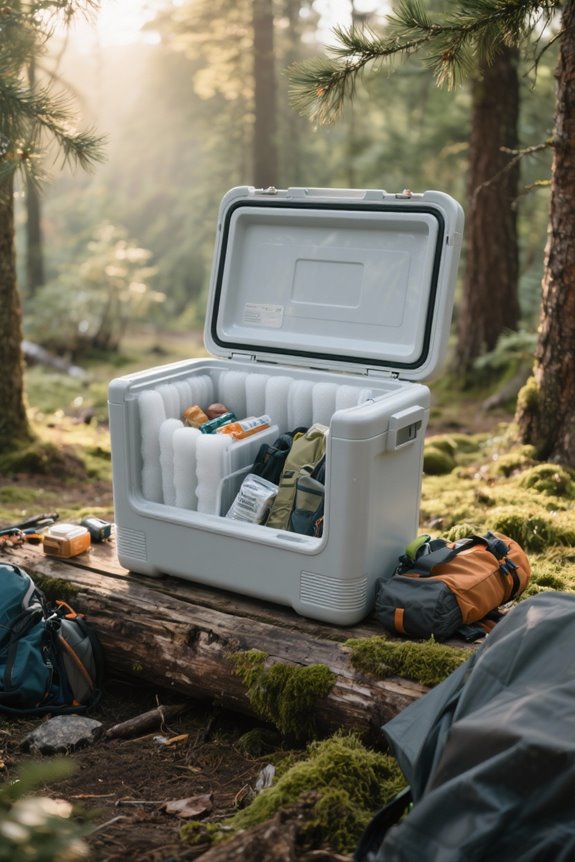
When we look at coolers, it’s essential to recognize the gap between advertised capacity and real storage capability. Many manufacturers highlight maximum internal volume, but this often skews consumer expectations. Here are some key points to ponder:
- Cooler dimensions include thick insulation, which reduces usable space.
- Structural elements like compartments and drainage holes further limit storage.
- Usable capacity can be up to 32% less than advertised.
- Ice placement typically takes up 2/3 of the cooler, leaving only 1/3 for food and drinks.
- For optimal ice retention, aim for a 2:1 ice-to-contents ratio, which means even less room remains for your actual items.
Understanding these factors helps us make better choices. Rather than solely relying on quarts, we need to reflect on practical storage options that truly meet our needs.
Recommended Products

Fully guaranteed maintenance service: Stainless Steel interior and exterior, exterior stainless steel designed with anti-fingerprint function, easy for daily cleaning, 6-year warranty on compressor, 2-year warranty on all parts, and labor and manual door-to-door service. We have professional customer service personnel and engineers to answer your questions online. Welcome to contact us by phone or email(Warranty service applies both in commercial address and residential address )

Ideal for open water anglers and tournament fishing pros, the Old Town Sportsman BigWater PDL 132 pedal kayak's easy-to-use forward/reverse pedal drive provides easy, hands-free navigation and fishing; pedal drive is removable for easy transport.

CLEAN PRESENTATION: This 73" unit features a 1-1/2" thick solid foamed stainless steel top to provide a usable workspace and a clean presentation with surrounding cabinetry and equipment, while the black, powder-coated steel front and sides provide an attractive and durable finish.
Estimating Food and Drink Requirements for Different Trip Sizes
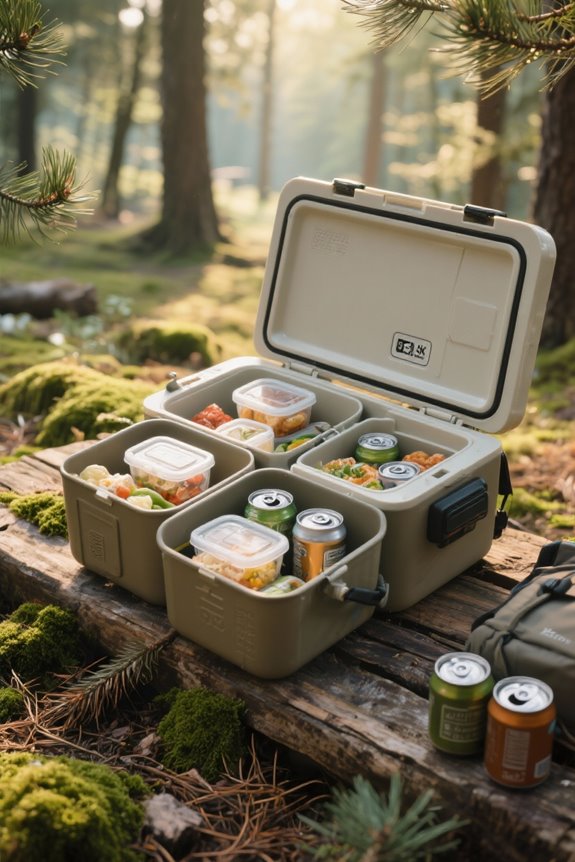
Estimating food and drink requirements for our trips is essential if we want to stay prepared and organized. Here’s a simple breakdown:
For Short Trips:
- Food Quantity: Pack light snacks like sandwiches and fruits.
- Drink Selection: Choose water and juice.
For Medium-Sized Trips (1-3 days):
- Food Quantity: Plan for about 1-2 pounds of food per person daily.
- Drink Selection: Include a mix of water, juice, and soda.
For Large Trips:
- Food Variety: Incorporate meats and dairy that require refrigeration.
- Drink Selection: Offer a diverse range of beverages for everyone.
When selecting a cooler, consider that the Pelican 30 Quart Elite Cooler holds 22 cans with its true 30-quart internal volume, making it suitable for medium-sized trips, while the 95QT model can accommodate 72 cans for extended adventures.
Recommended Products

【👧𝟐𝟎𝟐𝟒 𝐍𝐞𝐰𝐞𝐬𝐭 𝐔𝐩𝐠𝐫𝐚𝐝𝐞𝐝 𝐃𝐮𝐚𝐥 𝐒𝐞𝐚𝐭𝐞𝐫𝐬👧】Eahora M1P PRO 2 Seaters powerful electric motorcycle is coming! Having family trips,taking child to school,visiting friends or commuting, it is the best choice.Adult motorcycle provides smooth and quiet riding experiences for 2 persons.Going with a cool motorcycle to enjoy riding with your kids and enhance the parent-child relationship. (The motorcycle and rear seat are shipped separately.)

【👧𝟐𝟎𝟐𝟒 𝐍𝐞𝐰𝐞𝐬𝐭 𝐔𝐩𝐠𝐫𝐚𝐝𝐞𝐝 𝐃𝐮𝐚𝐥 𝐒𝐞𝐚𝐭𝐞𝐫𝐬👧】Eahora M1P PRO 2 Seaters powerful electric motorcycle is coming! Having family trips,taking child to school,visiting friends or commuting, it is the best choice.Adult motorcycle provides smooth and quiet riding experiences for 2 persons.Going with a cool motorcycle to enjoy riding with your kids and enhance the parent-child relationship. (The motorcycle and rear seat are shipped separately.)
Practical Packing Tips for Optimizing Cooler Space
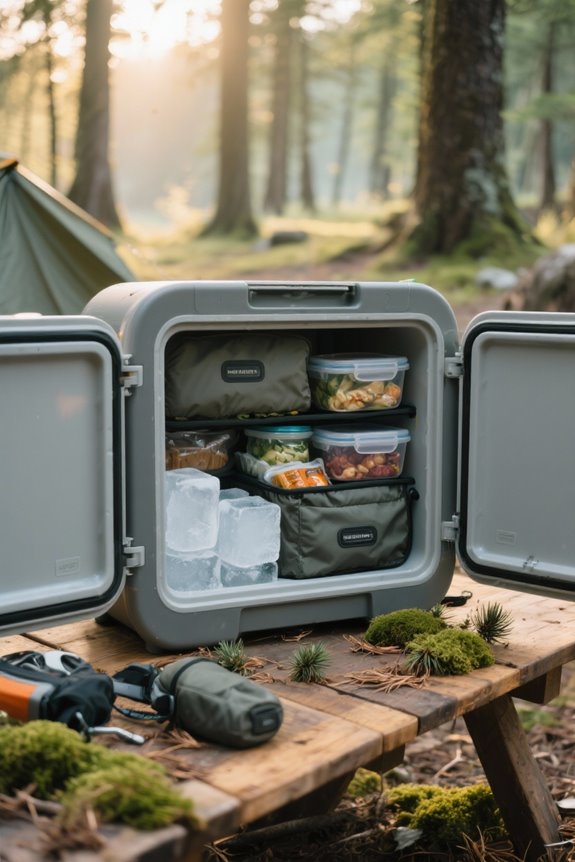
Packing a cooler effectively can make a big difference in how well our food and drinks stay cold during our trips. Here are some practical packing tips for optimizing space management and packing efficiency:
- Pre-Chill: Cool the cooler and items beforehand to reduce ice melt.
- Layer Strategically: Use large ice blocks at the bottom, then place perishables on top in airtight containers.
- Maximize Space: Fill gaps with ice and use stackable containers for better organization.
- Choose Size Wisely: Aim for a two-thirds ice to one-third consumables ratio.
- Freeze Food: Use frozen items as additional ice packs, ensuring longevity.
- Utilize Multiple Compartments: Take advantage of organizational features like separate sections to keep utensils, condiments, and quick-access items neatly arranged and easily retrievable.
Recommended Products

Local AI & LLM Powerhouse: Fueled by the Ryzen 8845HS NPU and RTX 5070 GPU, this NAS is your private AI workstation. Effortlessly deploy local LLMs and run Stable Diffusion without costly cloud subscriptions. Enjoy 100% data privacy and absolute protection for your proprietary code and sensitive data.
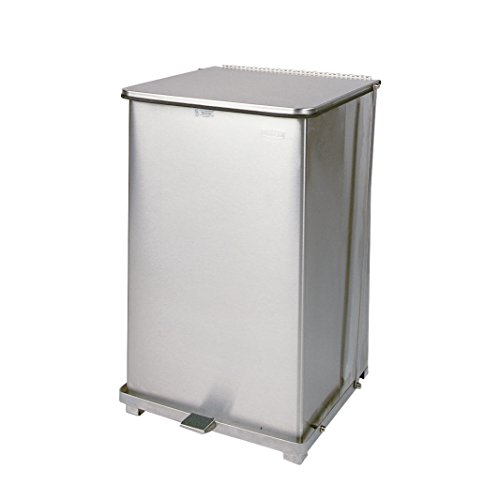
HANDS-FREE: Step-on foot pedal enables hands-free operation, optimizing sanitary efforts

Ideal for transporting waste, laundry, and other materials
Balancing Portability and Capacity in Cooler Selection

Choosing the right cooler requires us to balance portability and capacity, especially when planning our outings. Here’s what we should consider:
- Cooler Designs: Smaller coolers (5-25 quarts) are lightweight but hold fewer items. They’re perfect for day trips but often limit storage.
- Medium Options: Coolers between 36-59 quarts strike a balance, offering more space while remaining manageable.
- Large Models: 60 quarts and above provide extensive capacity but can be difficult to transport due to weight.
To maximize our cooler’s usability, we should look for options with improved insulation efficiency. Effective designs that use thinner walls can increase storage without adding bulk. Rotomolded construction provides exceptional durability while maintaining optimal insulation performance for extended trips. Making informed choices helps us find the ideal balance, allowing us to enjoy our time without worrying about cooler complications.
Recommended Products

1.5-ton (16,800 BTU) 115V / 20Amp 1 pH Portable Spot Cooler

Introducing the Frozin 400 Cold Plunge Tub, your ultimate solution for a superior daily plunge. Chiller Ready, with its high-efficiency insulation, this tub ensures superior ice water retention for extended periods.

The Haul is the first-ever YETI cooler on wheels. Perfect for taking the Tundra's legendary toughness and unmatched insulation power the extra mile
Important Considerations for Cooler Purchases
When we set out to buy a cooler, it’s essential that we consider several key factors to guarantee we make the best choice for our needs. Here are important considerations:
- Cooler Materials: Choose between hard-sided (better insulation, less space) and soft-sided (flexible storage with thinner walls) options.
- Insulation Types: Thicker insulation extends ice life but decreases usable space. Next, balance your trip length with the cooler’s design.
- Storage Efficiency: Look for minimal obstructions and options like removable dividers.
- Shape and Size: Consider the internal geometry and how it affects actual capacity.
- Capacity Claims: Be aware that advertised can capacity often exceeds practical storage, as the Titan Deep Freeze Backpack Cooler claims to hold 24 cans but users report it realistically fits only 12 to 15 cans when accounting for ice and proper packing.
Recommended Products

Reinforced Construction: The durable aluminum framework and three improved larger beams ensure the pergola withstands 60 mph winds.

Built for quality in your most needed spaces: This unit’s front-breathing cooling system and fully finished sides allow built-in or freestanding use. A 15” width makes it ideal for any tight location. This model comes equipped with an internal pump allowing more flexibility in where it can go.

Instant Setup, No Assembly Required: Simply unfold the side‑opening structure and pull out the included 7.5 ft telescoping ladder – the tent pops open automatically thanks to powerful Stabilus gas struts. Enjoy a spacious shelter in seconds, with zero poles or complex assembly
Frequently Asked Questions
How Do Cooler Shapes Affect Actual Storage Space?
Cooler shapes greatly impact actual storage space. By focusing on innovative cooler designs, we can optimize storage, ensuring every inch is utilized effectively, maximizing our ability to store food and drinks efficiently.
Can I Use a Cooler for Non-Food Items?
We can use a cooler for non-food storage, but it’s often like trying to fit a square peg in a round hole. While coolers show versatility, moisture complicates effective long-term storage for non-food items.
What Materials Are Coolers Made of and How Do They Impact Performance?
Coolers are made of various materials, like stainless steel and galvanized steel. Insulation types, such as XPS and polyurethane, greatly impact material durability and thermal efficiency, affecting overall performance and long-term use.
How Do Temperature Variations Affect Cooler Efficiency?
Temperature variations greatly impact cooler efficiency. We find that maintaining temperature consistency under varying ambient conditions is essential. If temperatures fluctuate, our coolers have to work harder, ultimately reducing their overall performance and energy efficiency.
Is It Worth Investing in a High-End Cooler for Regular Use?
Absolutely, investing in a high-end cooler for regular use can pay off. We’ve found the cost benefits are significant, especially with user experiences highlighting durability and better ice retention, making it worth every penny.


