As an Amazon Associate, we earn from qualifying purchases. Some links on this site are affiliate links at no extra cost to you. Our recommendations are based on thorough research and editorial judgment.

The Science of Navigation Without GPS Technology

Navigation without GPS technology requires essential skills and techniques. Here’s what we should know:
- Shadow Stick Method: Use a stick in sunlight to determine directions.
- Sun Position: Track the sun to help calculate your latitude.
- Landmarks: Observe mountains, rivers, and trees to guide your path.
You may be interested



These methods enhance our spatial awareness and confidence. They’re rooted in tradition and improve adaptability in new environments. Let’s explore more techniques that can effectively guide us on our journeys.
Key Takeaways
- Navigation skills enhance spatial memory and cognitive mapping while promoting confidence for independent living, reducing reliance on GPS technology.
- Techniques like the Shadow Stick Method and sun position utilization aid in determining direction without electronic devices.
- Celestial navigation employs stars and celestial bodies, using sextants and almanacs for accurate positioning in open environments.
- Advanced sensor systems like Inertial Navigation Systems and sensor fusion improve navigation accuracy in GPS-denied areas.
- Weather impacts navigation reliability; understanding atmospheric conditions is vital for accurate signal interpretation, even with traditional techniques.
The Importance of Navigation Skills
When we think about navigation skills, it’s clear that they play an essential role in our daily lives. Here are some key points highlighting their importance:
- Cognitive Benefits: Developing navigation skills engages the hippocampus, enhancing spatial memory and cognitive mapping.
- Environmental Learning: Using internal navigation strategies improves our understanding of different environments, promoting situational awareness.
- GPS Dependence: Overreliance on GPS can weaken our spatial memory, making it harder to adapt to new places.
- Navigational Confidence: Strong navigation skills bolster our confidence, vital for independent living.
- Flexibility in Strategies: Proficient navigators can switch between map-like and route-based navigation strategies efficiently.
- Practical Applications: Just as outdoor enthusiasts rely on ergonomic design features in their camping gear to ensure comfort during extended trips, developing strong navigation skills provides the foundational support needed for confident exploration in unfamiliar terrain.
Shadow Stick Method for Orientation

The Shadow Stick Method offers a straightforward way to find your bearings using just a stick and some basic observation. Here’s how it works:
- Materials: Just a straight stick, some markers, and a sunny, flat area.
- Setup: Insert the stick vertically into the ground.
- Marking: Track the sun shadow by marking its tip at two different times.
- First mark: This indicates west.
- Second mark: This shows east.
- Connecting: Draw a line between the two marks for an approximate east-west direction.
This method allows us to determine the cardinal points effectively, needing only a little time and no GPS tools. Whether for survival or casual exploration, it’s a useful skill to have at our disposal. Similar to how carbon steel skillets require proper seasoning and maintenance to perform optimally, mastering the shadow stick method improves with regular practice and attention to technique.
Recommended Products

[4K ULTRA HD TOUCHSCREEN WITH STUNNING VISUALS] The 32-inch display with 3840x2160 resolution delivers crystal-clear 4K UHD picture quality. A built-in 8MP camera and voice-activated remote make controlling your smart screen effortless and intuitive.
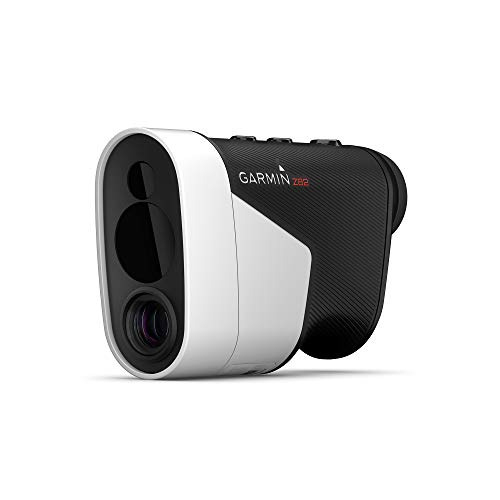
Most accurate laser range finder on the market within 10” of the flag, up to 450 yards
![Smart Projector 4K [VIDAA Live TV & 36W Dolby & Voice Control] with WiFi6 and Bluetooth, Short Throw Projector Compatible with Netflix, AI Auto Focus, HDR10, Home Theater Proyector for Outdoor Movies](https://m.media-amazon.com/images/I/51LPK2IYH0L._SL500_.jpg)
[2026 Fastest VIDAA Smart OS: Faster, Smoother, More Reliable] TOPTRO A2 4K projector runs exclusive VIDAA Smart OS, blending smart-TV simplicity with a mature app ecosystem and broad streaming support. Built on years of smart TV development, it delivers a true TV-like experience with smooth, intuitive operation. Compared with standard Android or Google TV projectors, VIDAA offers faster navigation, greater stability, enhanced security, and more efficient resource management. No streaming stick needed. Access Netflix, YouTube, Prime Video, Disney+, Hulu, and massive live TV channels. Designed for long-term performance, VIDAA stays responsive while reducing ads, crashes, and complicated setup
Utilizing the Sun’s Position

Utilizing the sun’s position for navigation expands on the foundational skills we gained with the Shadow Stick Method. Here’s how we can do it:
- Solar Altitude Measurement: At local noon, we measure the sun’s height using a sextant.
- Determine Zenith Distance (ZD): Subtract the solar altitude from 90°.
- Check Declination Angle: Use a nautical almanac to find the sun’s declination for our specific date and time.
- Latitude Calculation:
- If we’re in the same hemisphere as the sun, we add the declination to ZD.
- If in opposite hemispheres, we subtract it.
Just as thermal insulation helps maintain temperature consistency in insulated coolers for extended periods, understanding the sun’s position requires maintaining accurate measurements throughout the day to preserve navigational precision.
Understanding Solar Azimuth

Understanding solar azimuth is fundamental for both direction finding and solar energy applications.
- The solar azimuth angle indicates the Sun’s horizontal direction, measured from true north.
- It shifts continuously, starting near east at sunrise, reaching south at solar noon, and moving to west at sunset.
We can perform solar azimuth calculations using trigonometric formulas that consider factors such as latitude, solar declination, and hour angle. The solar elevation influence is essential, too, as it determines the Sun’s height in the sky.
In directing ourselves without GPS, we rely on solar azimuth to find bearings and estimate our location. Whether for sailing or setting up solar panels, mastering solar azimuth helps us utilize the Sun’s position effectively throughout the day. Just as outdoor enthusiasts must consider temperature ratings when selecting gear for varying conditions, navigators need to account for seasonal changes in the Sun’s path when using solar azimuth for orientation.
Observing Natural Landmarks

Observing natural landmarks plays a significant role in navigation, especially when we’re off the beaten path and without the aid of technology. Here’s how we can use them effectively:
- Mountains and Hills: These prominent peaks act as primary reference points.
- Water Features: Rivers and lakes guide us, often flowing toward inhabited areas.
- Distinctive Trees and Rocks: Unique shapes serve as reliable visual markers.
- Vegetation Clues: Moss growth typically indicates direction, while tree bark texture can suggest sun exposure patterns.
- Portable Equipment: Lightweight adjustable aluminum poles can be carried to mark waypoints or create temporary reference structures during extended wilderness navigation.
The Role of Celestial Navigation
Celestial navigation, while it may sound complex, offers a reliable method for determining our position using the stars and other celestial bodies. This ancient technique relies on celestial observations, enabling us to navigate even in the absence of GPS.
Some key navigational techniques include:
- Measuring the altitude of celestial bodies with a sextant.
- Using a nautical almanac to gather essential data about celestial positions.
- Taking multiple sightings to pinpoint our exact location.
Modern navigators often carry replacement part kits for their sextants and other instruments to ensure continued accuracy during extended voyages, much like how outdoor enthusiasts maintain their equipment with compatible components.
Identifying the North Star
In our previous exploration of celestial navigation, we highlighted the significance of various stars and constellations. Today, we’ll focus on Polaris, our North Star. Here’s how we can identify it:
- Locating Polaris: Use the Big Dipper. The pointer stars at the end of its bowl point directly to Polaris.
- Distance: Polaris is roughly five times the distance between these pointer stars.
- Alternative: If the Big Dipper isn’t visible, look for Cassiopeia. This constellation’s “W” shape can help guide us to Polaris too.
Once we successfully achieve Polaris identification, we can rely on it for celestial alignment, as it remains almost stationary in the sky, providing a dependable reference for true north in our navigational journeys. Just as outdoor enthusiasts depend on reliable equipment like hard-anodized aluminum cookware for consistent performance in varying conditions, navigators rely on Polaris for its unwavering position in the night sky.
Mapping With a Compass
When we think about navigation, using a compass is essential for mapping our way through unfamiliar territory. Here’s how we can make effective use of it:
- Compass Basics: A compass has four main parts: a magnetic needle, a baseplate, a rotating bezel, and a direction of travel arrow.
- Taking a Bearing: Lay the compass on the map with the baseplate edge connecting our location to our destination. Adjust the bezel until the orienting lines align with the map’s grid.
- Following a Bearing: Hold the compass level, align the needle, and walk in the arrow’s direction.
- Proper Sizing for Support: When using trekking poles alongside compass navigation, measure from wrist to ground with elbows bent at 90 degrees to ensure optimal balance and stability while traversing terrain.
Techniques in Dead Reckoning
Techniques in dead reckoning help us maintain a reliable estimate of our position while controlling, especially in challenging environments. We create distance calculations by multiplying speed and time, using instruments like compasses and gyroscopes for direction. Here are some effective dead reckoning techniques:
- Regular Position Fixes: Using landmarks or celestial navigation enhances accuracy.
- Error Correction: Incorporate feedback from external references to adjust our estimated positions.
- Environmental Awareness: Utilize data on current winds or currents to mitigate drift.
- Sensor Integration: Combining inputs from sensors like accelerometers can improve calculations.
Modern navigators often carry portable power stations to ensure their electronic navigation backup systems remain operational during extended expeditions.
Inertial Navigation Systems
Maneuvering without GPS often leads us to rely on advanced technologies like Inertial Navigation Systems (INS). INS is built on three main components: accelerometers, gyroscopes, and a computer. This system operates using Newton’s laws, measuring acceleration and angular velocity.
Key benefits of inertial navigation include:
- High Stability: It provides stable measurements in dynamic conditions.
- Resistance to Interference: It’s immune to jamming and external signals.
- Continuous Data: Updates navigation data in real-time.
However, we must consider some drawbacks:
- Long-Term Drift: Accuracy decreases over time.
- Initial Alignment: Can require extensive setup time.
Despite its complexities and costs, INS proves invaluable across various applications, from aerospace to automotive, showcasing impressive sensor performance in diverse environments.
Recommended Products
![[(Principles of GNSS, Inertial, and Multi-sensor Integrated Navigation Systems)] [Author: Paul D. Groves] published on (February, 2008)](https://m.media-amazon.com/images/I/41W2La6NyWL._SL500_.jpg)


Advanced Sensor-Based Navigation
In today’s world, advanced sensor-based navigation systems are redefining how we navigate without GPS.
Here are some key elements:
- Quantum Navigation: Utilizing ultra-sensitive quantum sensors, we can measure motion changes at an incredibly small scale. This precision enhances our ability to navigate effectively, even without satellite signals.
- Magnetic Anomalies: By leveraging subtle fluctuations in Earth’s magnetic field, we can pinpoint our position accurately. Magnetic anomaly aided navigation (MagNav) relies on real-time comparisons with detailed magnetic maps.
- Sensor Fusion: By integrating data from multiple sensors like LiDAR and magnetometers, we create resilient navigation systems that can operate effectively in GPS-denied environments.
- Inertial Navigation Systems: Similar to how independent burner controls enhance versatility in camp stoves, autonomous sensors work together to maintain accurate positioning through dead reckoning and accelerometer data integration.
These innovations promise to improve safety and efficiency across various domains while tackling the challenges posed by jamming and spoofing.
The Impact of Weather on Navigation
While advanced sensor-based navigation shows great promise for guiding without GPS, we can’t overlook the marked influence weather has on navigation systems. Weather impacts navigation accuracy in several ways:
- Ionospheric Effects: Charged particles can bend GPS signals, causing positioning errors that vary with solar activity.
- Heavy Precipitation: Rain and hail notably lower signal quality, degrading our ability to determine precise locations.
- Atmospheric Conditions: Changes in air temperature, humidity, and pressure affect signal travel times, leading to delays.
Navigating in adverse weather requires us to be aware of these challenges. By understanding how weather impacts our technology, we can improve strategies for reliable navigation even when conditions aren’t ideal. Remember, staying informed is key to maintaining safety on the road.
Navigational Tools Throughout History
Navigational tools have evolved remarkably over the centuries, helping us traverse the seas and unknown lands with increasing accuracy. Here’s a quick overview of key navigation instruments:
- Celestial Navigation: Ancient sailors relied on stars, using early maps and guidance from celestial bodies.
- Magnetic Compass: Invented around 200 BC, it guided sailors more effectively than using the sun alone.
- Astrolabes and Cross-Staffs: These instruments measured angles to determine latitude, improving navigation insights.
- Cartography: Ancient maps laid the groundwork for modern nautical charts, enhancing our understanding of geography.
Practical Tips for Wilderness Navigation
When we venture into the wilderness, it’s essential to have reliable strategies for navigation without GPS technology. To tackle navigation challenges and improve our wilderness survival, consider these tips:
- Natural Features: Follow rivers and ridges as guides, and use treelines or distinct rocks to confirm our position.
- Intuitive Navigation: Observe the landscape, correlate with maps, and use the sun’s position for directional cues.
- Shadow Techniques: Use a stick to mark shadows, helping us determine east-west direction.
- Compass Skills: Learn to read a map and adjust for magnetic declination, while triangulating our position with landmarks.
- Route Finding: Assess obstacles and choose paths with less resistance.
Frequently Asked Questions
How Can I Improve My Compass Reading Accuracy?
To improve our compass reading accuracy, we should regularly perform compass calibration, use steady reading techniques, and maintain awareness of magnetic interference. Practicing proper handling enhances our reliability in navigation, ensuring consistent results during outdoor adventures.
What Are the Limitations of Using Animal Trails for Navigation?
Animal trails can mislead us; they reflect animal behavior, not human needs. They change with ecological indicators like seasons and disturbances, leaving us lost if we rely solely on these unreliable paths for navigation.
Can Stars Be Used for Navigation During the Day?
We can’t effectively use stars for daytime navigation due to limited starlight visibility. Instead, we rely on the Sun’s position, employing methods like shadow sticks or analogue watches to navigate during daylight hours.
How Do Different Seasons Affect Celestial Navigation?
Seasonal variations substantially affect celestial navigation. In summer, long daylight allows sun sightings, while winter’s limited light alters visibility of celestial bodies. We must adapt our techniques to track these changes for accurate navigation.
What Should I Do if I Get Lost in the Wilderness?
If we get lost in the wilderness, let’s stay calm, conserve resources, and use emergency signaling. Practicing survival skills like evaluating our surroundings and signaling for help can greatly increase our chances of rescue.


