As an Amazon Associate, we earn from qualifying purchases. Some links on this site are affiliate links at no extra cost to you. Our recommendations are based on thorough research and editorial judgment.


The Science of Sleeping Pad Thickness and Comfort

When we explore the science of sleeping pad thickness and comfort, several factors come into play:
- R-value measures thermal resistance; higher values mean better insulation.
- Thickness matters: side sleepers often need thicker pads, while stomach sleepers should opt for thinner ones.
- Weight and bulk affect portability, so we balance comfort with practicality.
- Layering techniques enhance insulation and support.
You may be interested


With proper selection, we can greatly improve our outdoor sleep experience, and there’s more to uncover about this topic.
Key Takeaways
- Thicker pads, typically 3-4 inches, improve pressure distribution and enhance comfort, especially for side sleepers.
- Side sleepers require pads over 3 inches to relieve pressure on hips and shoulders, while back sleepers need moderate thickness for even support.
- Stomach sleepers should opt for thinner, firmer pads to avoid back arching during sleep.
- Balancing pad thickness and weight ensures both comfort and portability for outdoor camping.
- Properly selected sleeping pads maximize warmth, comfort, and support across various sleep positions, leading to better sleep quality.
Understanding R-Value and Thermal Insulation
When it comes to sleeping pads, understanding R-value and thermal insulation is key to achieving a comfortable night’s sleep outdoors.
- What is R-value? It measures thermal resistance, indicating how well a pad resists heat loss.
- Importance of R-value: Higher R-values, ranging from 1 to 7, guarantee better insulation and warmth, especially in cold conditions.
In our R value analysis, we find that effective insulation methods prevent heat transfer from our bodies to the ground. Choosing the right R-value means considering the season—we need lower R-values for summer and higher ones for winter camping.
Remember that a sleeping pad with an adequate R-value reduces the risk of hypothermia while providing a more comfortable layer between us and the cold ground. For example, pads like the MondoKing 3D with an R-value of 7.0 and the Basecamp with a 6-rated insulation provide year-round warmth suitable for all-season camping.
The Balance of Thickness and Comfort
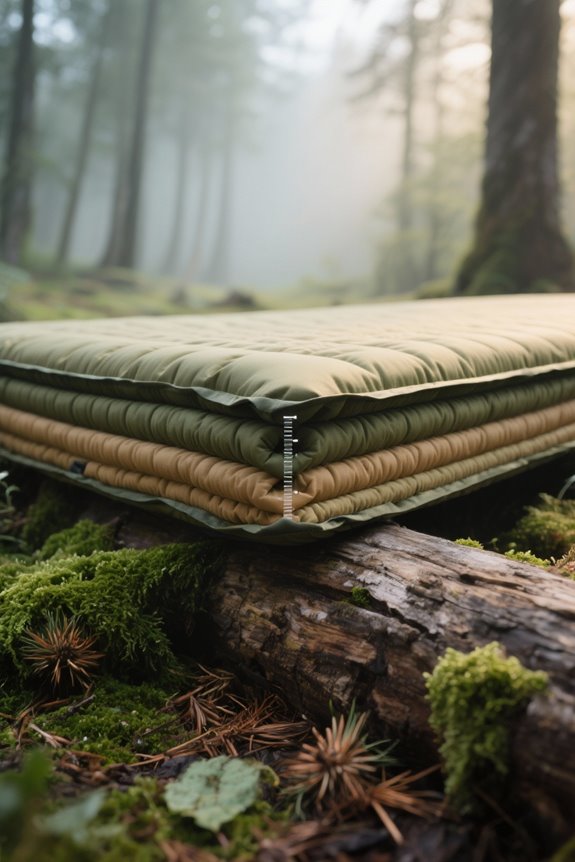
Finding the right balance between thickness and comfort in sleeping pads is essential for a good night’s sleep outdoors.
Here are some key points to examine:
- Thickness Trade-Offs: Thicker pads (3-4 inches) generally offer better pressure distribution, enhancing comfort. However, they may add weight, impacting portability.
- Comfort Optimization: Side sleepers usually need that extra thickness for hips and shoulders, while back sleepers may find moderate thickness sufficient.
- Weight vs. Thickness: Lightweight pads often sacrifice thickness for pack efficiency, which can reduce cushioning. Just as ultralight backpackers choose stoves weighing between 3 to 5 ounces for optimal portability, the same principle applies to sleeping pads.
Ultimately, it depends on your needs. Car camping allows for more comfort, while backpacking requires careful evaluation of weight. Finding your ideal sleeping pad means steering through these trade-offs to optimize both thickness and comfort effectively.
Recommended Products

Spacious & Durable Build: This Portable Toilet is designed with high-temperature resistant paint and sturdy materials, ensuring long-lasting performance. Ideal for event organizers and construction crews needing a reliable restroom solution.

3‑in‑1 Convertible Design: Easily transitions between sofa, lounger, and queen‑size pull‑out bed, making it ideal for living rooms, guest rooms, or multi‑use spaces.
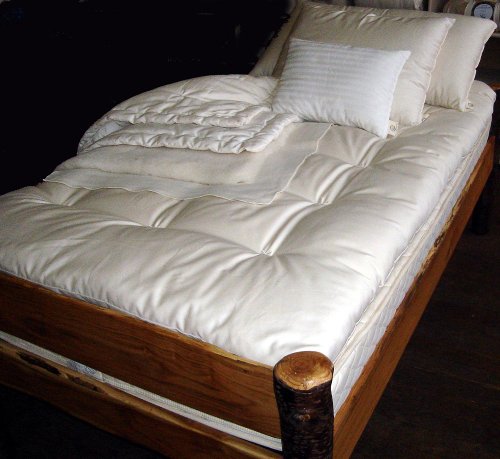
Premium Eco-Wool Batting
Impact of Sleep Quality on Overall Health

Sleep quality significantly impacts our overall health, affecting both our physical and mental well-being. When we don’t get enough restful sleep, we might face several challenges:
- Physical Health Risks: Sleep deprivation effects include higher chances of cardiovascular diseases, obesity, and weakened immune function, increasing infection susceptibility.
- Mental Health Concerns: Lack of sleep disrupts emotional stability, often leading to mood swings and heightened anxiety or depression.
Making sleep a priority has considerable benefits. Extended sleep duration promotes physical recovery and improved emotional regulation. By investing time in restful sleep, we can enhance our quality of life, minimize health risks, and bolster our emotional resilience. When camping outdoors, comfort features like pad thickness and insulation play a crucial role in achieving the restorative sleep our bodies need. Let’s aim for those necessary 7-9 hours a night—our bodies and minds will thank us!
Weight, Bulk, and Their Practical Implications

As we consider our overall sleep experience, weight and bulk of sleeping pads play a significant role in our comfort and convenience on outdoor adventures.
Recommended Products
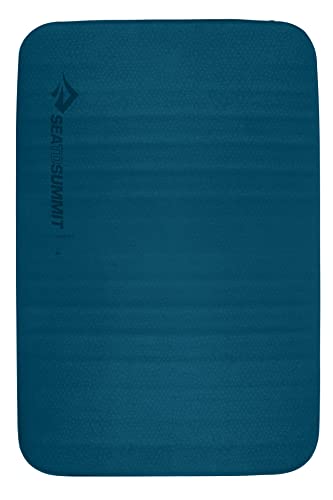
4-season luxury foam double sleeping pad is 4 inches thick, with vertical sidewalls, for maximum warmth and comfort for two people while camping, traveling, or at home

Exped MegaMat Max Duo Long Wide Plus - Self Inflating Plush Sleeping Mat, 6” Foam Pad, Pump Included
Ultimate Plush Design: The thickest self-inflating air mattress in the lineup, featuring 6 inches of open-cell foam - 50% thicker than standard camping mattress pads - creating an exceptionally soft car camping and tent sleeping surface ideal for couples

Baffle height is body-mapped to create cradling support that keeps you centered on the pad throughout the night.
Key Points:
- Weight Trade-offs: While lighter pads like the Therm-a-Rest NeoAir XLite weigh just 12 ounces, they might compromise durability for portability.
- Bulk Management: Inflatable pads easily pack small, making them ideal for backpackers. In contrast, foam pads are bulkier, often needing external attachment to backpacks.
- Comfort vs. Practicality: Choosing the right pad depends on the trip type. Thicker pads suit side sleepers, while back sleepers may prefer thinner options, balancing comfort with weight concerns.
- Pairing with Sleeping Bags: Just as ultralight sleeping bags use compression sacks to reduce packed size, modern sleeping pads benefit from similar storage solutions to maximize space efficiency in your pack.
Understanding these factors helps us select the best sleeping pad for our adventures, ensuring we prioritize both comfort and practicality.
Exploring Construction Materials and Their Effects

When we explore the world of sleeping pads, understanding construction materials is key to achieving the right balance of comfort and durability. Here’s a breakdown of some essential materials:
- Closed-Cell Foam: Offers excellent insulation and high material durability but lacks comfort and can be bulky.
- Self-Inflating Open-Cell Foam: Combines foam characteristics for insulation with air for added comfort, though it’s more compact yet heavier than air pads.
- Air-Filled Pads: Provide superior comfort and packability, yet may not match foam in durability.
- StrataCore Construction: Merges thermal foam with air spaces for ideal warmth-to-weight efficiency.
Many modern sleeping pads feature fabric constructions like 50D nylon or polyester combined with TPU coatings to enhance both waterproofing and tear resistance. As we explore options, considering how these materials impact comfort and durability will confirm we choose the right sleeping pad for our needs.
Recommended Products

Ultimate Comfort: The Captain Comfort Deluxe pads are plush self-inflating foam-core pads designed for maximum warmth and comfort. The stretch top provides a pillow-soft sleeping surface that is comfy and quiet, allowing for a good night’s sleep.

4-season luxury foam sleeping pad is 4 inches thick, with vertical sidewalls, for maximum warmth and comfort for camping, home, and travel

Designed for vehicle-assisted adventures with wheel well cutouts that fit many mid-size trucks, SUVs, wagons, and Teslas — measure your vehicle interior to confirm fit
The Role of Body Type in Pad Thickness Selection
Choosing the right thickness for your sleeping pad isn’t just about preference; it’s influenced by our body types. Here are some key points:
- Body Weight: Heavier individuals generally need thicker pads (≥2.5 inches) for proper comfort and pressure relief.
- Sleeping Position: Side sleepers consistently benefit from added thickness to cushion hips and shoulders. Back sleepers can often use thinner pads if they’re lighter.
- Insulation Needs: Larger body types may retain heat better and can sometimes use thinner pads, while leaner individuals often require higher R-values.
- Pad Materials: Thicker pads with durable materials provide better body support and insulation.
- Comfort Preferences: We must consider our unique preferences in thickness variations to enhance our overall sleeping experience.
- Superior Support Options: For those requiring maximum cushioning, some pads feature up to 5 inches of thickness with memory foam materials that deliver hotel-quality support for back pain relief.
Seasonal Considerations for Pad Selection
Selecting the right sleeping pad doesn’t just hinge on our body types; it also varies with the seasons we’re camping in. Here’s a quick breakdown:
- Summer Sleeping: For warmer months, look for pads with an R-value of 1 to 2. Thinner pads (around 2 to 2.5 inches) provide comfort without excess weight.
- Three-Season Pads: R-values between 2 and 4 are ideal for spring and fall. They accommodate cooler temperatures and unpredictable weather.
- Winter Insulation: When the temperature drops, we need pads with R-values of 6 or higher, ensuring warmth against freezing ground.
Keep in mind, using multiple pads can enhance insulation. This approach allows us to adapt our gear based on seasonal needs while maintaining comfort and packability. Pairing your sleeping pad with a sleeping bag rated for the appropriate temperature range—such as 0 degrees for winter or 20-30 degrees for milder conditions—creates a complete sleep system that maximizes warmth and comfort throughout the night.
Recommended Products

This unique, sustainable sleeping pad bladder with insulated cover is designed for premium feel, maximum comfort, and reliable performance. This pad was designed with circularity in mind. At the end of your pad’s life, after many adventures, contact Big Agnes and we’ll recycle it into something new!

Product 1: All-Season Outdoor Camping Mat: This lightweight, extra-wide inflatable mattress is made with Klymalite insulation that keeps you warm when it's cold out with an R-Value of 4.4

EXPED's new SYNMAT PLUS TECHNOLOGY utilizes recycled synthetic microfiber for efficient insulation combined with layers of reflective foil, maximizing warmth & reducing weight.
Sleep Positions and Their Influence on Comfort
Understanding how our sleep position can affect comfort is essential for optimizing our camping experience. Each sleep style presents unique challenges:
- Side Sleepers: Need thicker pads (3″+) to alleviate pressure points at hips and shoulders.
- Back Sleepers: A moderate thickness (2″-2.5″) works well, as it distributes weight evenly, minimizing discomfort.
- Stomach Sleepers: Require thinner, firmer pads to prevent back arching while still offering moderate support.
- Frequent Position Changers: Benefit from pads that provide stable support with minimal wobbling for consistent comfort.
Choosing the right sleeping pad thickness can greatly impact our overall experience, allowing us to sleep better and enjoy our adventures more. Advanced features like patented body mapping technology help ensure that pads accommodate multiple sleep positions by strategically distributing support where it’s needed most. Let’s keep in mind how our sleep positions affect our comfort as we gear up for our next outdoor trip!
Layering Techniques for Enhanced Insulation
When we think about staying warm while camping, layering our sleeping pads is a smart strategy we can employ. Here’s how we can enhance our insulation with pad layering:
- Combine Pads: Use a closed-cell foam pad at the bottom for durability, topped with an inflatable pad for comfort.
- Understand R-Values: Add the R-values for cumulative insulation—like pairing an R-value 3 pad with an R-value 2.5 pad for a total of 5.5.
- Seasonal Adjustments: Adjust our layers as the temperature changes.
These insulation strategies not only protect against cold but also prevent punctures. Foam pads offer moisture protection while inflatable options provide superior cushioning through features like body mapping technology. By being intentional with our choices, we can enjoy a comfortable camping experience, no matter the weather!
Recommended Products

Ultimate Comfort: The Captain Comfort Deluxe pads are plush self-inflating foam-core pads designed for maximum warmth and comfort. The stretch top provides a pillow-soft sleeping surface that is comfy and quiet, allowing for a good night’s sleep.

The Divide Insulated is a light and compact Insulated pad with a smooth sleeping surface of vertical baffles at an incredible price. With an R-Value of 4.0, it’s the perfect pad for your 3-seaon adventures.

Camp like royalty with the MondoKing 3D, an ultra-comfy 4.25-inch thick sleeping pad with a stretch knit fabric layer for resting better under the stars
Personal Preferences and Customizing Your Sleep System
Personalizing our sleep system can greatly enhance our camping experience, especially when it comes to comfort. Understanding our individual preferences allows us to create an ideal setup. Here are key factors to take into account:
- Sleeping Position: Side sleepers might need thicker pads for better support.
- Customization: We can explore custom padding options and adjustable systems for tailored comfort.
- Pad Shape: Semirectangular designs often balance comfort and compactness.
- R-Value: Choosing higher R-values helps with insulation in colder weather.
- Material Choice: Air-filled pads are lightweight, while foam offers stability.
- Additional Features: Side rails or built-in pillows can enhance our overall experience.
- Repair Preparedness: Carrying a compact sleeping pad repair kit ensures we can quickly fix punctures or leaks during our outdoor adventures.
Frequently Asked Questions
How Do Environmental Factors Affect Sleeping Pad Performance?
Environmental factors like temperature regulation and humidity impact our sleeping pad performance. Fluctuating temperatures can lead to deflation, while high humidity affects insulation. We need to choose wisely for comfort in diverse conditions.
What Is the Lifespan of a Typical Sleeping Pad?
The lifespan of a typical sleeping pad varies, but with good care, we can expect it to last several years. Mattress comparisons show that inflation technology affects durability, so let’s choose wisely to maximize longevity.
Can a Sleeping Pad Be Repaired if Damaged?
Yes, a sleeping pad can be repaired. We can use various sleeping pad materials and effective repair techniques, like adhesive patches and cleaning processes, to fix leaks and extend the pad’s lifespan for future adventures.
How Should I Clean and Maintain My Sleeping Pad?
To clean and maintain our sleeping pads, we should use gentle cleaning methods with mild soap, avoid harsh chemicals, and follow maintenance tips like air drying and storing them properly to guarantee longevity and performance.
Do Sleeping Pads Affect Tent Ventilation?
Yes, sleeping pads do affect tent ventilation. Their insulation properties can impact ventilation dynamics, potentially blocking airflow and altering temperature inside the tent. We should choose our pads wisely to optimize our camping experience.


